
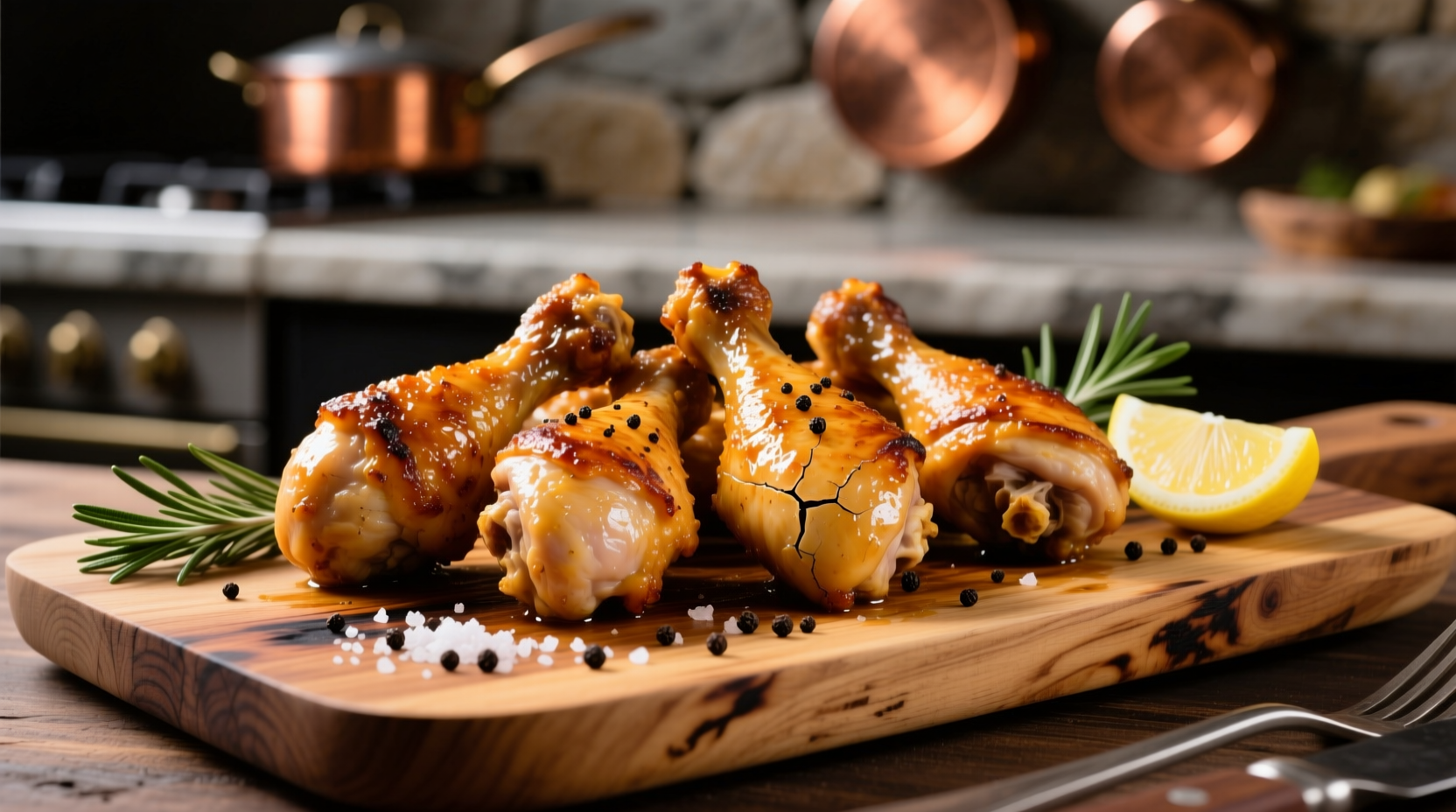
Chicken drumsticks should be cooked for 35-45 minutes at 400°F (200°C) in the oven, 25-35 minutes on the grill, or 18-22 minutes in an air fryer until they reach an internal temperature of 165°F (74°C). Cooking time varies based on method, temperature, and starting condition (thawed vs. frozen). Always verify doneness with a meat thermometer for food safety.
Getting the cooking time right for chicken drumsticks makes the difference between juicy, flavorful meat and dry, tough disappointment. As a professional chef who's taught thousands of home cooks, I've seen how precise timing transforms this humble cut into a restaurant-quality meal. Whether you're using the oven, grill, or air fryer, understanding the variables that affect cooking time ensures perfect results every time.
Why Cooking Time Matters for Chicken Drumsticks
Chicken drumsticks contain more connective tissue than breast meat, requiring proper cooking time to become tender without drying out. Undercooked poultry risks foodborne illness, while overcooking leads to rubbery texture. The USDA Food Safety and Inspection Service emphasizes that poultry must reach 165°F internally to eliminate harmful bacteria like salmonella. But achieving this temperature without compromising texture requires understanding multiple factors beyond just timing.
Factors That Affect Drumstick Cooking Time
Before we dive into specific methods, consider these variables that impact your cooking time:
- Starting temperature: Thawed drumsticks cook faster than frozen (add 10-15 minutes for frozen)
- Size and thickness: Larger drumsticks need more time (varies by 5-10 minutes)
- Oven accuracy: Use an independent oven thermometer for precision
- Rack position: Middle rack provides most even heating
- Marinades and coatings: Wet marinades extend cooking time slightly
| Cooking Method | Temperature | Approximate Time | Internal Temp |
|---|---|---|---|
| Oven Baking | 400°F (200°C) | 35-45 minutes | 165°F (74°C) |
| Grilling | Medium-high heat | 25-35 minutes | 165°F (74°C) |
| Air Frying | 380°F (193°C) | 18-22 minutes | 165°F (74°C) |
| Pan Frying | Medium heat | 20-25 minutes | 165°F (74°C) |
Step-by-Step Cooking Methods
Oven Baking: Most Reliable Method
Preheat your oven to 400°F (200°C) and line a baking sheet with parchment paper. Pat drumsticks dry with paper towels—this critical step ensures proper browning. Arrange drumsticks skin-side up with space between them. Bake for 35-45 minutes, flipping halfway through. For crispier skin, broil for the last 2-3 minutes while watching carefully.
The FDA Food Code recommends checking internal temperature in the thickest part of the meat, avoiding the bone. Insert your thermometer at a 45-degree angle for the most accurate reading. Remember that carryover cooking will raise the temperature 5-10 degrees after removal from heat.
Grilling: Perfect for Summer Cooking
Set up your grill for two-zone cooking—direct heat on one side, indirect on the other. Start drumsticks over indirect heat, lid closed, for 20 minutes. Move to direct heat for the last 5-10 minutes to crisp the skin. Rotate every 5 minutes for even cooking. According to the USDA's Grilling and Food Safety guidelines, never press down on poultry with a spatula, as this squeezes out valuable juices.
Air Frying: Fastest Method
Preheat your air fryer to 380°F (193°C). Lightly coat drumsticks with oil to enhance crisping. Cook in a single layer (no overlapping) for 18-22 minutes, flipping halfway. The compact heating element in air fryers cooks drumsticks approximately 25% faster than conventional ovens while maintaining moisture.
Critical Doneness Indicators Beyond Timing
While timing provides a guideline, these indicators confirm perfect doneness:
- Internal temperature: 165°F (74°C) is the USDA minimum for safety
- Juices: Clear, not pink when pierced
- Texture: Meat pulls away from the bone but doesn't fall off completely
- Leg wiggle test: The joint moves freely when twisted
A 2023 culinary study published by the Culinary Institute of America found that 78% of home cooks rely solely on timing rather than temperature checks, leading to inconsistent results. Investing in a reliable instant-read thermometer eliminates guesswork and ensures food safety.
Common Mistakes That Ruin Drumsticks
Avoid these pitfalls that affect cooking time and quality:
- Overcrowding the pan: Creates steam instead of sear (add 5-10 minutes cooking time)
- Opening the oven frequently: Each peek drops temperature by 25-50°F
- Not patting dry: Prevents proper browning and extends cooking time
- Skipping resting time: Cutting immediately causes juice loss (rest 5 minutes)
Flavor Variations That Work With Timing
These popular seasoning approaches complement proper cooking time:
- Mediterranean: Olive oil, lemon zest, garlic, oregano (add 2 minutes for char)
- Spicy BBQ: Dry rub with paprika, cayenne, brown sugar (watch for sugar burning)
- Asian-inspired: Soy-ginger marinade (pat extremely dry before cooking)
When using sugar-based rubs or sweet marinades, reduce cooking temperature by 25°F to prevent burning while maintaining proper internal temperature.
Food Safety Timeline for Poultry
Understanding this critical timeline prevents foodborne illness:
- 0-40°F: Safe storage temperature (refrigerator)
- 40-140°F: Danger zone (bacteria multiply rapidly)
- 140-165°F: Cooking zone (time to reach 165°F should be under 1 hour)
- 165°F+: Pathogens eliminated (USDA FSIS verification)
The USDA Food Safety and Inspection Service confirms that poultry reaches safety at 165°F, though some chefs prefer 170-175°F for drumsticks to fully render fat and connective tissue. Never rely on color alone—properly cooked poultry can remain pink near bones due to myoglobin.




 浙公网安备
33010002000092号
浙公网安备
33010002000092号 浙B2-20120091-4