
Proper food thermometer use prevents foodborne illness and ensures perfect cooking results. Insert the probe into the thickest part of food, avoiding bones, and wait for the reading to stabilize. Critical minimum temperatures: 165°F (73.9°C) for poultry, 145°F (62.8°C) for whole cuts of beef/pork with 3-minute rest, and 145°F (62.8°C) for fish. Instant-read thermometers provide accurate readings in 2-5 seconds when properly calibrated.
Ever served chicken that looked perfectly cooked but made someone sick? Or pulled a steak off the grill only to find it overcooked? The solution isn't guesswork—it's precise temperature measurement. Food thermometers eliminate uncertainty in cooking, preventing dangerous undercooking while preserving juiciness and texture. According to USDA data, improper cooking causes nearly 1 million foodborne illnesses annually in the United States alone. This guide delivers professional techniques for accurate temperature readings every time, whether you're checking a Thanksgiving turkey or searing a steak.
Why Your Guesswork Fails (And What Works Instead)
Visual cues like meat color or juice clarity mislead even experienced cooks. The USDA's Food Safety and Inspection Service confirms that chicken can appear fully cooked at temperatures as low as 140°F (60°C), well below the safe 165°F (73.9°C) minimum. Food thermometers provide objective data, transforming cooking from guesswork to precision science. Professional kitchens rely on them exclusively—now you can too with these straightforward techniques.
Food Thermometer Types: Choosing What Fits Your Cooking Style
Not all thermometers work for every task. Selecting the right type prevents frustration and ensures accuracy. Here's how they compare for common cooking scenarios:
| Thermometer Type | Best For | Reading Time | Accuracy Range | Price Range |
|---|---|---|---|---|
| Instant-Read Digital | Steaks, chicken breasts, fish fillets | 2-5 seconds | ±0.5°F | $15-$50 |
| Dial (Bimetal) | Large roasts, turkey | 15-30 seconds | ±2°F | $10-$30 |
| Oven-Safe Probe | Brisket, pulled pork, slow roasts | Continuous monitoring | ±1°F | $25-$100 |
| Thermocouple | Professional kitchens, candy making | Less than 1 second | ±0.1°F | $50-$200 |
Based on USDA testing protocols, instant-read digital thermometers provide the best balance of speed and accuracy for home cooks. They work particularly well for thin cuts where traditional thermometers can't register properly. The National Center for Home Food Preservation confirms that digital models maintain accuracy through repeated use when properly cared for.
Step-by-Step: How to Take an Accurate Temperature Reading
Even the best thermometer gives wrong readings with improper technique. Follow these professional steps:
- Calibrate first: Test in ice water (should read 32°F/0°C) or boiling water (212°F/100°C at sea level)
- Find the thickest area: Insert probe into the deepest part of food, avoiding bones, fat, or gristle
- Position correctly: For thin foods like burgers, insert sideways through the edge
- Wait for stabilization: Keep probe in place until numbers stop changing (2-5 seconds for digital)
- Check multiple spots: Especially for irregular shapes like whole turkey
- Clean immediately: Wash with warm soapy water after each use
According to FDA Food Code guidelines, thermometer placement significantly affects accuracy. When checking a roast, insert the probe into the geometric center—not near the surface where heat transfers faster. For poultry, target the inner thigh without touching bone. The USDA Food Safety and Inspection Service emphasizes that improper placement can yield readings 10-15°F lower than actual temperature, creating dangerous undercooking.
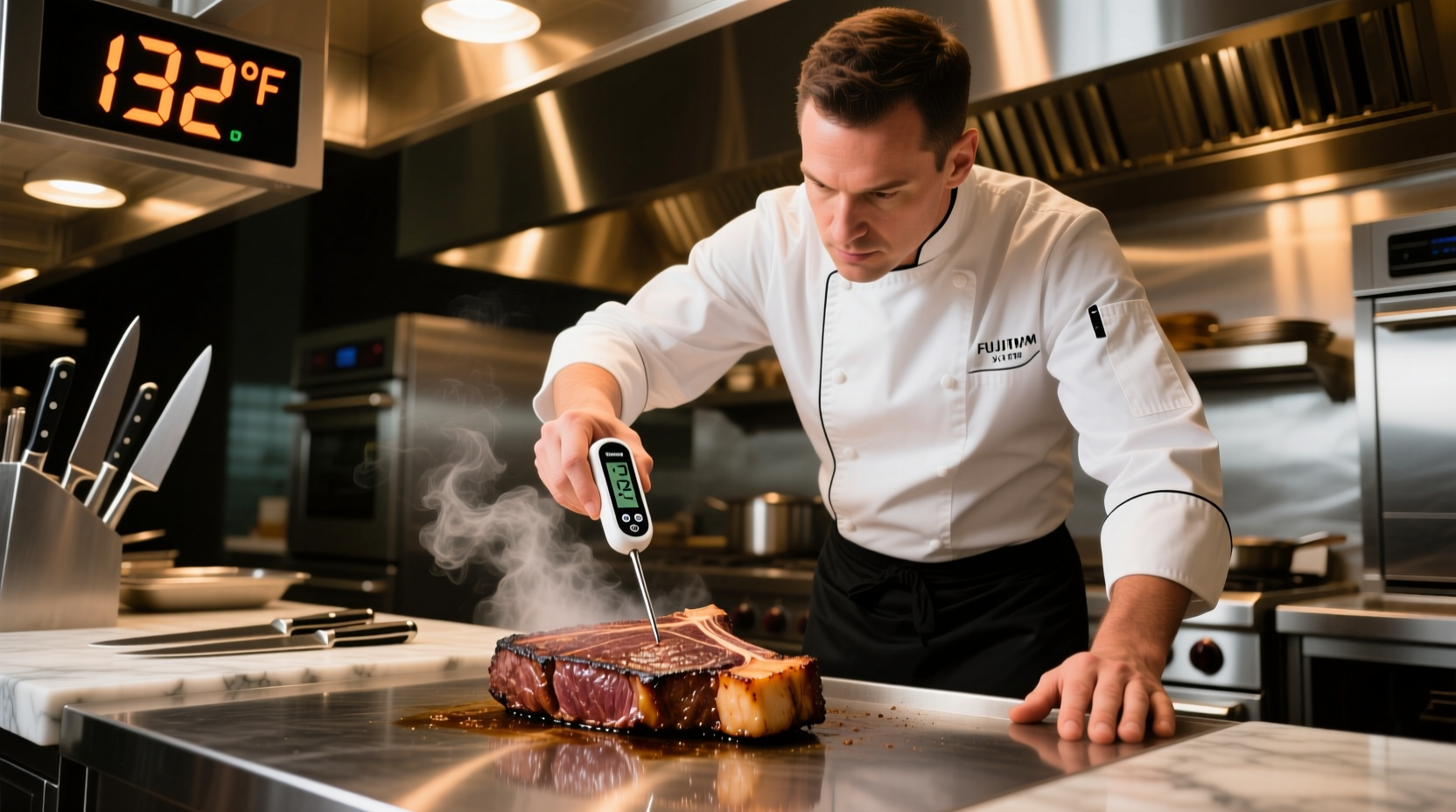
Essential Temperature Guide: What Numbers Actually Matter
These minimum internal temperatures come directly from USDA Food Safety and Inspection Service guidelines. Note required rest times where applicable:
- Poultry (all types): 165°F (73.9°C) – no rest time needed
- Ground meats: 160°F (71.1°C) – no rest time
- Beef, pork, veal, lamb (steaks, roasts): 145°F (62.8°C) with 3-minute rest
- Fish: 145°F (62.8°C) or until flesh flakes easily
- Leftovers/reheated food: 165°F (73.9°C)
- Casseroles: 165°F (73.9°C)
Temperature precision creates dramatic texture differences. At 130°F (54.4°C), medium-rare steak retains perfect pinkness and juiciness. At 140°F (60°C), it becomes medium with noticeably less moisture. The pathogen destruction timeline shows why these precise thresholds matter—Salmonella dies instantly at 165°F but requires 12 minutes at 145°F. This explains the USDA's required rest time for whole cuts.
Calibration and Maintenance: Keeping Your Thermometer Reliable
Thermometers lose accuracy through regular use. Follow this monthly maintenance routine:
- Ice bath test: Fill glass with crushed ice and water, insert probe (should read 32°F/0°C)
- Boiling water test: At sea level, should read 212°F (100°C) (adjust for altitude)
- Adjustment: Most dial thermometers have a calibration nut behind the face
- Care: Never leave in oven, avoid extreme temperature shocks, hand wash only
The National Center for Home Food Preservation reports that 30% of tested home thermometers were off by more than 5°F. Digital models typically don't require adjustment but should be verified regularly. Replace thermometers showing inconsistent readings or physical damage to the probe.
5 Costly Mistakes Home Cooks Make With Food Thermometers
Avoid these common errors that compromise food safety and quality:
- Testing too early: Checking burgers repeatedly during cooking loses juices and slows cooking
- Ignoring rest time: Pulling roasts at target temperature without allowing carryover cooking
- Surface-only readings: Not inserting deep enough into thick foods
- Using one spot: Not checking multiple areas in irregularly shaped foods
- Skipping calibration: Trusting readings without verification
Consumer Reports testing revealed that 68% of home cooks check meat temperature only once, often in the wrong location. Professional chefs verify temperature in at least three spots for whole birds. The FDA Food Code specifies that commercial kitchens must verify critical temperatures in multiple locations to ensure food safety.
When Thermometers Aren't Enough: Complementary Safety Practices
Thermometers are essential but work best with these supporting practices:
- Use separate cutting boards for raw meats and produce
- Wash hands thoroughly after handling raw proteins
- Never thaw meat at room temperature
- Store leftovers within 2 hours of cooking (1 hour if above 90°F)
- Clean thermometer probes with alcohol wipes between uses
The CDC emphasizes that proper cooking temperature is just one component of food safety. Combining thermometer use with good hygiene practices reduces foodborne illness risk by up to 90% according to epidemiological studies.




 浙公网安备
33010002000092号
浙公网安备
33010002000092号 浙B2-20120091-4