
Cooking brisket in the oven takes approximately 1.5 hours per pound at 275°F (135°C) until the internal temperature reaches 195-205°F (90-96°C). For a standard 12-pound brisket, expect 8-12 hours total cooking time including resting. The exact duration depends on your oven's accuracy, brisket thickness, and desired tenderness level.
Nothing beats the rich, melt-in-your-mouth texture of perfectly cooked oven brisket. Whether you're preparing Sunday dinner or hosting a special gathering, mastering this cut transforms tough connective tissue into succulent perfection. The secret lies not just in timing but understanding the science behind low-and-slow cooking.
The Science Behind Perfect Oven Brisket
Brisket contains abundant collagen that requires slow conversion to gelatin. This transformation happens between 160-205°F (71-96°C), explaining why rushed cooking yields tough results. The "stall"—when evaporation cools the meat around 150-170°F (65-77°C)—is normal and shouldn't prompt temperature increases. Patience allows collagen breakdown without drying the meat.
| Brisket Weight | 225°F (107°C) | 250°F (121°C) | 275°F (135°C) |
|---|---|---|---|
| 8 pounds | 10-12 hours | 9-10 hours | 8-9 hours |
| 10 pounds | 12-14 hours | 11-12 hours | 9-10 hours |
| 12 pounds | 14-16 hours | 13-14 hours | 10-12 hours |
Note: These times include 1-2 hours resting. Always verify with a meat thermometer rather than relying solely on time.
Brisket Selection and Preparation Essentials
Choosing the right brisket matters. Look for:
- Prime grade with abundant marbling (Choice works but yields less tender results)
- Whole packer cut (12-14 pounds) containing both point and flat sections
- Thick flat section (at least 1 inch thick at the narrow end)
Trim excess fat to ¼ inch thickness, removing hard fat deposits. Apply your rub 12-24 hours before cooking to enhance flavor penetration. Let the brisket sit at room temperature for 1-2 hours before oven placement.
Step-by-Step Oven Cooking Process
- Preheat oven to 275°F (135°C) with rack positioned in the center
- Prepare cooking vessel—use a roasting pan with a wire rack or disposable aluminum pan
- Place brisket fat-side up on the rack with a water pan underneath for moisture
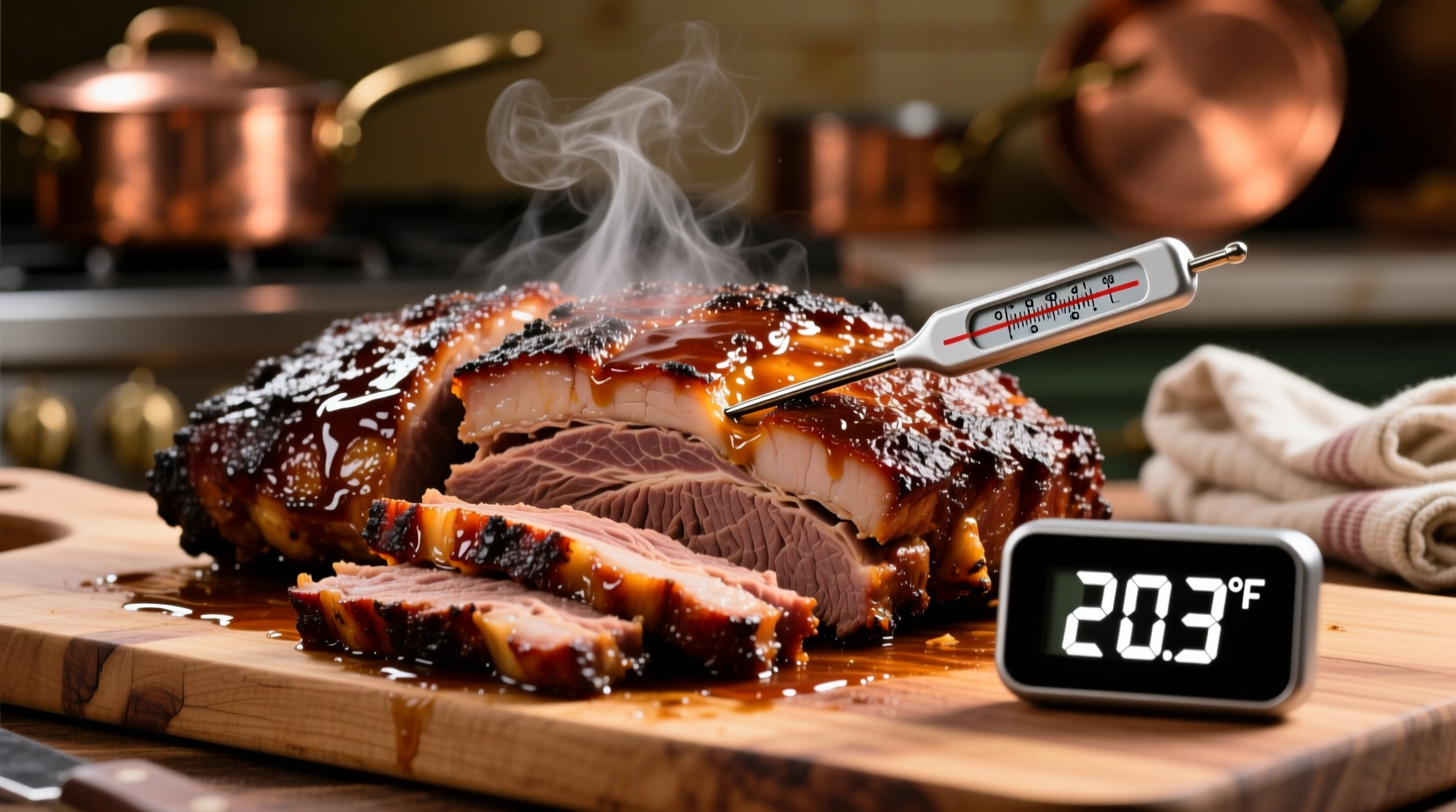
- Insert probe thermometer into the thickest part of the flat section
- Cook uncovered until internal temperature reaches 165°F (74°C), approximately 5-6 hours
- Wrap in butcher paper (preferred) or aluminum foil when stall begins
- Continue cooking until 195-205°F (90-96°C) is reached in the flat section
- Rest for 1-4 hours wrapped in towels inside an empty cooler
Troubleshooting Common Brisket Issues
Dry brisket? Likely overcooked or insufficient wrapping. Maintain 275°F maximum and wrap when internal temperature hits 165°F.
Tough texture? Didn't reach proper internal temperature. Continue cooking until 200°F minimum, even if past estimated time.
Uneven cooking? Rotate the pan halfway through cooking and ensure consistent oven temperature with an independent oven thermometer.
The USDA Food Safety and Inspection Service confirms that while 145°F is the minimum safe temperature for beef, tough cuts like brisket require higher temperatures (190°F+) for proper collagen breakdown without compromising safety.
Resting and Slicing Techniques
Resting allows juices to redistribute—skip this step and lose up to 30% of moisture. The Texas A&M Department of Animal Science's meat laboratory confirms that resting for at least 60 minutes significantly improves tenderness and juiciness.
Slice against the grain using a sharp carving knife:
- Separate point and flat sections first
- Cut flat section into ¼-inch slices perpendicular to muscle fibers
- For point section, slice at a 45-degree angle for maximum tenderness
Pro Tips for Consistent Results
Professional pitmasters recommend these evidence-based techniques:
- Use an oven thermometer—built-in thermostats often vary by 25°F+
- Butcher paper wrapping (not foil) preserves bark texture while speeding cooking
- Temperature monitoring is non-negotiable—time estimates are secondary
- Resting duration should equal 25% of total cooking time for optimal results
Remember that oven cooking differs from smoking—the lack of smoke flavor means seasoning becomes paramount. A simple salt-pepper-garlic rub lets the beef's natural flavor shine, while coffee-based rubs add complexity without overpowering.
Frequently Asked Questions
Can I cook brisket at 350°F to save time?
No—higher temperatures cause rapid moisture loss before collagen breaks down. Cooking above 300°F typically yields dry, tough brisket. The low-and-slow method (225-275°F) is essential for tender results.
How do I know when brisket is done without a thermometer?
While a thermometer is essential for accuracy, properly cooked brisket will feel like the fleshy part of your palm below the thumb when pressed. The probe should slide in with almost no resistance, like warm butter. However, thermometer use remains the only reliable method.
Why did my brisket cook faster than estimated?
Oven temperature inaccuracy is the most common cause. Many ovens run 25-50°F hotter than displayed. Always verify with an independent oven thermometer. Smaller briskets or thinner cuts also cook faster than standard estimates.
Should I wrap my brisket in the oven?
Yes—wrapping at 165-170°F (the stall point) speeds cooking while retaining moisture. Butcher paper is preferred over foil as it preserves the bark's texture while still accelerating the cooking process through the stall phase.




 浙公网安备
33010002000092号
浙公网安备
33010002000092号 浙B2-20120091-4