
Hosting a party means juggling multiple tasks while ensuring your food stays deliciously warm from setup to the last guest departure. Whether you're serving appetizers, main courses, or buffet-style meals, maintaining proper temperatures affects both safety and flavor. This guide delivers field-tested warming strategies used by professional caterers and home entertainers alike, with specific solutions for different food types, party sizes, and venue constraints.
Understanding Food Safety Fundamentals
Before implementing warming techniques, recognize why temperature control matters. The USDA Food Safety and Inspection Service identifies the "danger zone" as 40°F to 140°F (4°C to 60°C), where bacteria like Salmonella and E. coli double every 20 minutes. Keeping hot foods above 140°F prevents foodborne illness while preserving texture and flavor integrity.
| Food Type | Minimum Safe Temperature | Maximum Holding Time |
|---|---|---|
| Meats & Poultry | 145°F (63°C) | 2 hours |
| Casseroles & Mixed Dishes | 165°F (74°C) | 2 hours |
| Soups & Stews | 165°F (74°C) | 4 hours |
| Vegetables | 140°F (60°C) | 2 hours |
This temperature reference comes directly from the USDA's food safety guidelines, providing scientifically validated parameters for safe food service.
Step-by-Step Warming Solutions for Home Entertainers
1. Oven Warming Strategy (Indoor Parties)
For controlled indoor environments, your oven provides precise temperature management. Preheat to 200°F (93°C), then place food in oven-safe dishes covered with foil. Check temperatures hourly with an instant-read thermometer. This method works exceptionally well for:
- Casseroles and baked dishes
- Roasted vegetables
- Meat entrees
Pro tip: Place a shallow pan of water on the oven's bottom rack to maintain moisture and prevent drying.
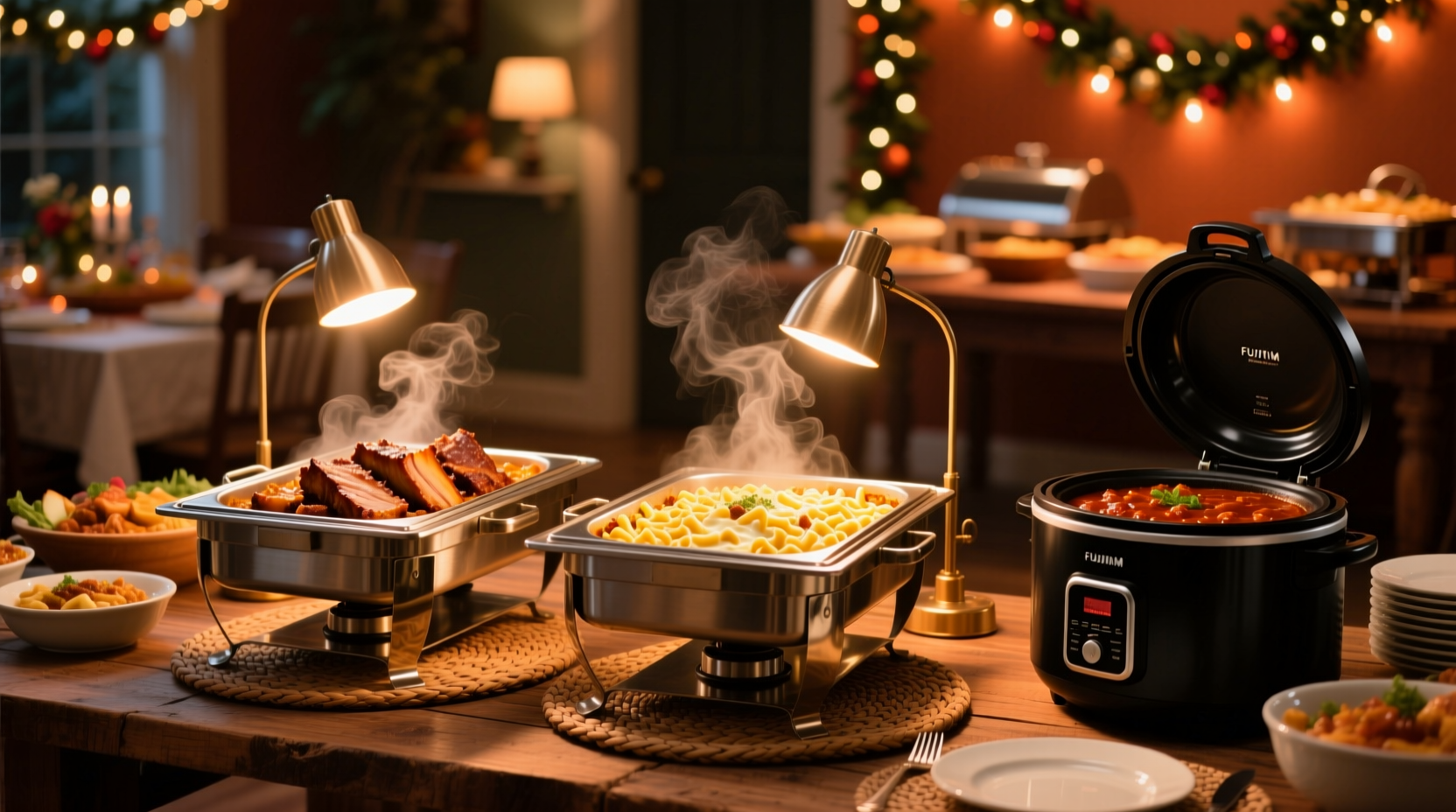
2. Slow Cooker & Chafing Dish System
Slow cookers maintain consistent temperatures with minimal monitoring. For buffet service, transfer food to chafing dishes with Sterno fuel cans underneath. This combination delivers:
- Even heat distribution without hot spots
- Visual presentation that encourages guest interaction
- Capacity for large quantities (ideal for 10+ guests)
When using slow cookers, keep the lid on except when serving to retain heat and moisture. For thicker dishes like stews, stir occasionally to prevent settling.
3. Insulated Carrier Techniques
For transporting dishes or outdoor events without power access, insulated carriers provide reliable warmth. Professional caterers use this three-step method:
- Preheat containers with boiling water (empty, for 5 minutes)
- Line with aluminum foil for radiant heat reflection
- Pack food tightly to minimize air space
Quality insulated carriers maintain safe temperatures for 2-4 hours depending on ambient conditions. This approach works best for dense foods like mashed potatoes, meatloaf, and grain dishes.
4. Outdoor Party Solutions
When hosting on patios or in yards, adapt these field-tested methods:
- Hot stone warming: Place preheated baking stones beneath serving platters
- DIY warming trays: Use disposable aluminum pans inside cardboard boxes lined with foil
- Grill warming: Maintain a cool zone on your grill for indirect warming
Outdoor temperatures significantly impact warming effectiveness. Below 60°F (15°C), add an extra heat source. Above 85°F (29°C), monitor more frequently as ambient heat affects temperature control.
Food-Specific Warming Considerations
Different foods require tailored approaches to maintain quality:
- Soups and sauces: Keep covered with minimal stirring to prevent evaporation
- Fried foods: Place on wire racks over warming trays to maintain crispness
- Delicate proteins: Use lower temperatures (140°F-150°F) to prevent overcooking
- Cheese-based dishes: Stir frequently to prevent separation
Avoid These Common Warming Mistakes
Even experienced hosts make these temperature control errors:
- The lukewarm trap: Setting warming devices too low (below 140°F)
- Overcrowding: Packing too many cold dishes into warming spaces
- Ignoring ambient conditions: Not adjusting for outdoor temperature swings
- Thermometer neglect: Guessing temperatures instead of verifying
Remember that food safety standards don't relax for parties. The FDA Food Code specifies that potentially hazardous foods shouldn't remain in the danger zone for more than 4 hours cumulative time, including preparation, service, and storage periods.
Timing Your Warming Strategy
Effective temperature management requires strategic timing:
- Start warming 30-60 minutes before guests arrive
- Replenish dishes from a hot holding source rather than warming cold food
- Discard food that's been in the danger zone for 4+ hours
- For extended events, implement a 2-hour refresh cycle for high-risk items




 浙公网安备
33010002000092号
浙公网安备
33010002000092号 浙B2-20120091-4