
Cooked chicken lasts 3-4 days in the refrigerator when stored properly at or below 40°F (4°C). This timeframe applies to roasted, grilled, or boiled chicken stored in airtight containers. Exceeding this window significantly increases foodborne illness risk from pathogens like salmonella and listeria.
Understanding exactly how long cooked chicken lasts in the fridge is crucial for both food safety and minimizing waste. As a professional chef who's handled thousands of pounds of poultry in both restaurant and home kitchen settings, I've seen how proper storage practices can make the difference between enjoying delicious leftovers and dealing with food poisoning.
Why the 3-4 Day Rule Exists
The USDA Food Safety and Inspection Service establishes the 3-4 day guideline based on extensive research into bacterial growth rates in cooked poultry. Even when refrigerated properly, cooked chicken provides an ideal environment for pathogens to multiply. The "danger zone" for food safety spans 40°F to 140°F (4°C to 60°C), where bacteria can double in number every 20 minutes.
When I worked in restaurant kitchens, we followed a strict "first in, first out" system for all cooked proteins. This professional practice directly translates to home kitchens—always label containers with preparation dates and consume oldest items first.
Maximizing Freshness: Storage Best Practices
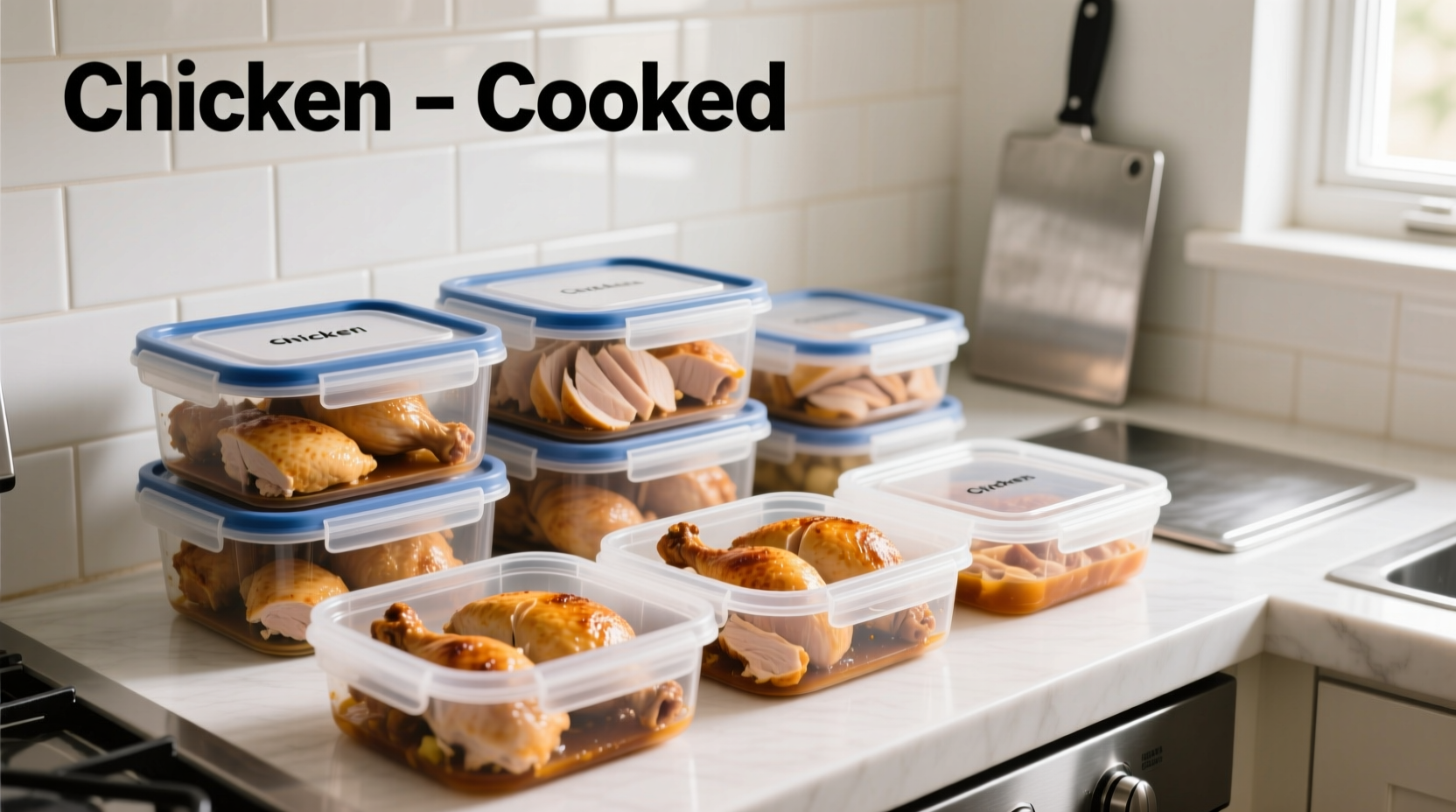
How you store cooked chicken dramatically impacts its actual shelf life. Follow these professional techniques to ensure your leftovers remain safe and delicious:
- Cool rapidly: Divide large portions into smaller containers to cool within 2 hours of cooking (1 hour if room temperature exceeds 90°F/32°C)
- Airtight containers: Use glass or BPA-free plastic containers with tight seals—never leave chicken uncovered
- Strategic placement: Store in the main compartment of your refrigerator, not the door where temperatures fluctuate
- Temperature verification: Keep your refrigerator at 35°-38°F (1.7°-3.3°C) using a standalone thermometer
Many home cooks don't realize that the shelf life of cooked chicken in the refrigerator can be shortened by improper cooling. Leaving a whole roasted chicken to cool on the counter before refrigerating creates a perfect breeding ground for bacteria in the dense meat.
Storage Methods Compared: Your Timeline Guide
| Storage Method | Temperature | Safe Duration | Best Practices |
|---|---|---|---|
| Refrigeration | ≤40°F (4°C) | 3-4 days | Store in airtight containers; place in main compartment |
| Freezing | 0°F (-18°C) | 2-6 months | Vacuum seal or use freezer bags; remove all air |
| Room Temperature | 40°-140°F (4°-60°C) | 2 hours max | Discard if left out longer than 2 hours (1 hour if >90°F) |
When Is Cooked Chicken No Longer Safe?
Knowing how to tell if cooked chicken has gone bad requires attention to multiple sensory indicators. Don't rely solely on smell—pathogens like listeria often don't produce noticeable odors. Check for these warning signs:
- Texture changes: Slimy or sticky surface (even after washing)
- Visual cues: Grayish-green discoloration or visible mold
- Odor: Sour, ammonia-like, or sulfur smells
- Taste test (not recommended): Sour or unpleasant flavor
During my time working in food safety training, I've emphasized that when in doubt, throw it out. The USDA explicitly states that cooked chicken showing any signs of spoilage should be discarded immediately.
Freezing Cooked Chicken: Extending Shelf Life
If you won't consume your cooked chicken within 3-4 days, freezing provides a safe alternative. The FDA confirms that frozen cooked chicken remains safe indefinitely, though quality degrades after 2-6 months.
For best results when freezing:
- Portion into meal-sized servings before freezing
- Use vacuum sealing or remove all air from freezer bags
- Label with contents and freezing date
- Thaw in refrigerator, not at room temperature
Professional kitchens often freeze cooked chicken in its cooking liquid or broth, which helps maintain moisture during storage. This technique works equally well in home settings.
Reheating Leftover Chicken Safely
Proper reheating is just as important as storage when dealing with leftover cooked chicken safety. The USDA requires that reheated chicken reach an internal temperature of 165°F (74°C) to eliminate potential pathogens.
Use these reheating methods for optimal results:
- Oven: 325°F with broth to prevent drying (15-20 minutes)
- Stovetop: Simmer in sauce or broth (5-10 minutes)
- Microwave: Cover with damp paper towel (2-3 minutes, stirring once)
Always verify temperature with a food thermometer—don't rely on visual cues alone. I've seen many home cooks make this mistake, thinking chicken is safe when it's still below the critical 165°F threshold.
Special Considerations for Different Chicken Preparations
The shelf life of cooked chicken in the fridge varies slightly based on preparation method and additional ingredients:
- Plain roasted/grilled chicken: 3-4 days (best case scenario)
- Chicken in sauce or gravy: 3-4 days (sauces can accelerate spoilage)
- Chicken salad or mixed dishes: 3-4 days (may spoil faster due to mayonnaise)
- Chicken soup or broth: 3-4 days (longer if highly acidic)
According to food safety experts at FoodSafety.gov, dishes containing dairy, eggs, or mayonnaise require extra vigilance as these ingredients spoil more quickly than the chicken itself.
Food Safety Timeline: What Happens Each Day
Understanding the evolution of bacterial growth in refrigerated chicken helps explain why the 3-4 day rule exists:
- Day 1: Optimal freshness and safety; minimal bacterial growth
- Day 2: Still excellent quality; bacteria begin multiplying slowly
- Day 3: Quality starts declining; bacterial counts approaching caution level
- Day 4: Final safe day; bacteria reach levels that may cause illness in sensitive individuals
- Day 5+: High risk of foodborne illness; discard immediately
This timeline assumes perfect refrigeration conditions. Temperature fluctuations, improper storage containers, or initial contamination can accelerate this process significantly.
Practical Leftover Strategies
Reduce waste while maintaining safety with these professional kitchen techniques:
- Batch cooking: Prepare multiple meals at once and freeze portions immediately
- Repurpose strategically: Transform day-old chicken into soups or casseroles (recooking to 165°F)
- Freeze in cooking liquid: Maintains moisture and flavor during storage
- Label everything: Include both preparation and expiration dates
When teaching home cooks, I emphasize that proper food storage isn't just about safety—it's about respecting your ingredients and your health. The proper storage duration for cooked chicken represents the intersection of science and culinary responsibility.




 浙公网安备
33010002000092号
浙公网安备
33010002000092号 浙B2-20120091-4