
Omega-6 fatty acids are essential polyunsaturated fats your body can't produce on its own. While crucial for brain function, skin health, and hormone production, modern diets often contain excessive omega-6 compared to omega-3—sometimes at ratios as high as 20:1 instead of the recommended 4:1. This imbalance may contribute to chronic inflammation. Understanding which foods contain significant omega-6 helps you make informed dietary choices.
Understanding Omega-6 Fatty Acids
Omega-6 fats primarily exist as linoleic acid (LA) and arachidonic acid (AA). Unlike saturated fats, these essential fatty acids support cell membrane integrity and serve as precursors to important signaling molecules. The National Institutes of Health emphasizes that while omega-6 is vital, excessive consumption without sufficient omega-3 can promote inflammatory responses.
| Food Source | Omega-6 Content (per 100g) | Primary Omega-6 Type |
|---|---|---|
| Soybean oil | 58g | Linoleic acid |
| Sunflower seeds | 34g | Linoleic acid |
| Walnuts | 34g | Linoleic acid |
| Corn oil | 49g | Linoleic acid |
| Sesame oil | 41g | Linoleic acid |
Top Plant-Based Omega-6 Sources
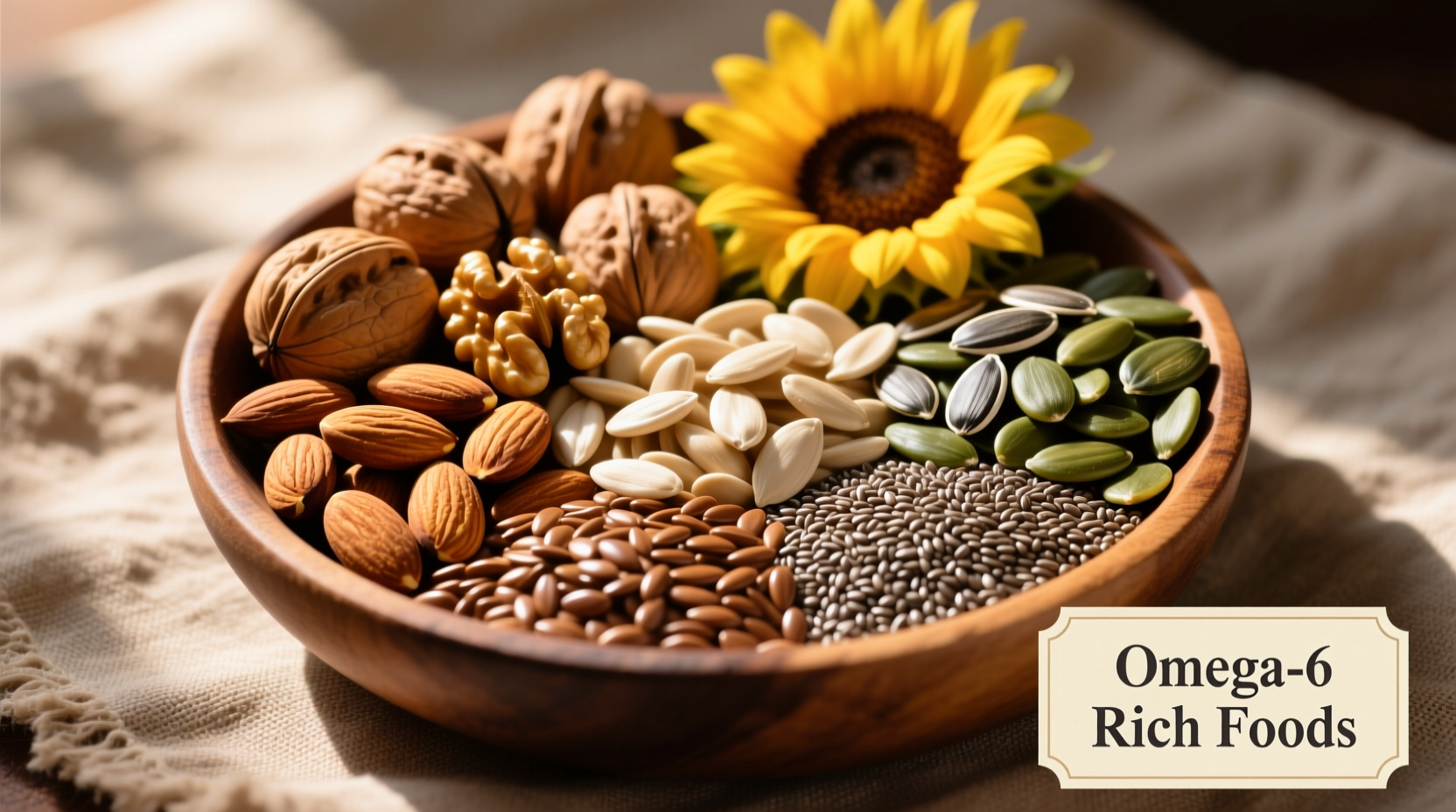
Vegetable oils dominate the omega-6 landscape in Western diets. According to USDA FoodData Central, soybean oil contains 58 grams of omega-6 per 100 grams, making it the most concentrated source. Sunflower seeds and walnuts follow closely with approximately 34 grams each. These whole food sources also provide vitamin E and other beneficial compounds unlike refined oils.
Processed foods represent a significant but often overlooked source of omega-6. A single serving of commercially fried french fries can contain 10-15 grams of omega-6 from the cooking oil. The American Heart Association notes that while these foods provide essential fats, their high omega-6 to omega-3 ratio requires conscious balancing with omega-3 rich foods like fatty fish and flaxseeds.
Animal Sources and Processed Foods
Eggs and poultry contain moderate omega-6 levels (about 2g per 100g), primarily as arachidonic acid. Conventionally raised animals have higher omega-6 content than pasture-raised counterparts due to grain-based feed. Processed snacks like crackers and cookies often use omega-6 rich oils for texture and shelf stability—check ingredient labels for soybean, corn, or sunflower oil.
The National Library of Medicine reports that between 1960 and 2020, omega-6 consumption in the United States increased by approximately 250% due to industrial food production practices. This dramatic shift occurred as food manufacturers replaced animal fats with cheaper vegetable oils.
Practical Dietary Guidance
Maintaining a healthy omega-6 to omega-3 ratio requires strategic choices. Registered dietitians recommend these evidence-based approaches:
- Replace soybean or corn oil with olive oil (which has a more balanced 12:1 omega-6 to omega-3 ratio) for everyday cooking
- Choose pasture-raised eggs and meats when possible—they contain better fatty acid profiles
- Read labels carefully on packaged foods to identify hidden omega-6 sources
- Pair omega-6 rich foods with omega-3 sources in the same meal (e.g., walnuts with salmon)
- Limit consumption of commercially fried foods and processed snacks
For those following vegetarian or vegan diets, achieving balance requires particular attention. Chia seeds and hemp seeds provide omega-6 but with more favorable ratios to omega-3 than many other plant sources. The Academy of Nutrition and Dietetics suggests consuming these alongside algae-based omega-3 supplements for optimal balance.
When Omega-6 Becomes Problematic
While essential in proper amounts, excessive omega-6 intake relative to omega-3 may contribute to chronic inflammation. Research published in the journal Nutrients indicates that populations maintaining ratios below 4:1 show reduced markers of inflammation. The key isn't eliminating omega-6 foods but creating dietary harmony through intentional food combinations and mindful oil selection.
Individuals with inflammatory conditions like rheumatoid arthritis may benefit from temporarily reducing high omega-6 foods while increasing omega-3 intake. Always consult with a healthcare provider before making significant dietary changes for medical conditions.
Building Balanced Meals
Create meals that naturally balance these essential fats. Try these combinations:
- Salad with mixed greens, walnuts, avocado, and olive oil dressing
- Grilled salmon with roasted Brussels sprouts cooked in avocado oil
- Chia pudding made with flax milk topped with sunflower seeds
These combinations provide essential fats in ratios closer to what human physiology evolved with, supporting optimal cellular function without promoting excessive inflammation.
Frequently Asked Questions
Is omega-6 bad for you?
Omega-6 isn't inherently bad—it's essential for health. Problems arise when consumed in excessive amounts relative to omega-3 fats. The ideal ratio ranges from 1:1 to 4:1 (omega-6 to omega-3). Modern Western diets often reach 15:1 or higher, which may promote inflammation. Consuming omega-6 from whole food sources like nuts and seeds within a balanced diet provides significant health benefits.
How can I reduce omega-6 in my diet?
Reduce omega-6 by replacing common cooking oils like soybean, corn, and sunflower oil with olive oil, avocado oil, or coconut oil. Limit processed and fried foods which typically use omega-6 rich oils. Choose pasture-raised animal products when possible, as they contain better fatty acid profiles. Read ingredient labels carefully—omega-6 rich oils hide in many packaged foods from crackers to salad dressings.
What's the difference between omega-6 and omega-3?
Both are essential fatty acids but serve different functions. Omega-6 fats (like linoleic acid) primarily support skin health, hair growth, and metabolism. Omega-3 fats (like EPA and DHA) reduce inflammation and support brain health. The key difference lies in their metabolic pathways—omega-6 tends to promote inflammatory responses while omega-3 reduces them. Maintaining proper balance between these competing pathways is crucial for health.
Which nuts are highest in omega-6?
Walnuts contain the highest omega-6 content among common nuts at approximately 34g per 100g, followed by pecans (20g) and Brazil nuts (18g). While these provide valuable nutrients, those seeking to reduce omega-6 intake might prefer macadamia nuts (1.5g) or hazelnuts (6g) which have more favorable omega-6 to omega-3 ratios. Remember that whole nuts also provide fiber, protein, and other beneficial compounds that mitigate potential concerns about their omega-6 content.




 浙公网安备
33010002000092号
浙公网安备
33010002000092号 浙B2-20120091-4