
Nothing ruins a meal faster than dry, stringy chicken. As a chef who's worked in Michelin-starred kitchens and taught thousands of home cooks, I've perfected the exact techniques that guarantee juicy results—no special equipment required. Forget guesswork; these methods work whether you're pan-searing, roasting, or grilling.
Why Chicken Turns Dry (And How to Prevent It)
Chicken dries out when protein fibers contract too aggressively during cooking, squeezing out precious moisture. According to food science research from USDA's National Institute of Food and Agriculture, chicken breast loses 20-30% of its moisture when cooked beyond 160°F. The critical threshold? Protein denaturation begins at 140°F and accelerates rapidly above 150°F.
| Chicken Cut | Perfect Temperature | Texture Result |
|---|---|---|
| Chicken Breast | 155-160°F | Juicy, slightly springy |
| Thighs/Drumsticks | 165°F | Tender, no pink juices |
| Whole Chicken | 160°F breast/170°F thigh | Perfectly balanced |
This temperature precision matters because carryover cooking will raise internal temperature 5-10°F after removal from heat. Pull chicken off the heat 5°F below target temperature for optimal results.
Preparation Techniques That Lock In Moisture
Brining: The Game-Changer
Brining isn't just for holidays. A simple 30-minute soak in 4 cups water with 1/4 cup salt creates osmotic pressure that helps chicken retain 15-20% more moisture during cooking. For even better results, add 2 tablespoons sugar and your favorite herbs to the brine solution. Dry brining (rubbing salt directly on chicken and refrigerating uncovered for 1-4 hours) works equally well by drawing out moisture that then reabsorbs seasoned liquid.
Temperature Equilibrium
Never cook chicken straight from the refrigerator. Let it sit at room temperature for 20-30 minutes before cooking. This simple step ensures even cooking—cold centers won't overcook while waiting for outer portions to reach temperature. Food safety experts at USDA Food Safety and Inspection Service confirm this brief window is safe for properly stored poultry.
Cooking Methods That Deliver Juicy Results
Pan-Searing Perfection
For restaurant-quality chicken breasts:
- Pat chicken completely dry with paper towels
- Heat oil in skillet until shimmering (375°F)
- Sear undisturbed for 5-7 minutes until golden
- Flip and finish in 350°F oven for 8-10 minutes
- Remove at 155°F internal temperature
The oven finish prevents over-browning while ensuring thorough cooking. This two-stage method, recommended by the Culinary Institute of America, maintains optimal moisture retention.
Resting: The Non-Negotiable Step
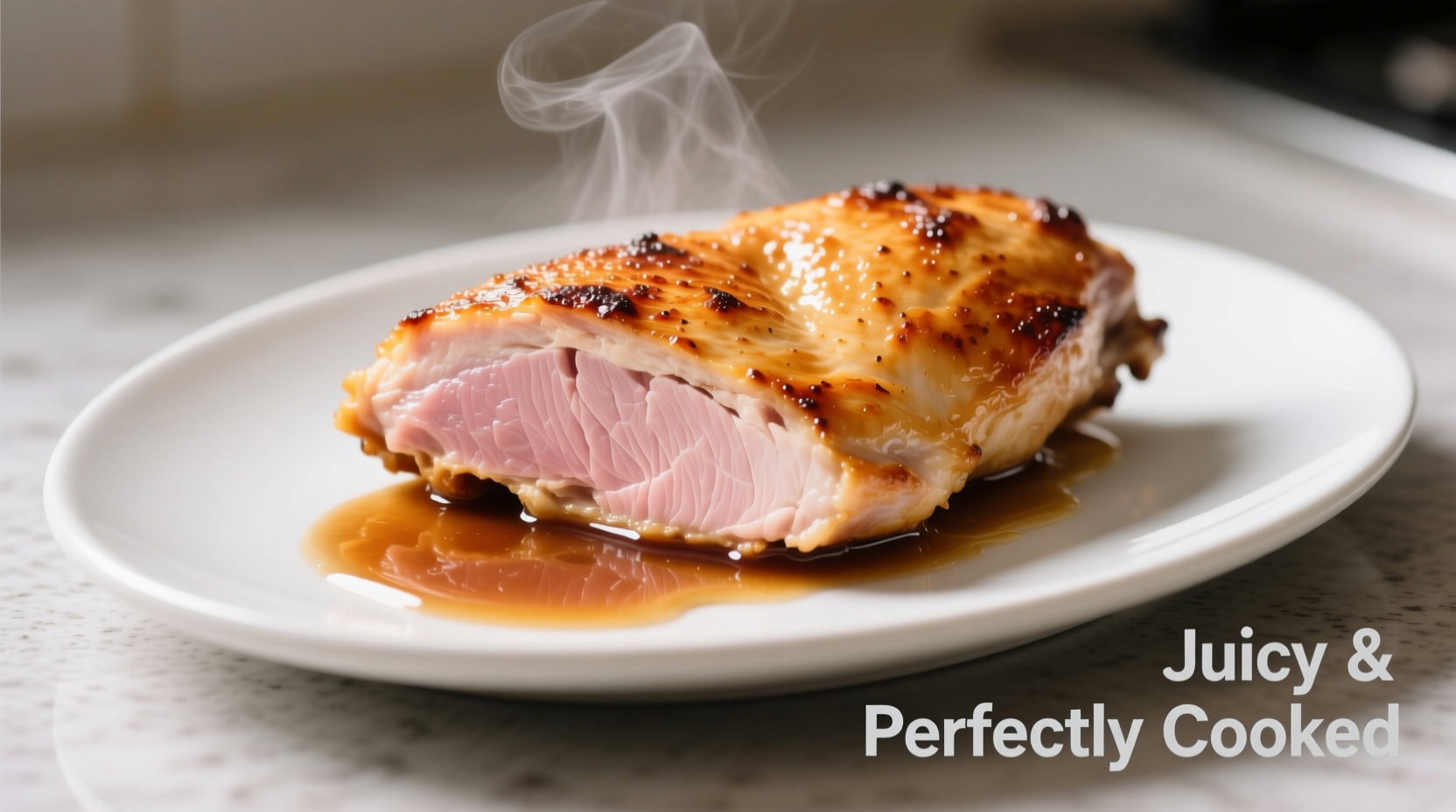
Resting isn't optional—it's essential science. During the 5-10 minute rest period, residual heat continues cooking the chicken while proteins relax, redistributing juices throughout the meat. Cutting too soon releases all those precious juices onto your cutting board. For whole chickens, extend resting to 15-20 minutes.
Troubleshooting Common Moisture Problems
"My Chicken Breast Is Still Dry!"
If you're still struggling with dry chicken, check these culprits:
- Overcooking by just 5°F: Use an instant-read thermometer—visual cues alone aren't reliable
- Inconsistent thickness: Pound breasts to even ¾-inch thickness before cooking
- Rushing the rest period: Set a timer—those 5 minutes make all the difference
Rescuing Slightly Dry Chicken
Even professionals occasionally overshoot temperatures. If your chicken lands at 165°F+, try these fixes:
- Brush with warm chicken stock or pan sauce before serving
- Slice against the grain at a 45-degree angle to shorten tough fibers
- Top with compound butter that melts into the meat
Advanced Moisture-Boosting Techniques
Butter Basting for Flavor Infusion
During the final 3 minutes of cooking, spoon melted butter continuously over the chicken. This technique, used in classic French cuisine, creates a protective layer while infusing flavor. Add garlic, thyme, and lemon slices to the butter for extra dimension.
Vacuum-Seal Cooking (Without the Machine)
Don't own a sous vide machine? Create a makeshift version by placing seasoned chicken in a zip-top bag with olive oil, removing air by submerging (water displacement method), then cooking in a 145°F water bath for 1-1.5 hours. This precise temperature control delivers unparalleled juiciness.
Storing and Reheating Without Drying Out
Proper storage maintains moisture for leftovers:
- Store in shallow containers to cool rapidly (within 2 hours)
- Place parchment paper directly on chicken surface before sealing
- Add 2 tablespoons broth when reheating
For best reheating results, use a low oven (275°F) until internal temperature reaches 130°F, or microwave at 50% power with a damp paper towel cover.
Frequently Asked Questions
How long should I brine chicken for optimal moisture?
For best results, brine chicken breasts for 30-60 minutes in a solution of 4 cups water and ¼ cup salt. Longer brining (up to 4 hours) works for whole chickens but can make smaller cuts too salty. Dry brining (rubbing with salt and refrigerating uncovered) for 1-4 hours yields similar moisture retention with better browning.
Why does my baked chicken breast always turn out dry?
Baked chicken breasts dry out when cooked at too high a temperature or for too long. Bake at 375-400°F (not higher), and remove at 155°F internal temperature—carryover cooking will bring it to 160°F. For even cooking, pound breasts to uniform ¾-inch thickness and consider cooking breast-side down for the first half of baking time.
Does pounding chicken breast make it more moist?
Yes, pounding chicken to even thickness prevents overcooking. Thick portions require longer cooking, causing thin areas to dry out. A uniform ¾-inch thickness ensures even heat distribution. Use a meat mallet or heavy skillet between plastic wrap, starting from the center and working outward to maintain structure.
How do I know when chicken is properly rested?
Chicken is properly rested when the internal temperature drops 5-10°F from its peak cooking temperature. For breasts, this takes 5-7 minutes; whole chickens need 15-20 minutes. The meat should feel slightly springy when pressed, and cutting into it should release clear (not pink) juices without excessive pooling.




 浙公网安备
33010002000092号
浙公网安备
33010002000092号 浙B2-20120091-4