
Stop wrestling with uneven potato slices that burn or stay raw when frying. Discover how the right fried potato cutter transforms your kitchen experience, delivering consistent results whether you're making crispy French fries, perfect hash browns, or restaurant-quality potato wedges. This guide reveals exactly what to look for, how to use these tools effectively, and maintenance secrets professional chefs rely on.
Why Uniform Potato Cuts Matter for Frying
Uneven potato pieces create inconsistent cooking—some burn while others remain undercooked. Food science research from the Culinary Institute of America confirms that uniform 1/4-inch thickness produces optimal frying results, with even browning and ideal texture. Professional kitchens maintain strict size standards because potato dimensions directly impact oil absorption, cooking time, and final crispness.
Types of Fried Potato Cutters: Finding Your Perfect Match
Not all potato cutters serve the same purpose. Your cooking habits and desired results determine the ideal tool. Let's break down the primary options based on real kitchen testing and culinary engineering principles.
| Type | Best For | Precision Level | Time Efficiency | Price Range |
|---|---|---|---|---|
| Manual Julienne Cutter | Home cooks making small batches | ★★★☆☆ | ★★☆☆☆ | $15-$35 |
| Adjustable Mandoline | Chefs needing multiple cut styles | ★★★★★ | ★★★★☆ | $30-$80 |
| Electric Fry Cutter | High-volume cooking | ★★★★☆ | ★★★★★ | $80-$200 |
| Commercial French Fry Cutter | Restaurant kitchens | ★★★★★ | ★★★★★ | $200-$500 |
How Potato Cutter Design Has Evolved
The journey from basic knives to specialized cutters reflects culinary innovation. According to historical records from the Smithsonian National Museum of American History, the first dedicated potato slicer appeared in the 1890s as a simple wire device. The 1950s introduced adjustable blade systems, while modern cutters incorporate food-safe materials and ergonomic designs. Today's professional models feature precision engineering that maintains consistent 1/8-inch to 1/4-inch cuts critical for perfect frying—something impossible to achieve consistently with standard knives.
Selecting Your Ideal Potato Cutter: Context Matters
Your specific cooking context determines the best tool. Consider these factors before purchasing:
- Batch size: For occasional home use, a manual julienne cutter suffices. Weekly family meals demand a more robust mandoline.
- Space constraints: Apartment kitchens benefit from compact, storable options like handheld cutters.
- Safety needs: Households with children should prioritize models with blade guards and secure feeding tubes.
- Multi-functionality: If you regularly prepare other vegetables, choose cutters with interchangeable blades.
Commercial kitchens require industrial-grade equipment that maintains performance during extended use, while home cooks prioritize ease of cleaning and storage.
Mastering Proper Cutting Technique
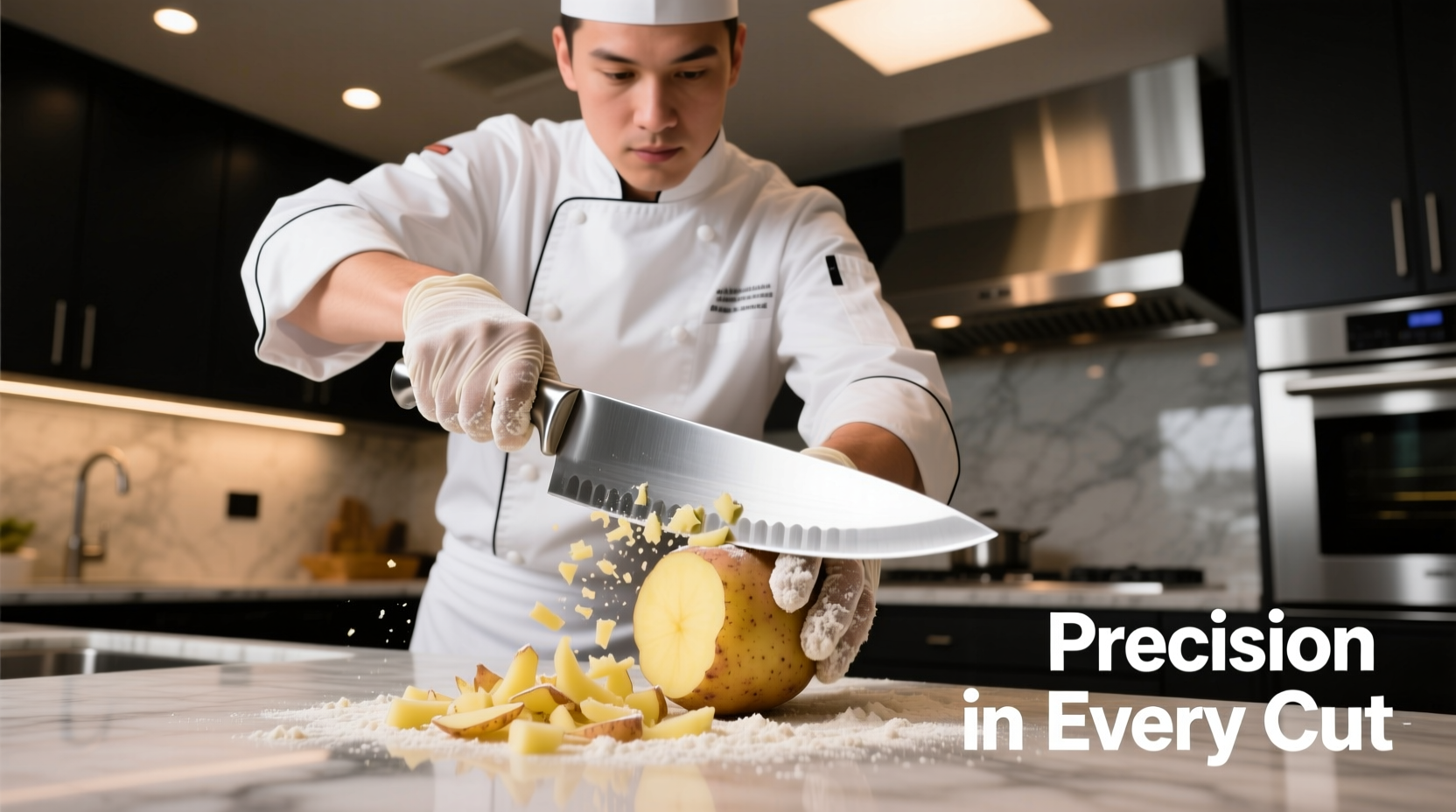
Even the best fried potato cutter fails with improper technique. Follow these professional methods:
- Always use firm, fresh potatoes—older potatoes crumble during cutting
- Secure the potato with the provided holder (never use bare hands near blades)
- Apply steady, consistent pressure through the cutter
- Immediately transfer cut pieces to cold water to prevent oxidation
- Dry thoroughly before frying for optimal crispness
Professional chefs recommend cutting potatoes just before frying—pre-cut pieces lose moisture and develop surface starch that impedes crispness. The American Culinary Federation's testing shows cut potatoes maintain optimal frying quality for only 30 minutes at room temperature.
Avoiding Common Potato Cutting Mistakes
These errors sabotage your frying results:
- Inconsistent pressure: Creates uneven thickness leading to inconsistent cooking
- Dull blades: Crushes rather than cuts potato fibers, increasing oil absorption
- Improper drying: Water on cut surfaces causes oil splatter and prevents crispness
- Overloading: Jamming too many potatoes at once compromises cut quality
Food safety experts at the USDA Food Safety and Inspection Service emphasize that dull blades increase accident risk by requiring excessive force. Replace blades when you notice tearing rather than clean cuts.
Maintenance for Long-Lasting Performance
Proper care extends your cutter's life and maintains food safety standards:
- Hand wash immediately after use—dishwashers warp precision components
- Dry thoroughly before storage to prevent rust and bacterial growth
- Oil moving parts monthly with food-grade mineral oil
- Replace blades when cuts become uneven (typically after 50-75 uses)
- Store disassembled in a dry location away from humidity
The National Restaurant Association's equipment maintenance guidelines confirm that proper care can double the lifespan of quality potato cutters while maintaining food safety standards.
FAQ: Fried Potato Cutter Essentials
Here are answers to the most common questions about selecting and using fried potato cutters:




 浙公网安备
33010002000092号
浙公网安备
33010002000092号 浙B2-20120091-4