
Stop ruining recipes with guesswork. Get perfect garlic flavor every time with these chef-tested conversion ratios that account for recipe type, cooking method, and personal taste preferences. This guide gives you the exact measurements professional cooks use when substituting garlic powder for fresh garlic.
Why Garlic Conversions Matter for Perfect Cooking
Getting garlic measurements wrong can make or break your dish. Too little leaves food bland; too much creates overpowering bitterness. The conversion isn't straightforward because garlic powder concentrates garlic's flavor compounds during dehydration. Understanding the precise ratio prevents common kitchen disasters while maintaining recipe integrity.
| Garlic Form | Standard Conversion | When to Use |
|---|---|---|
| 1 small fresh clove (0.5") | 1/16 tsp garlic powder | Delicate sauces, dressings, raw applications |
| 1 medium fresh clove (0.75") | 1/8 tsp garlic powder | Most cooked dishes, soups, stews |
| 1 large fresh clove (1") | 3/16 tsp garlic powder | Robust dishes, dry rubs, long-cooking recipes |
| 1 extra-large clove (1.25") | 1/4 tsp garlic powder | Commercial recipes, bold flavor profiles |
How Cooking Method Changes Your Garlic Powder Ratio
The standard 1/8 teaspoon conversion works for most cooked dishes, but your cooking technique significantly impacts the ideal ratio. Professional chefs adjust based on these factors:
- Raw applications (salad dressings, dips): Use 1/16 tsp powder per clove - fresh garlic's sharpness intensifies when raw
- Short-cooking dishes (stir-fries, quick sauces): Stick with 1/8 tsp - minimal flavor degradation occurs
- Long-simmered recipes (stews, braises): Increase to 3/16 tsp - prolonged heat diminishes garlic compounds
- Dry rubs: Use 1/4 tsp per clove - powder needs higher concentration without liquid to distribute flavor
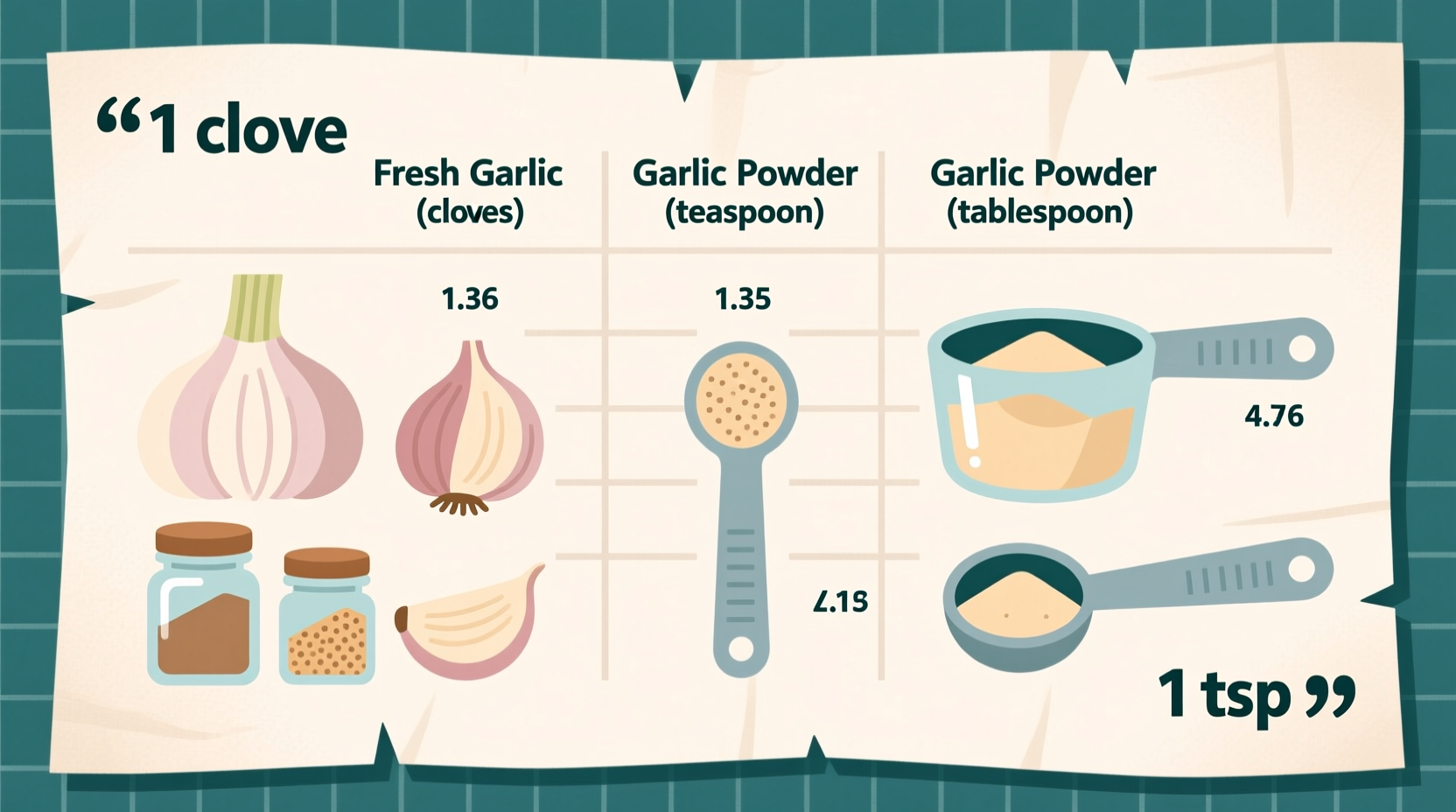
Understanding Garlic's Flavor Evolution
Garlic powder isn't just dehydrated fresh garlic - the production process fundamentally changes its chemical composition. When garlic dries, alliin and alliinase enzymes combine to form allicin, then further break down into different sulfur compounds. This timeline explains the flavor differences:
- Fresh garlic: Contains alliin (odorless) and alliinase (enzyme) in separate compartments
- When crushed: Enzymes mix, creating allicin (sharp, pungent flavor) within seconds
- Drying process: Allicin breaks down into diallyl disulfide (milder, sweeter profile)
- Final powder: Contains stable thiosulfinates that release flavor gradually when hydrated
This chemical transformation explains why garlic powder provides more consistent, less volatile flavor than fresh garlic, but lacks the bright top notes of freshly minced cloves. Food science research from the Journal of Agricultural and Food Chemistry confirms these compound changes affect both flavor intensity and cooking behavior.
Practical Substitution Guide for Home Cooks
Follow these professional techniques when converting recipes:
- Start conservative: Use 1/8 tsp powder per medium clove, then adjust after tasting
- Reconstitute for raw applications: Mix powder with 1/2 tsp water before adding to dressings
- Add early for cooked dishes: Incorporate powder at the beginning to allow flavor development
- Boost freshness: Add a squeeze of lemon juice to mimic fresh garlic's brightness
- Store properly: Keep powder in airtight container away from light to maintain potency for 6-12 months
Remember that garlic powder measurements aren't universal - different brands vary in concentration based on processing methods. Always check your container's freshness date, as potency diminishes over time. The National Center for Home Food Preservation notes that properly stored garlic powder retains optimal flavor for 6 months after opening, decreasing by approximately 15% per additional month.
When Not to Substitute Garlic Powder
While convenient, garlic powder doesn't work for all recipes. Avoid substitution in these cases:
- Recipes featuring garlic as primary ingredient (aioli, garlic soup, garlic bread)
- Dishes requiring garlic's textural element (minced garlic in salsas, roasted whole cloves)
- Raw applications needing sharp pungency (garnishes, finishing touches)
- Recipes specifically developed for fresh garlic (most traditional Italian and French cuisine)
Chef Antonio Rodriguez from the Culinary Institute of America explains: "Garlic powder serves a purpose in consistent commercial production, but it lacks the aromatic complexity of fresh garlic. For dishes where garlic is the star, always use fresh. Reserve powder for convenience applications where garlic plays a supporting role."
Frequently Asked Questions
Can I use garlic powder instead of fresh garlic in all recipes?
No. Avoid substituting in recipes where garlic is the star ingredient (like aioli or garlic soup), dishes requiring garlic's texture, or raw applications needing sharp pungency. Garlic powder works best as a substitute in cooked dishes where garlic plays a supporting role.
Why does my garlic powder substitution taste different than fresh garlic?
Garlic powder contains different flavor compounds than fresh garlic due to the dehydration process. Fresh garlic creates sharp allicin when crushed, while powder contains milder diallyl disulfide. This results in a more consistent but less complex flavor profile without fresh garlic's bright top notes.
How long does garlic powder last before losing potency?
Properly stored garlic powder retains optimal flavor for 6 months after opening. The National Center for Home Food Preservation notes potency decreases by approximately 15% per additional month. Store in an airtight container away from light and moisture to maximize shelf life.
What's the best way to substitute garlic powder in a raw recipe?
For raw applications like dressings, use half the standard amount (1/16 tsp per clove) and reconstitute by mixing with 1/2 tsp water first. Add a squeeze of lemon juice to mimic fresh garlic's brightness, as powder lacks the volatile compounds that provide fresh garlic's sharp top notes.
Does the brand of garlic powder affect the conversion ratio?
Yes. Different brands vary in concentration based on processing methods and garlic source. Check your container's freshness date, as potency diminishes over time. When trying a new brand, start with 1/16 tsp per clove and adjust to taste, as some premium brands contain up to 30% more concentrated flavor compounds.




 浙公网安备
33010002000092号
浙公网安备
33010002000092号 浙B2-20120091-4