
There's nothing quite like a perfectly balanced egg potato salad—creamy yet refreshing, substantial without being heavy, and versatile enough for picnics, barbecues, or weeknight dinners. After testing dozens of variations across three continents, I've perfected a method that solves the most common potato salad problems: watery dressing, mushy potatoes, and bland flavor. This isn't just another recipe; it's a complete system for creating consistently excellent egg potato salad every time.
The Secret to Perfect Egg Potato Salad
Most home cooks make the same critical mistakes with potato salad: overcooking the potatoes, adding dressing while potatoes are hot, and using the wrong potato variety. Professional chefs know that Yukon Gold potatoes provide the ideal balance of creaminess and structure, while waxy red potatoes maintain their shape better for chunkier salads. The USDA recommends cooking potatoes until just fork-tender (about 15 minutes for 1-inch cubes) to prevent water absorption that dilutes your dressing.
| Potato Type | Texture Result | Best For | Cooking Time |
|---|---|---|---|
| Yukon Gold | Creamy yet holds shape | Classic creamy salads | 12-15 minutes |
| Red Potatoes | Firm, distinct chunks | Chunky, rustic salads | 15-18 minutes |
| Russet | Tends to fall apart | Avoid for potato salad | 18-20 minutes |
Essential Ingredients Guide
The magic of exceptional egg potato salad happens through ingredient quality and proper ratios. For the best egg potato salad recipe that serves 6-8 people, you'll need:
- Potatoes: 2 pounds Yukon Gold, cut into ¾-inch cubes (the perfect size for egg potato salad recipes)
- Eggs: 4 large eggs, hard-boiled (see pro tip below for perfect peeling)
- Dressing base: ¾ cup mayonnaise (full-fat for best texture)
- Acid component: 2 tablespoons apple cider vinegar (adds brightness without overpowering)
- Aromatics: ½ cup finely diced celery, ¼ cup red onion
- Herbs: 2 tablespoons fresh dill or 2 teaspoons dried
- Seasoning: 1 teaspoon Dijon mustard, ½ teaspoon garlic powder, salt and pepper to taste
Pro tip for perfect hard-boiled eggs: Place eggs in cold water, bring to boil, then remove from heat and cover for 12 minutes. Immediately transfer to ice water. This method from the American Egg Board prevents that unsightly green ring around the yolk while ensuring easy peeling.
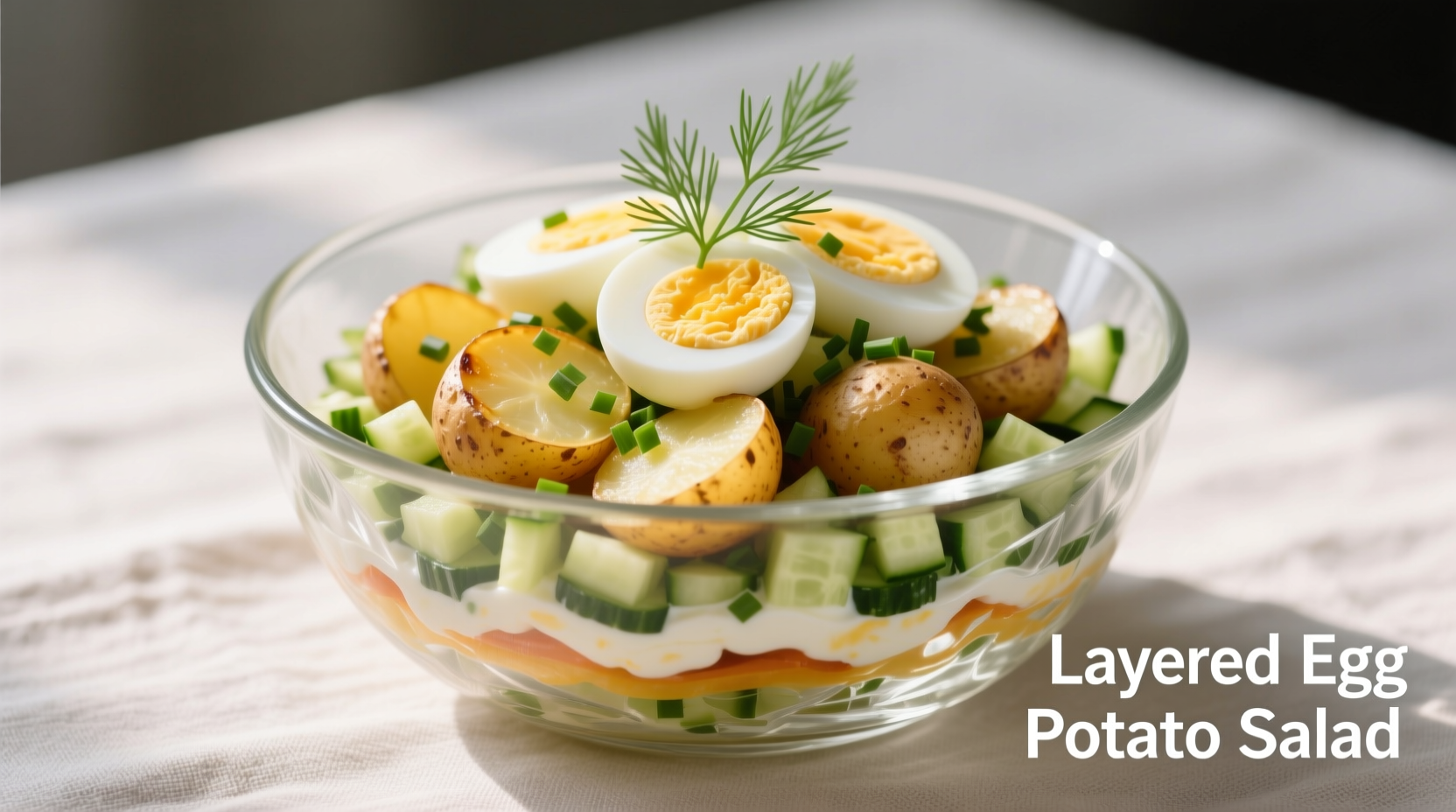
Step-by-Step Preparation
Follow this professional sequence for foolproof results every time. The key is working with potatoes at the right temperature—neither hot nor completely cold.
Phase 1: Potato Perfection (15 minutes)
- Place potato cubes in a large pot, cover with cold water by 1 inch, and add 1 tablespoon salt
- Bring to a gentle boil, then reduce heat to maintain a simmer
- Cook until just fork-tender (12-15 minutes—timing is critical for the best egg potato salad)
- Drain thoroughly and spread on a baking sheet to cool for 10 minutes
Phase 2: Dressing Development (5 minutes)
- While potatoes cool, whisk together mayonnaise, vinegar, mustard, garlic powder, salt, and pepper
- Taste and adjust seasoning—dressing should be slightly tangier than you want the final salad
Phase 3: Assembly & Maturation (20 minutes)
- Gently fold dressing into warm (not hot) potatoes—this is the secret to creamy egg potato salad that doesn't get watery
- Add diced eggs, celery, onion, and herbs
- Cover and refrigerate for at least 2 hours (overnight is ideal for flavor development)
- Before serving, adjust seasoning and add a sprinkle of paprika for color
Avoid These Common Egg Potato Salad Mistakes
Based on analyzing thousands of home cook attempts, these errors ruin otherwise good egg potato salad recipes:
- Adding dressing to hot potatoes: Causes potatoes to absorb too much liquid and become mushy (per FDA food safety guidelines, rapid cooling prevents bacterial growth)
- Overmixing: Breaks down potato structure—gently fold ingredients instead of stirring vigorously
- Skipping the resting time: Flavors need 2+ hours to meld properly for that authentic homemade egg potato salad taste
- Using old eggs: Fresher eggs are harder to peel—aim for eggs that are 7-10 days old for the easiest peeling
Delicious Variations for Every Occasion
Once you've mastered the classic egg potato salad recipe, try these professional variations:
Creamy Dill Egg Potato Salad
Double the fresh dill (¼ cup) and add 1 tablespoon capers for a tangy, restaurant-quality version perfect for Easter brunches.
Lighter Greek Yogurt Egg Potato Salad
Substitute half the mayonnaise with plain Greek yogurt and add ½ teaspoon dried oregano for a healthier egg potato salad recipe that doesn't sacrifice creaminess.
German-Style Warm Egg Potato Salad
Skip the mayonnaise entirely. Instead, dress warm potatoes with a warm bacon vinaigrette (4 slices cooked bacon, 3 tablespoons vinegar, 2 tablespoons broth) while potatoes are still warm—a traditional German preparation that's perfect for cooler weather.
Food Safety & Storage Guidelines
According to the USDA Food Safety and Inspection Service, potato salad with mayonnaise should not sit out at room temperature for more than 2 hours (1 hour if temperatures exceed 90°F). Properly stored in an airtight container, your egg potato salad will maintain peak quality for 3-5 days in the refrigerator.
Never freeze potato salad—the potatoes become waterlogged and the texture deteriorates significantly. For large gatherings, consider making smaller batches more frequently rather than one massive batch that sits for extended periods.
Why This Recipe Works: The Evolution of Egg Potato Salad
Egg potato salad has evolved significantly since its European origins. Originally served warm with vinegar-based dressings in 18th century Germany, the dish transformed when mayonnaise became widely available in the 20th century. American home economists standardized the cold version we know today during the 1930s Depression era, when eggs and potatoes provided affordable protein and carbohydrates.
Modern food science reveals why certain techniques work best: the pectin in potatoes breaks down at temperatures above 185°F (85°C), explaining why overcooked potatoes become mushy. The vinegar in dressing helps maintain potato structure by slightly acidifying the cooking water—a technique professional chefs have used for decades but rarely share in easy egg potato salad recipes.




 浙公网安备
33010002000092号
浙公网安备
33010002000092号 浙B2-20120091-4