
What Exactly Is Taiwan Spinach? Setting the Record Straight
Despite its misleading name, “Taiwan spinach” has no botanical connection to Taiwan. This common market label typically refers to Malabar spinach (Basella alba), a leafy vine native to tropical regions of India and Southeast Asia. The misnomer likely originated from Taiwan’s role as a major exporter of Asian vegetables to Western markets during the late 20th century.
Food historians at the University of California’s Agricultural Extension confirm this naming confusion stems from international supply chain practices rather than botanical accuracy. “Produce labels often reflect shipping origins rather than true botanical origins,” explains Dr. Lin Mei of the UC Davis Plant Sciences Department in their research on vegetable nomenclature.
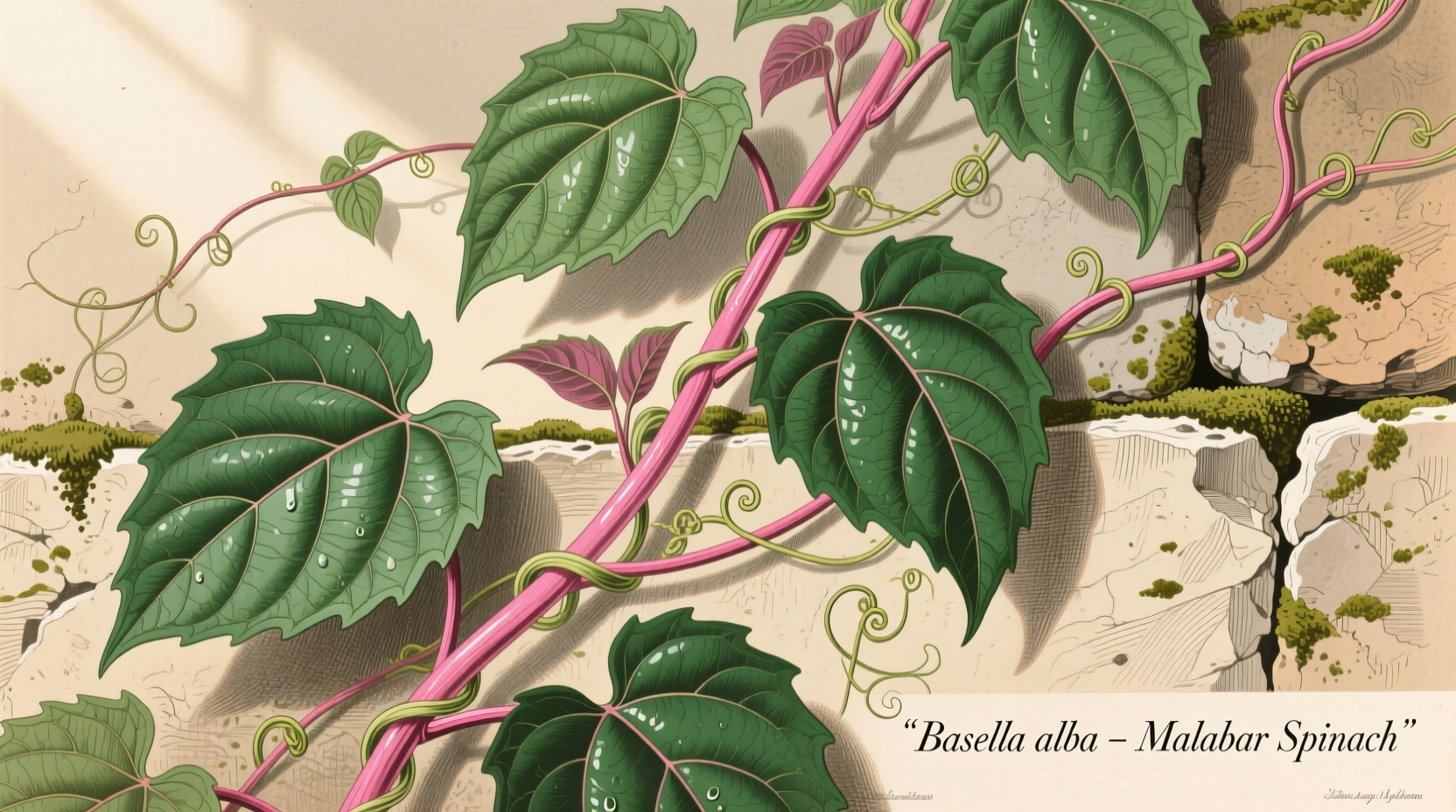
Botanical Profile: Identifying the Real Taiwan Spinach
Malabar spinach (Basella alba) belongs to the Basellaceae family, completely unrelated to true spinach (Spinacia oleracea in the Amaranthaceae family). Here’s how to identify it:
- Leaves: Thick, glossy, heart-shaped leaves up to 4 inches long
- Stems: Fleshy, often with pink or red coloring
- Growth habit: Fast-growing climbing vine requiring support
- Flavor: Mild, slightly peppery taste when raw; mucilaginous texture when cooked
| Characteristic | Malabar “Taiwan” Spinach | True Spinach |
|---|---|---|
| Botanical Family | Basellaceae | Amaranthaceae |
| Native Region | India & Southeast Asia | Central Asia |
| Heat Tolerance | Thrives in 80-100°F (27-38°C) | Bolts above 75°F (24°C) |
| Texture When Cooked | Mucilaginous (slightly slimy) | Softens without sliminess |
Why the Taiwan Misnomer? A Naming Timeline
The “Taiwan spinach” label emerged through a confluence of agricultural trade developments:
- 1970s-1980s: Taiwan becomes major exporter of Asian vegetables to North America and Europe
- 1990s: Western supermarkets begin labeling diverse Asian greens with country names for marketing
- Early 2000s: Malabar spinach, shipped through Taiwanese distributors, acquires “Taiwan spinach” label
- Present: Misnomer persists despite Taiwan’s reduced role in vegetable exports
This naming pattern mirrors other produce mislabeling documented by the USDA’s Agricultural Marketing Service, where shipping origins often override botanical accuracy in consumer markets.
Culinary Applications: How to Use Malabar Spinach
Malabar spinach shines in warm-weather cooking where traditional spinach would wilt. Professional chefs appreciate its unique properties:
Best Cooking Methods
- Stir-frying: Retains texture better than true spinach; pairs well with garlic and chili
- Smoothies: Adds thickness without strong flavor (use raw)
- Curries and stews: The mucilage acts as natural thickener
- Steaming: Best for preserving nutrients while reducing sliminess
Regional Dishes Featuring Malabar Spinach
- Philippines: Alitaw – steamed with coconut milk
- India: Pui saag – cooked with mustard seeds and turmeric
- Thailand: Phak khom – added to spicy salads
- Nigeria: Ugwu soup – stewed with palm oil and fish
Nutritional Comparison: Malabar vs. True Spinach
While both are nutrient-dense greens, Malabar spinach offers distinct advantages in certain nutrients according to USDA FoodData Central analysis:
- Vitamin A: Contains 314% more beta-carotene per 100g than true spinach
- Calcium: Provides 30% more bioavailable calcium due to lower oxalate content
- Iron: Contains comparable iron but with higher vitamin C for better absorption
- Protein: Offers 15% more protein by weight than traditional spinach
The lower oxalate content makes Malabar spinach’s calcium more readily absorbed by the body, an important consideration for bone health according to research published in the Journal of Food Composition and Analysis.
Growing and Sourcing Malabar Spinach
Unlike true spinach, Malabar spinach thrives in summer heat, making it an excellent warm-weather alternative for home gardeners:
Growing Requirements
- Climate: Grows best in zones 9-11; tolerates frost poorly
- Sun exposure: Prefers partial shade in hot climates
- Soil: Well-draining with pH 6.0-7.5
- Support: Requires trellis or fence (grows 6-10 feet tall)
Where to Find It
- Asian markets: Often labeled as “Ceylon spinach” or “vine spinach”
- Farmers markets: Increasingly available in summer months
- Gardening: Seeds available from specialty tropical plant suppliers
- Substitutes: New Zealand spinach or regular spinach in cooler months
Common Misconceptions Clarified
Several persistent myths surround this vegetable:
- Myth: Taiwan spinach is a variety developed in Taiwan
Fact: It’s native to South Asia with no historical cultivation in Taiwan - Myth: It’s interchangeable with regular spinach in all recipes
Fact: Its mucilaginous texture requires different cooking approaches - Myth: All “Taiwan spinach” is the same plant
Fact: Some markets mislabel water spinach (kangkong) as Taiwan spinach
Understanding these distinctions helps home cooks select the right green for their culinary needs and avoid recipe failures.
Practical Tips for Cooking Success
Professional chefs recommend these techniques for best results with Malabar spinach:
- Reduce sliminess: Blanch leaves for 30 seconds in boiling water before cooking
- Maximize nutrition: Pair with healthy fats (avocado, olive oil) to boost fat-soluble vitamin absorption
- Flavor pairing: Complements citrus, ginger, and toasted sesame
- Storage: Keeps 3-4 days refrigerated in perforated plastic bag
For those exploring Asian cuisines, recognizing the difference between Malabar spinach and water spinach (Ipomoea aquatica) is crucial, as they require different preparation methods despite similar appearances.




 浙公网安备
33010002000092号
浙公网安备
33010002000092号 浙B2-20120091-4