
There's nothing quite like perfectly cooked shrimp—sweet, tender, and infused with just the right amount of seasoning. Yet many home cooks struggle with this simple task, ending up with rubbery, overcooked shrimp that disappoints. The good news? Mastering pan-cooked shrimp is easier than you think when you understand the science behind the process.
Why Pan-Cooking Shrimp Works Best
Pan-cooking delivers superior results for shrimp compared to boiling or steaming because it creates that coveted golden-brown exterior while keeping the interior perfectly tender. Unlike other methods, the direct heat of a pan allows for the Maillard reaction—the chemical process that creates complex flavors and appealing color.
Shrimp cook incredibly fast due to their delicate protein structure. According to the FDA's seafood guidelines, shrimp reach safe internal temperatures (145°F/63°C) in just minutes, making timing absolutely critical. Overcooking by even 30 seconds can transform tender shrimp into rubbery disappointments.
Essential Preparation Steps
Proper preparation makes the difference between mediocre and magnificent shrimp. Start with quality ingredients and follow these professional techniques:
Selecting the Right Shrimp
Choose shrimp with firm, translucent flesh and a mild ocean scent. Avoid any with ammonia odors or slimy texture. For pan cooking, medium to large shrimp (31/40 or 26/30 count per pound) work best as they're less likely to overcook during the brief cooking process.
Thawing Frozen Shrimp Properly
If using frozen shrimp, proper thawing is essential for even cooking:
| Thawing Method | Time Required | Quality Result |
|---|---|---|
| Refrigerator (best method) | 12-24 hours | Premium texture, no moisture loss |
| Cold water bath | 15-20 minutes | Good texture, minimal moisture loss |
| Room temperature | 30-60 minutes | Poor texture, significant moisture loss |
Never thaw shrimp in warm water or at room temperature, as this promotes bacterial growth and causes the shrimp to absorb excess water, preventing proper searing.
Drying and Seasoning Techniques
After thawing, pat shrimp thoroughly dry with paper towels. This critical step removes surface moisture that would otherwise create steam instead of sear. For best results, let the dried shrimp sit uncovered in the refrigerator for 15-30 minutes before cooking.
Season just before cooking with salt and pepper. Adding salt too early can draw out moisture through osmosis, compromising the sear. For additional flavor, consider these timing guidelines:
- Acidic ingredients (lemon juice, vinegar): Add after cooking to prevent premature protein denaturation
- Dry spices: Apply just before cooking for maximum flavor penetration
- Garlic and delicate herbs: Add in the last 30 seconds to prevent burning
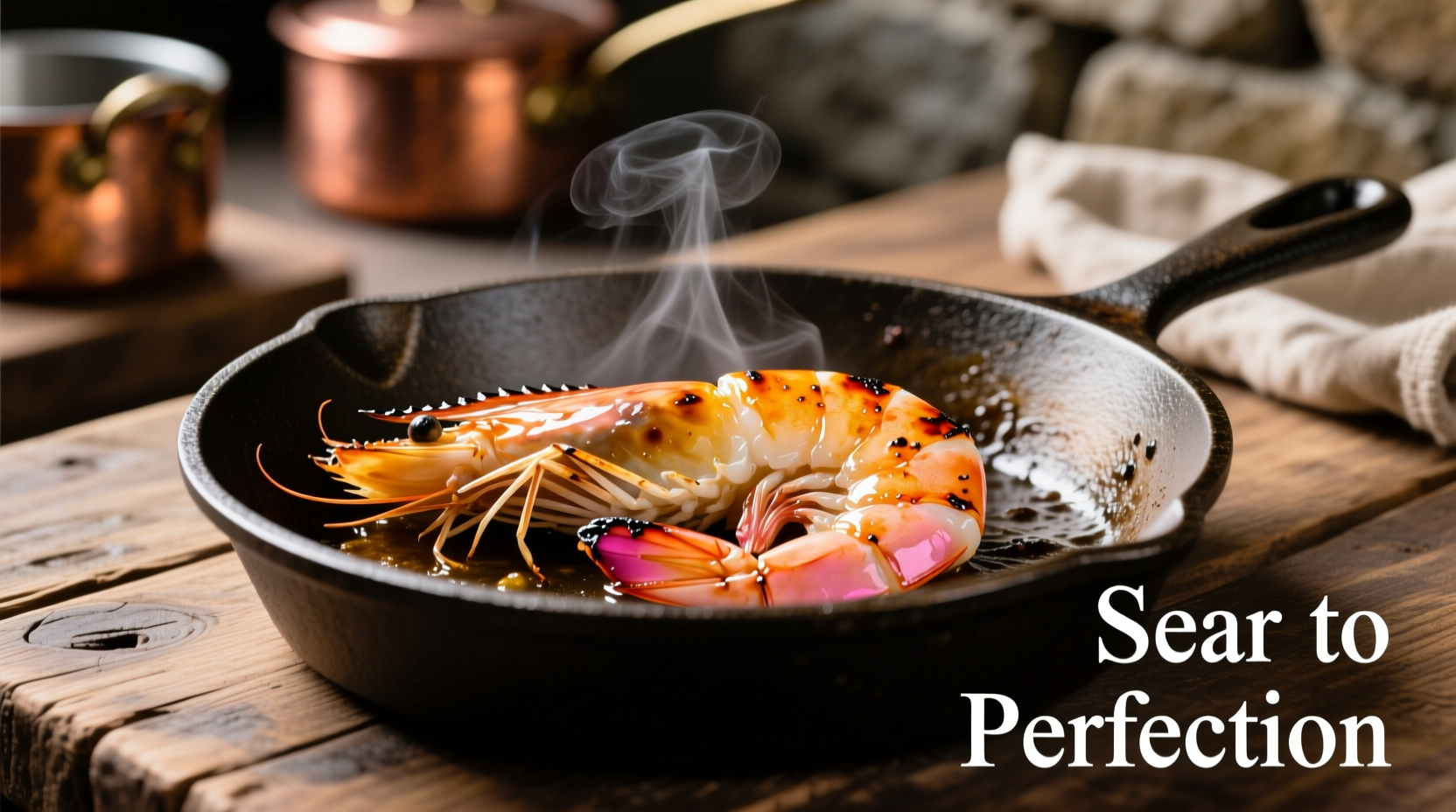
The Perfect Pan-Cooking Technique
Now for the moment of truth—cooking your shrimp to perfection. Follow these precise steps for restaurant-quality results every time.
Pan and Heat Selection
Use a heavy-bottomed skillet (cast iron or stainless steel) for even heat distribution. Non-stick works but won't create as good a sear. Preheat your pan over medium-high heat for 3-5 minutes until properly hot.
To test if your pan is ready, sprinkle a few drops of water on the surface. If they dance and evaporate immediately (the Leidenfrost effect), your pan is at the ideal temperature for searing.
Cooking Process Step-by-Step
- Add 1-2 tablespoons of high-smoke point oil (avocado, grapeseed, or refined olive oil)
- Wait until oil shimmers but doesn't smoke (about 350°F/175°C)
- Place shrimp in a single layer without crowding (work in batches if necessary)
- Cook undisturbed for 1-2 minutes until golden brown on first side
- Flip shrimp and cook 1-2 minutes more until opaque throughout
- Remove immediately from pan to prevent carryover cooking
Cooking times vary by shrimp size:
- Small (51/60 count): 1-1.5 minutes per side
- Medium (31/40 count): 1.5-2 minutes per side
- Large (21/25 count): 2-2.5 minutes per side
- Jumbo (U15 count): 2.5-3 minutes per side
Doneness Indicators
Don't rely solely on timing—use these visual cues to determine perfect doneness:
- Color change: Translucent gray turns opaque pink/orange
- Shape change: Shrimp curl into a loose "C" shape (tight "O" means overcooked)
- Texture: Firm but still slightly springy to touch
- Internal temperature: 145°F (63°C) when measured with instant-read thermometer
Troubleshooting Common Issues
Even with careful preparation, problems can occur. Here's how to address the most frequent shrimp-cooking challenges:
Why Shrimp Become Rubbery
Rubbery shrimp almost always result from overcooking. Shrimp proteins denature quickly, and once they squeeze out all their moisture, they become tough. This happens faster than most people realize—often in as little as 30 seconds past perfect doneness.
The solution? Remove shrimp from the pan when they're almost done, as carryover cooking will continue the process. They should still be slightly translucent in the very center when you take them out.
Preventing Sticking
Shrimp stick to pans when:
- Pan isn't hot enough before adding shrimp
- Shrimp aren't properly dried before cooking
- Trying to move shrimp too soon after placing in pan
Remember the chef's adage: "If it's not ready to release, don't force it." Properly seared shrimp will naturally release from a hot pan when ready to flip.
Flavor Variations and Serving Suggestions
Once you've mastered the basic technique, experiment with these simple flavor variations that professional chefs use:
Classic Garlic Butter Shrimp
Add 2 tablespoons butter and 3 minced garlic cloves to the pan during the last 30 seconds of cooking. Finish with fresh parsley and a squeeze of lemon juice.
Cajun-Style Shrimp
Toss shrimp in 1 teaspoon each paprika, garlic powder, onion powder, dried thyme, and cayenne before cooking. Add a dash of hot sauce to the pan during the last minute.
Mediterranean Shrimp
Season with oregano, lemon zest, and red pepper flakes before cooking. Finish with chopped tomatoes, Kalamata olives, and fresh basil.
For best results, serve shrimp immediately while hot. They pair beautifully with rice, pasta, or a simple green salad. Remember that shrimp continue cooking after removal from heat, so perfect timing ensures optimal texture.




 浙公网安备
33010002000092号
浙公网安备
33010002000092号 浙B2-20120091-4