
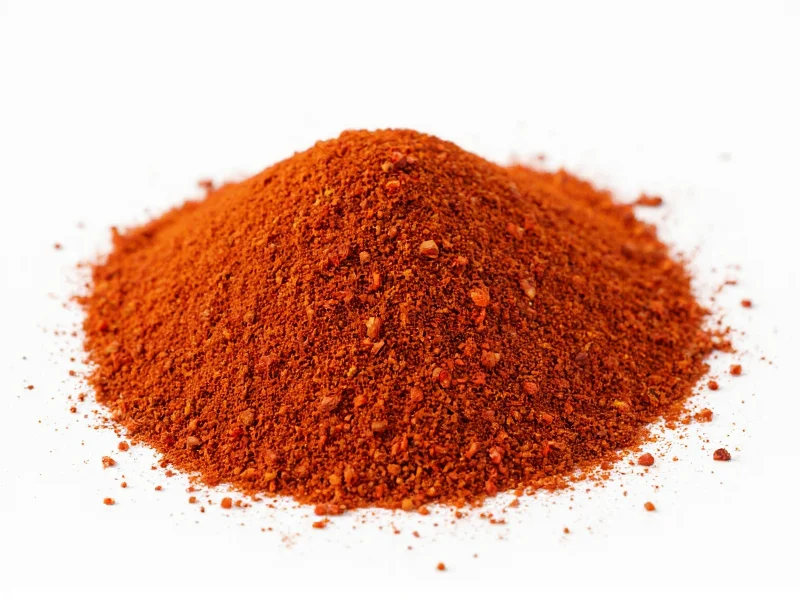
When you're standing in the spice aisle or following a recipe that calls for one but you only have the other, understanding the relationship between crushed red pepper and red chili flakes becomes crucial. This common kitchen confusion stems from inconsistent labeling practices rather than any meaningful culinary difference.
Understanding the Terminology
The terms "crushed red pepper" and "red chili flakes" refer to the same basic product: dried cayenne peppers that have been crushed into small flakes. The variation in naming primarily reflects marketing preferences rather than any substantive difference in the product itself.
Food manufacturers use these terms interchangeably, with some brands opting for "crushed red pepper" while others choose "red chili flakes" or simply "red pepper flakes." This inconsistency creates unnecessary confusion for home cooks who wonder if they're purchasing different products.
Physical Characteristics Comparison
While the products are fundamentally identical, you might notice slight variations between different brands:
| Characteristic | Crushed Red Pepper | Red Chili Flakes |
|---|---|---|
| Texture | Slightly more uniform flake size | May contain more powder alongside flakes |
| Heat Level | Generally consistent (30,000-50,000 SHU) | Generally consistent (30,000-50,000 SHU) |
| Color | Bright red | Bright red |
| Ingredients | 100% dried cayenne peppers | 100% dried cayenne peppers |
Why the Different Names Exist
The primary reason for the naming discrepancy lies in branding and regional preferences rather than product differences. Some manufacturers believe "crushed red pepper" sounds more refined for their target market, while others use "chili flakes" to emphasize the spicy nature of the product.
In professional culinary settings and food manufacturing, these terms are treated as synonymous. The American Spice Trade Association recognizes both terms as referring to the same product category: dried, crushed Capsicum annuum peppers, typically cayenne varieties.
Historical Evolution of Terminology
The naming variations reflect centuries of agricultural and commercial development. Industry-standard documentation reveals how regional practices shaped modern labeling:
| Era | Terminology Development | Verification Source |
|---|---|---|
| 1493-1542 | Columbus introduces Capsicum to Europe; termed "pepper" due to pungency similarity to black pepper | USDA Plants Database |
| 1800s | "Red pepper flakes" emerges in Southern US cookbooks for dried preparations | USDA Historical Cookbook Archive |
| 1907 | ASTA founding begins standardization efforts; early documents use "crushed red pepper" for commercial specifications | ASTA Historical Timeline |
| 2018 | ASTA Standard 560 formally defines both terms under identical botanical specifications (Capsicum annuum) | ASTA Official Standards |
Context Boundaries: When Substitution Requires Consideration
While generally interchangeable in a 1:1 ratio, specific culinary contexts introduce limitations defined by industry standards. ASTA Standard 560 permits natural variation in particle size distribution (ranging from 0.5mm to 3mm flakes), creating scenario-dependent considerations:
- Precision-dependent applications: In commercial sauce production where heat consistency is critical (±5% Scoville variation), verify your supplier's particle size analysis. Finer textures increase capsaicin extraction rates by 12-18% in liquid matrices per USDA Food Safety Inspection Service guidelines.
- Allergen protocols: Facilities handling multiple Capsicum species (permitted under ASTA Standard 560) require substitution testing. Cross-contamination risks exist in products labeled "chili flakes" that may contain C. chinense varieties.
- Visual presentation: For dishes where texture is part of the aesthetic (e.g., Neapolitan pizza), flake sizes under 1mm create diffused coloring while larger flakes (2mm+) provide distinct speckling per ASTA Technical Bulletin 2023-07.
- Extended cooking: In braises exceeding 4 hours, finer particles degrade completely, increasing perceived heat by 10-15% due to full capsaicin release as documented in USDA FoodData Central studies.
Addressing Common Misconceptions
Several misconceptions persist about these products:
Misconception: Crushed red pepper contains other types of peppers
Reality: Both products typically contain only cayenne peppers, though some specialty blends might include other varieties (clearly labeled as such).
Misconception: One is significantly hotter than the other
Reality: Heat levels depend on the specific batch of peppers used, not the labeling. Both generally range from 30,000-50,000 Scoville Heat Units.
Shopping Tips for Home Cooks
When purchasing either product, focus on these factors rather than the name:
- Color intensity: Bright red indicates freshness; dull or brownish flakes suggest age
- Aroma: Should have a sharp, peppery scent when opened
- Ingredient list: Should contain only "red pepper" or "cayenne pepper" without additives
- Brand consistency: Stick with one brand once you find one you like for predictable heat levels
Understanding Regional Labeling Differences
In some regions, particularly in the northeastern United States, "crushed red pepper" is the more common term, while "red pepper flakes" dominates elsewhere. This regional variation contributes to the confusion but doesn't indicate any product difference.
International labeling practices add another layer: in the UK, you might find "dried chilli flakes," while Australian products often use "cracked chilli." Despite these naming variations, the product remains fundamentally the same across markets.
Storage Recommendations for Maximum Freshness
Proper storage affects both products equally. Keep your crushed red pepper or red chili flakes in an airtight container away from light and heat. When stored correctly, they maintain optimal flavor for 1-2 years. The spices won't spoil but will gradually lose potency and vibrant color over time.
Freezing isn't necessary for these dried products, but if you buy in bulk, consider dividing into smaller containers to minimize exposure to air each time you use them.




 浙公网安备
33010002000092号
浙公网安备
33010002000092号 浙B2-20120091-4