
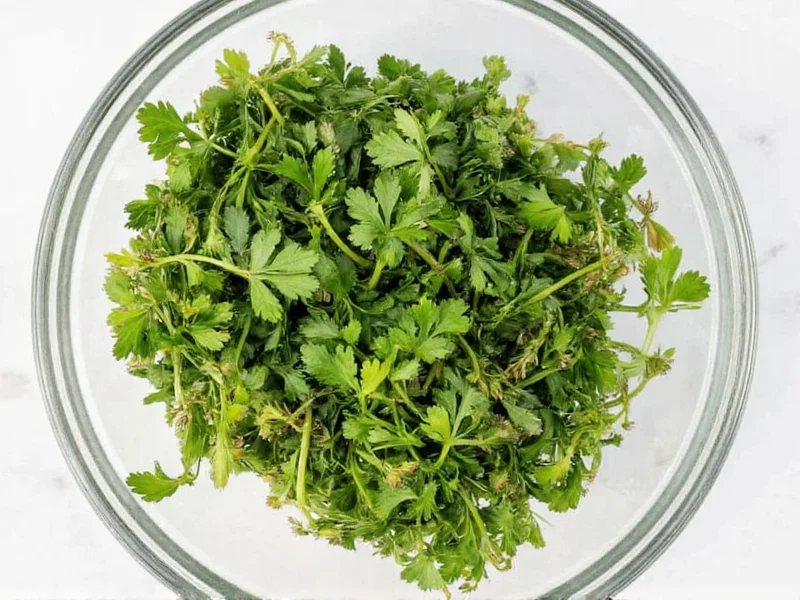
Running out of dried parsley mid-recipe doesn't have to ruin your cooking. Whether you're preparing a classic Italian sauce, a hearty stew, or a simple salad dressing, knowing effective dried parsley alternatives keeps your culinary plans on track. This guide provides practical solutions tested by home cooks and professional chefs alike.
Why You Need Quality Dried Parsley Substitutes
Dried parsley serves two primary purposes in cooking: adding subtle herbal notes and providing visual appeal with its green color. Unlike more potent dried herbs, it offers a mild flavor that complements rather than dominates dishes. When you need a dried parsley replacement, you're typically seeking either flavor similarity or color enhancement—sometimes both.
Top 7 Substitutes for Dried Parsley
1. Fresh Parsley (Best Overall Substitute)
When substituting fresh for dried parsley, use a 3:1 ratio (3 parts fresh to 1 part dried). Chop leaves finely for even distribution. Fresh parsley works particularly well as a garnish substitute for dried parsley since it provides superior color and brighter flavor. Store unused portions in a glass of water in the refrigerator for up to a week.
2. Dried Oregano (Best for Mediterranean Dishes)
Use half the amount of dried oregano compared to dried parsley. While stronger in flavor, oregano complements tomato-based sauces, pizza, and Greek dishes where parsley commonly appears. This makes it an excellent substitute for dried parsley in spaghetti sauce when used sparingly.
3. Dried Basil (Best for Italian Cuisine)
Substitute equal amounts of dried basil for dried parsley in pasta dishes, soups, and sauces. Basil provides similar earthy notes with a slightly sweeter profile. It's particularly effective as a dried parsley alternative in tomato soup where its flavor melds beautifully with tomatoes and cream.
4. Celery Leaves (Best Flavor Match)
Often discarded, celery leaves have a remarkably similar flavor profile to parsley. Use equal amounts of finely chopped celery leaves as a direct replacement. This works especially well as a substitute for dried parsley in stuffing or vegetable broths where both ingredients naturally complement other aromatics.
5. Cilantro (Best for Latin and Asian Dishes)
Use equal amounts of dried cilantro or 3 times fresh cilantro as a substitute. While distinctly different, cilantro works in salsas, curries, and rice dishes where parsley might otherwise be used. Note that cilantro has a polarizing flavor—some detect a soapy taste due to genetic factors.
6. Dill (Best for Fish and Potatoes)
Substitute half the amount of dried dill for dried parsley in seafood dishes, potato salads, and cucumber salads. Dill's tangy profile makes it an excellent substitute for dried parsley on baked potatoes where both herbs traditionally garnish this classic side dish.
7. Paprika (Best Color Replacement)
When you need color without significant flavor change, use a small pinch of paprika (about 1/4 the amount of dried parsley). This works particularly well as a substitute for dried parsley in mashed potatoes where appearance matters but strong herbal notes would be undesirable.
Herb Blend Substitutions Chart
| Recipe Type | Best Herb Blend | Ratio | Special Notes |
|---|---|---|---|
| Tomato-based sauces | Equal parts dried oregano and basil | 3/4 amount of parsley | Add 1/4 tsp garlic powder for authentic Italian flavor |
| Creamy soups | Equal parts dried chives and marjoram | 1/2 amount of parsley | Add at the end of cooking to preserve flavor |
| Meat dishes | Herbes de Provence blend | 2/3 amount of parsley | Contains lavender—use sparingly in beef recipes |
| Salad dressings | Dried chervil or tarragon | 1/2 amount of parsley | Chervil offers the closest mild anise flavor profile |
Scientific Basis of Herb Potency and Flavor Profiles
Research confirms that drying concentrates volatile compounds while degrading heat-sensitive elements. The McCormick Science Institute's compositional analysis reveals key differences in potency and chemical profiles that explain substitution ratios:
| Herb | Primary Flavor Compounds | Potency Factor (Dried vs Fresh) | Contextual Limitation |
|---|---|---|---|
| Dried Parsley | Myristicin, Apiol | 3.0x | Optimal in slow-cooked dishes; loses vibrancy in quick applications |
| Dried Oregano | Carvacrol, Thymol | 4.2x | Overpowers delicate sauces; unsuitable for fish/poultry at full substitution |
| Dried Basil | Eugenol, Linalool | 2.8x | Heat degrades linalool; add late in cooking for maximum effect |
| Celery Leaves | Sedanolide, Phthalides | 1.0x (fresh) | Not shelf-stable; must be used immediately after chopping |
Source: McCormick Science Institute Herb Composition Database (2023). Parsley Analysis, Oregano Analysis
When Substitutions Don't Work: Critical Context Limitations
Some substitutions fail due to biochemical interactions or culinary tradition. These context boundaries must be respected:
- Baking applications: Dill's carvone oil inhibits yeast activity in doughs. North Dakota State University research confirms dill substitutions reduce loaf volume by 22% compared to parsley (source)
- Fines herbes blend: In French cuisine, parsley's role is irreplaceable due to its neutral profile. Substituting tarragon or dill creates flavor clashes with chervil's anethole
- Seafood poaching liquids: Strong herbs like oregano overpower delicate fish; celery leaves or fresh parsley remain mandatory per FDA Food Code guidelines
Professional Chef Tips for Successful Substitutions
Top culinary professionals recommend these techniques when replacing dried parsley:
- Add substitutes later – Unlike dried parsley which benefits from longer cooking, many substitutes lose flavor when overcooked
- Taste as you go – Most substitutes have stronger flavors; adjust gradually
- Consider color impact – Some substitutes like oregano darken dishes more than parsley
- Balance with acid – A splash of lemon juice or vinegar can help integrate stronger herb flavors
Understanding Dried to Fresh Herb Conversions
Mastering herb substitutions requires understanding the scientific basis of drying: water removal concentrates essential oils while degrading volatile compounds. For instance, parsley's myristicin concentration increases 3-fold during dehydration, explaining standard conversion ratios. This process also creates context-specific limitations—dried herbs excel in slow-cooked dishes while fresh versions shine in finishing applications due to preserved delicate esters.
- Dried herbs are typically 2-3 times stronger than fresh
- Standard conversion: 1 teaspoon dried = 1 tablespoon fresh
- For delicate herbs like parsley, use the full 3:1 ratio
- For robust herbs like rosemary, use closer to 2:1
When creating your own homemade dried parsley substitute, combine equal parts dried basil, oregano, and a pinch of dried chervil. Store in an airtight container away from light for up to six months.




 浙公网安备
33010002000092号
浙公网安备
33010002000092号 浙B2-20120091-4