
The best way to cook chicken for alfredo involves pan-searing boneless, skinless chicken breasts or thighs to an internal temperature of 165°F (74°C), using medium-high heat for 5-7 minutes per side. Properly cooked chicken should be juicy, lightly golden, and sliced against the grain before adding to freshly made alfredo sauce. This method prevents dryness while creating a flavorful base that complements the creamy sauce without overpowering it.
Why Chicken Preparation Makes or Breaks Your Alfredo
Many home cooks ruin their alfredo dishes by improperly preparing the chicken component. The creamy, delicate nature of alfredo sauce demands perfectly cooked chicken that enhances rather than competes with the sauce's rich flavor profile. When chicken is overcooked, it becomes dry and stringy, absorbing the sauce's moisture and leaving you with a disappointing plate. Undercooked chicken creates food safety risks while failing to develop the subtle caramelization that complements creamy sauces.
Professional chefs at establishments like The Culinary Institute of America emphasize that chicken for alfredo requires special attention to moisture retention. According to their research, chicken loses approximately 20% of its moisture when cooked improperly, which directly impacts how well it absorbs and carries the alfredo sauce flavors.
Selecting the Perfect Chicken Cut
While both breast and thigh work for alfredo, each offers distinct advantages:
| Chicken Cut | Best For | Texture Result | Flavor Compatibility |
|---|---|---|---|
| Boneless skinless breasts | Lighter alfredo dishes | Firm, clean texture | Allows sauce flavors to shine |
| Boneless skinless thighs | Richer alfredo preparations | More tender, forgiving | Complements garlic-heavy sauces |
For optimal results with alfredo, select chicken with a pale pink color and firm texture. Avoid pieces with excessive liquid in the packaging, which indicates possible freezer burn or poor handling. The USDA Food Safety and Inspection Service recommends purchasing chicken that's consistently cold (below 40°F) and using it within 1-2 days of purchase for best quality.
Pre-Cooking Preparation Techniques
Proper preparation before cooking makes the difference between rubbery and restaurant-quality chicken:
Trimming and Shaping
Remove any visible fat or connective tissue, then pound thicker portions to an even 3/4-inch thickness using a meat mallet or rolling pin. This ensures uniform cooking - the #1 cause of dry chicken is uneven thickness causing some parts to overcook while others finish.
Seasoning Strategy for Alfredo
Less is more when seasoning chicken for alfredo. Heavy spices will clash with the delicate sauce. Instead, use this professional approach:
- Light coating of salt (1/4 tsp per breast) 15 minutes before cooking
- Minimal black pepper
- Optional: pinch of nutmeg (complements dairy beautifully)
Mastering the Cooking Process
Among various cooking methods, pan-searing delivers the best results for alfredo chicken. Here's why professional kitchens prefer this technique:
Pan-Searing: The Professional Standard
This method creates the ideal surface texture that holds alfredo sauce while maintaining interior juiciness:
- Heat 1 tablespoon olive oil in heavy skillet over medium-high heat until shimmering
- Dry chicken thoroughly with paper towels (critical for browning)
- Cook 5-7 minutes per side until golden brown and internal temperature reaches 165°F
- Use instant-read thermometer for accuracy - don't guess
- Rest 5 minutes before slicing
The USDA Food Safety and Inspection Service confirms that chicken is safe to eat at 165°F (74°C), which corresponds to a perfectly cooked, juicy interior without any pinkness. Their guidelines emphasize using a food thermometer as the only reliable method to ensure safety.
Baking Alternative for Multiple Servings
When cooking for a crowd, baking provides consistent results:
- Preheat oven to 400°F (200°C)
- Place chicken on greased baking sheet
- Cook 18-22 minutes until reaching 165°F internally
- Broil 1-2 minutes for color if desired
Critical Resting and Slicing Techniques
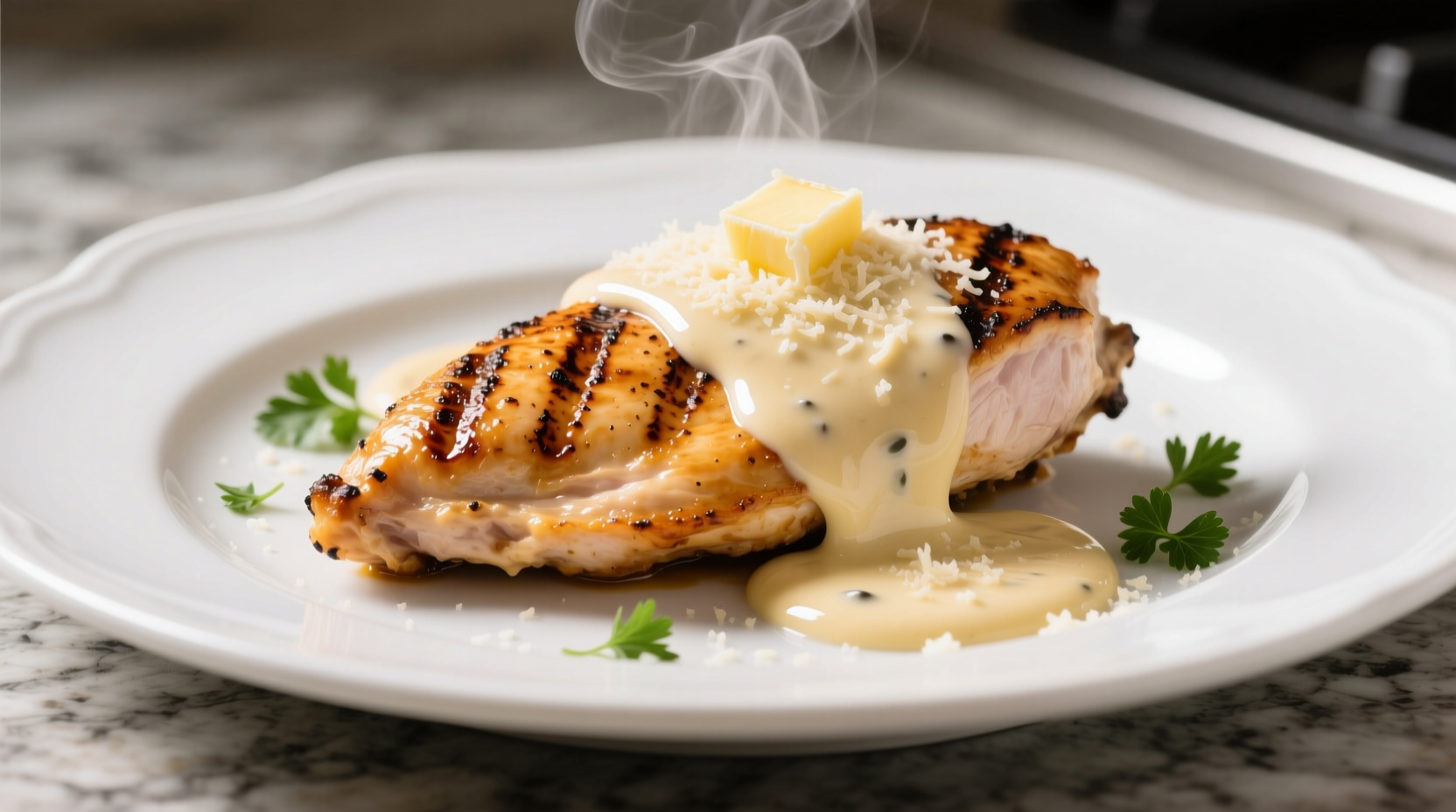
Skipping the resting period is the most common mistake home cooks make. When chicken comes off the heat, juices migrate toward the center. Resting for 5 minutes allows redistribution, resulting in significantly more moist meat. Slice against the grain at a 45-degree angle into 1/2-inch strips - this shortens muscle fibers for easier chewing and better sauce adherence.
Integrating Chicken with Alfredo Sauce
For restaurant-quality results, follow this professional sequence:
- Cook pasta al dente, reserving 1/2 cup pasta water
- Prepare alfredo sauce in same pan used for chicken (adds flavor)
- Add sliced chicken to warm sauce for 1-2 minutes to marry flavors
- Combine with pasta, adding reserved pasta water as needed
- Serve immediately with fresh parsley garnish
Adding the chicken to the sauce before the pasta prevents the sauce from breaking while allowing flavors to meld. Never cook the chicken directly in the sauce - this dilutes the sauce's richness and makes the chicken soggy.
Troubleshooting Common Problems
Even experienced cooks encounter issues. Here's how to fix them:
Dry Chicken
If your chicken turns out dry, try these solutions:
- Reduce cooking temperature slightly
- Shorten cooking time by 1-2 minutes per side
- Consider switching to thighs, which have more fat content
- Always use a thermometer - don't rely on timing alone
Burnt Exterior, Raw Interior
This indicates improper heat management:
- Lower the heat setting
- Ensure chicken is completely dry before cooking
- Use oil with higher smoke point (avocado or canola)
- Consider finishing in oven if pan is too hot
Pro Tips for Alfredo Perfection
Professional chefs employ these advanced techniques to elevate their alfredo dishes:
- Use the fond (browned bits) left in the pan after cooking chicken to deglaze with white wine before making sauce
- Add a splash of chicken stock to the alfredo for enhanced flavor complexity
- Finish with freshly grated nutmeg - it complements both chicken and dairy
- Never boil alfredo sauce after adding cheese to prevent separation




 浙公网安备
33010002000092号
浙公网安备
33010002000092号 浙B2-20120091-4