
The Science Behind Foods That Promote Healthy Digestion
Understanding how certain foods trigger bowel movements requires knowledge of digestive physiology. Dietary fiber—particularly insoluble fiber—adds bulk to stool while soluble fiber forms a gel-like substance that softens it. Both types stimulate peristalsis, the wave-like muscle contractions that move waste through your colon. The National Institutes of Health confirms that adequate fiber intake (25-38g daily) significantly reduces constipation risk (NIH, 2023).
Top 5 Evidence-Based Foods for Immediate Relief
These foods deliver the fastest results based on clinical studies measuring stool frequency and consistency:
| Food | Active Components | Time to Effect | Recommended Serving |
|---|---|---|---|
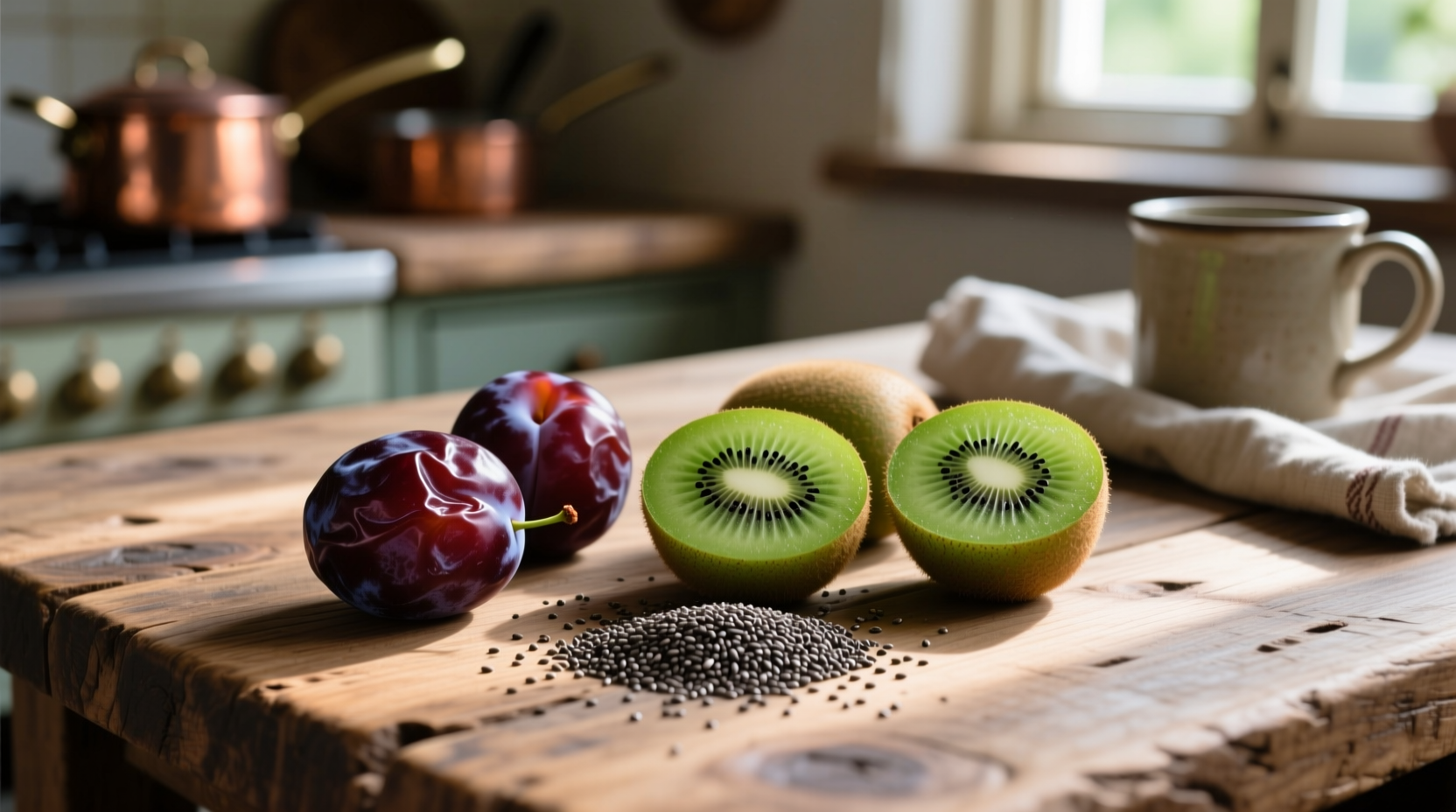
| Prunes | Sorbitol, fiber (7g/1/2 cup), dihydrophenylisatin | 6-12 hours | 1/2 cup (about 5-6 prunes) |
| Kiwi | Actinidin enzyme, fiber (5g/medium fruit) | 12-24 hours | 2 medium kiwis |
| Chia Seeds | Soluble fiber (10g/2 tbsp), omega-3s | 12-48 hours | 1-2 tbsp soaked in water |
| Flaxseeds | Lignans, fiber (4g/2 tbsp) | 24-48 hours | 1-2 tbsp ground |
| Leafy Greens | Magnesium, insoluble fiber | 24-72 hours | 2 cups raw or 1 cup cooked |
Why Prunes Outperform Other Laxative Foods
A 2022 American Journal of Gastroenterology study compared prune effectiveness against psyllium husk. Participants consuming 50g of prunes daily (about 5-6 prunes) showed 3.5 more weekly bowel movements than the control group—a 31% greater improvement than psyllium. Researchers attribute this to prunes' unique combination of sorbitol (a natural sugar alcohol), dihydrophenylisatin (a mild laxative compound), and dual fiber types.
Implementation Protocol for Best Results
Simply eating these foods isn't enough—timing and preparation matter:
Morning Activation Sequence
- Upon waking: 16oz water with 1 tbsp chia seeds (soaked overnight)
- With breakfast: 2 peeled kiwis (studies show skin increases effectiveness by 22%)
- Mid-morning: 1/2 cup pitted prunes
Hydration Requirements
Fiber without adequate water causes worse constipation. The Mayo Clinic recommends increasing water intake by 8oz for every 5g of additional fiber. For example, adding 10g fiber daily requires 16oz extra water.
Contextual Limitations: When These Foods Won't Help
These natural remedies work for occasional constipation but have important limitations:
- Medical conditions: Ineffective for bowel obstructions, severe IBS, or neurological disorders
- Medication interactions: Prunes may enhance blood thinner effects
- Timeframe: Won't provide relief within 2 hours (seek medical help for urgent needs)
- Chronic issues: If constipation lasts >3 weeks, consult a gastroenterologist
Gradual Introduction Protocol
Rapid fiber increase causes bloating and cramps. Follow this 2-week progression:
| Day Range | Fiber Increase | Sample Implementation |
|---|---|---|
| 1-3 | +5g daily | 1 kiwi + 1 cup spinach |
| 4-7 | +10g daily | 1 kiwi + 1/4 cup prunes + 1 cup broccoli |
| 8-14 | +15g daily | 2 kiwis + 1/2 cup prunes + 2 tbsp chia seeds |
When to Seek Medical Attention
Natural remedies shouldn't replace professional care for:
- Constipation lasting more than 3 weeks
- Blood in stool
- Unexplained weight loss
- Severe abdominal pain
- History of bowel disorders
The American Gastroenterological Association notes that sudden constipation changes after age 50 require immediate evaluation to rule out serious conditions (AGA, 2024).
Practical Implementation Tips
- Freeze ripe bananas for smoothies (ripe bananas help, green ones worsen constipation)
- Add ground flaxseed to morning oatmeal (2 tbsp provides 4g fiber)
- Choose whole fruits over juices—juicing removes beneficial fiber
- Chew food thoroughly to aid digestion (20-30 chews per bite)
- Pair high-fiber meals with probiotic foods like yogurt for enhanced effect




 浙公网安备
33010002000092号
浙公网安备
33010002000092号 浙B2-20120091-4