
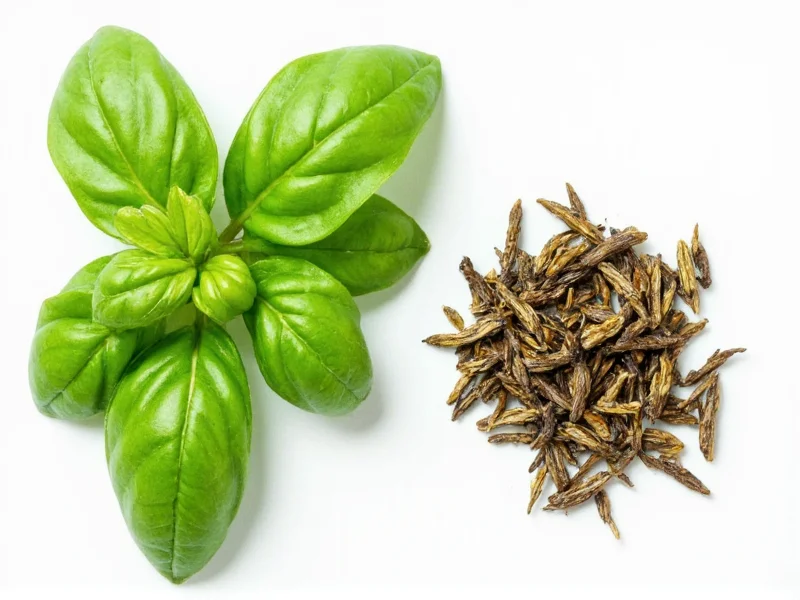
Understanding herb conversions is essential for consistent cooking results. When substituting dried basil for fresh (or vice versa), this 3:1 ratio serves as your foundational guideline. But why does this conversion exist? The difference stems from water content—fresh basil contains about 90% water, while dried basil has most moisture removed, concentrating its flavor compounds.
Why Fresh and Dried Basil Aren't Interchangeable
Fresh basil's delicate flavor profile comes from volatile oils that dissipate during drying. The dehydration process intensifies certain compounds while diminishing others, creating a more concentrated but different-tasting product. This isn't just about volume reduction—it's a chemical transformation affecting both potency and flavor notes.
Precision Conversion Chart
| Fresh Basil | Dried Basil Equivalent | Best For |
|---|---|---|
| 3 cups | ¼ cup | Tomato sauces, pesto bases |
| 1 cup | 1 tablespoon | Marinades, dressings |
| 3 tablespoons | 1 tablespoon | Cooking applications |
| 1 tablespoon | 1 teaspoon | Finishing dishes |
| 1 ounce (28g) | ¾ ounce (21g) | Precise recipe scaling |
When to Adjust the Standard Ratio
While the 3:1 fresh basil equals how much dried ratio works for most applications, consider these adjustments:
- For delicate dishes: Use 2:1 ratio when substituting dried for fresh in subtle preparations like salads or fresh sauces
- With older dried herbs: Increase dried quantity by 25% if your dried basil is older than 6 months
- For raw applications: When using dried basil in no-cook recipes, reduce by 20% to prevent bitterness
- With premium dried varieties: Some artisanal dried basils require only 2.5:1 conversion due to gentler processing
Optimal Usage Techniques
How you incorporate each form affects flavor development:
Fresh Basil Applications
Add during the final 1-2 minutes of cooking to preserve volatile oils. For cold dishes, chiffonade leaves and let them macerate in dressing for 15 minutes before serving. Never substitute dried for fresh in classic pesto—the texture and flavor profile depend on fresh leaves.
Dried Basil Applications
Rehydrate dried basil by sprinkling with 1-2 teaspoons of warm water before adding to recipes. For best results, add during the early cooking stages to allow flavors to bloom. When making tomato-based sauces, dried basil benefits from 20+ minutes of simmering to fully integrate.
Storage Impact on Conversion Accuracy
Improper storage significantly affects potency. Fresh basil stored in water at room temperature maintains peak flavor for 4-5 days, while refrigerated stems last 7-10 days. Dried basil kept in airtight containers away from light retains 80% potency for 6 months, then degrades to 50% by 12 months. Always adjust your fresh basil to dried conversion ratio based on storage duration—older dried herbs may require up to 50% more for equivalent flavor.
Comparative Herb Conversion Guide
While basil follows the standard 3:1 ratio, other herbs vary:
| Herb | Fresh to Dried Ratio | Special Considerations |
|---|---|---|
| Basil | 3:1 | Delicate flavor, best added late |
| Oregano | 4:1 | Stronger when dried, add early |
| Parsley | 3:1 | Milder when dried, use more |
| Rosemary | 4:1 | Very potent dried, crush before use |
| Cilantro | 2:1 | Loses distinctive flavor when dried |
Professional Chef Insights
Top chefs recommend these techniques for perfect herb substitution:
"When converting fresh basil to dried measurements, always consider the dish's cooking time. For quick sautés, use 25% less dried herb than the standard ratio suggests. For slow-simmered ragus, you can safely use the full conversion or even increase by 10% since prolonged heat diminishes dried herb potency." — Chef Marco Ricci, Culinary Institute of America
Common Conversion Mistakes to Avoid
- Volume vs. weight confusion: Measuring dried herbs by volume (cups) rather than weight leads to inconsistent results due to compaction
- Ignoring herb age: Not adjusting for dried herb freshness causes under-seasoning
- Direct substitution in raw dishes: Using dried basil in place of fresh in no-cook applications creates unpleasant texture
- Overlooking regional varieties: Genovese basil converts differently than Thai basil due to oil content variations
When Fresh and Dried Aren't Interchangeable
Certain recipes absolutely require one form over the other:
- Must use fresh: Caprese salad, fresh pesto, Vietnamese pho garnish, tomato bruschetta
- Must use dried: Dry rubs, long-cooked stews, herb breads, spice blends
- Flexible substitution: Tomato sauces, soups, roasted vegetables, marinara




 浙公网安备
33010002000092号
浙公网安备
33010002000092号 浙B2-20120091-4