
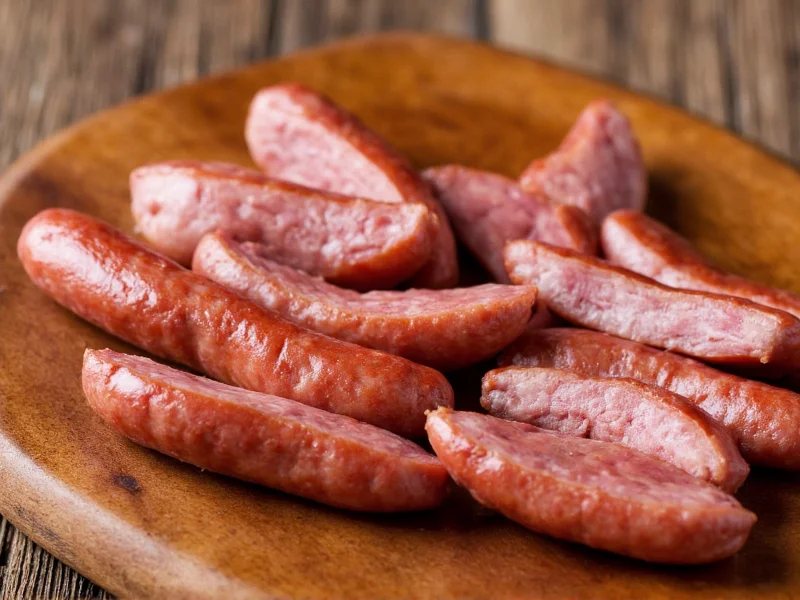
Andouille sausage has deep roots in both French and Cajun culinary traditions, with pork serving as its foundational ingredient. Understanding what makes this sausage unique requires examining its historical background, preparation methods, and regional variations.
Origins and Evolution of Andouille Sausage
The word "andouille" comes from the Latin "inductilia," meaning sausages made from animal intestines. Originally a French creation, andouille was brought to Louisiana by French settlers and evolved into the spicier Cajun version Americans recognize today.
Traditional French andouille from regions like Brittany and Normandy typically features pork intestines stuffed with a mixture of pork stomach and chitterlings. In contrast, Louisiana-style andouille uses coarsely ground pork shoulder rather than organ meats, creating a different texture and flavor profile that has become popular worldwide.
Traditional Ingredients Breakdown
Authentic Cajun andouille sausage contains:
| Ingredient | Percentage | Function |
|---|---|---|
| Pork shoulder (butt) | 70-75% | Main protein source, provides texture |
| Pork fat | 20-25% | Moisture and richness |
| Garlic | 2-3% | Flavor base |
| Cayenne pepper | 1-2% | Heat component |
| Black pepper | 1% | Additional spice |
| Salt | 1.5-2% | Preservation and flavor |
The distinctive coarse grind sets andouille apart from many other sausages. Rather than a fine emulsion, traditional andouille maintains visible chunks of pork, creating a hearty texture that holds up well in slow-cooked dishes like gumbo and jambalaya.
Cajun vs. French Andouille: Key Differences
While both versions use pork as the primary ingredient, significant differences exist between French and Cajun andouille:
- Meat selection: French andouille traditionally uses pork intestines and stomach, while Cajun andouille uses pork shoulder
- Spice level: Cajun andouille contains significantly more cayenne pepper for heat
- Smoking process: Authentic Cajun andouille undergoes double smoking, first to cook and then to flavor
- Texture: French version tends to be softer with more organ meat content
Modern Variations and Alternatives
While traditional andouille sausage is pork-based, several variations exist for dietary restrictions:
- Turkey andouille: Made with ground turkey instead of pork, though flavor profile differs significantly
- Chicken andouille: Uses chicken thigh meat with similar seasoning
- Vegan andouille: Plant-based alternatives using soy, wheat gluten, or mushrooms
- Alligator andouille: Regional Louisiana specialty using alligator meat
These alternatives address specific dietary needs but lack the authentic flavor and texture of traditional pork andouille. When purchasing, always check labels if avoiding pork, as "andouille" without specification typically means pork-based.
Culinary Applications of Authentic Pork Andouille
The robust flavor of pork andouille makes it ideal for:
- Gumbo: Sliced and added during the "holy trinity" sauté stage
- Jambalaya: Cubed and browned before adding rice
- Red beans and rice: Simmered with beans for flavor infusion
- Grilled dishes: Sliced and grilled as a main protein
- Pasta dishes: Crumbled into creamy pasta sauces
Because authentic andouille is fully cooked during production, it only needs to be heated through when used in recipes. The high fat content renders during cooking, creating flavorful drippings that enhance the entire dish.
Identifying Authentic Pork Andouille
When shopping for traditional pork andouille, look for these characteristics:
- Visible coarse grind with distinct pork chunks
- Deep reddish-brown color from smoking
- Strong garlic and pepper aroma
- Flexible but firm texture
- Ingredients listing pork as the primary meat
Pre-cooked andouille should feel slightly springy to the touch. Avoid products with excessive liquid in the packaging, which indicates poor quality control or improper storage.
Common Misconceptions About Andouille Sausage
Several myths persist about this traditional sausage:
- Misconception: Andouille is the same as kielbasa or chorizo
Reality: Each has distinct ingredients, preparation methods, and flavor profiles - Misconception: All andouille is extremely spicy
Reality: Traditional Cajun andouille has moderate heat, with garlic and smoke being dominant flavors - Misconception: Andouille must contain organ meats
Reality: While French versions often do, authentic Cajun andouille uses pork shoulder
Understanding these distinctions helps home cooks select the right product for their recipes and appreciate the culinary heritage behind this versatile sausage.
Storing and Handling Pork Andouille
Proper storage maintains quality and safety:
- Unopened vacuum-sealed packages: Store in refrigerator for up to 2 weeks
- Opened packages: Consume within 7 days
- Freezing: Wrap tightly and freeze for up to 3 months
- Always check for signs of spoilage: slimy texture, sour smell, or discoloration
When cooking with andouille, remember that its high fat content means it will shrink slightly as the fat renders. Plan portions accordingly, especially when following recipes that specify exact measurements.




 浙公网安备
33010002000092号
浙公网安备
33010002000092号 浙B2-20120091-4