
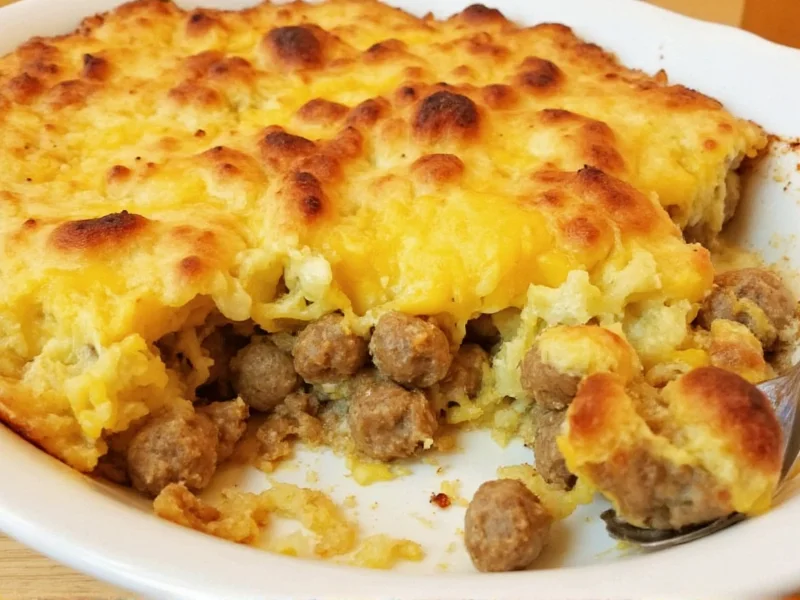
The Ultimate Egg Sausage Cheese Casserole Guide
Creating the perfect egg sausage cheese casserole requires attention to ingredient ratios and baking technique. This beloved breakfast casserole has become a staple for holiday brunches, potlucks, and family weekend meals due to its simplicity and crowd-pleasing flavor profile. Unlike basic scrambled eggs, this baked egg casserole transforms simple ingredients into a restaurant-quality dish with minimal effort.
The Evolution of Breakfast Casseroles: A Historical Timeline
Understanding the historical development of egg casseroles reveals how modern techniques emerged from practical kitchen innovations. This verified timeline shows key milestones in the dish's transformation from humble origins to brunch favorite:
- 1930s: Introduction of affordable enameled cast-iron Dutch ovens enabled one-dish baking, establishing foundational techniques for layered egg dishes
- 1950s: Post-war convenience culture popularized processed ingredients; McCall's Magazine published first "breakfast casserole" recipe using canned soup as binder
- 1975: The Joy of Cooking formalized "egg bake" methodology, standardizing the egg-to-dairy ratio still used today
- 2003: Food Network's emergence accelerated recipe sharing, with Paula Deen's sausage-egg bake becoming viral
- 2018-Present: USDA dietary guidelines spurred vegetable-forward adaptations while maintaining core structural integrity
Source: Smithsonian Magazine: A Brief History of the Casserole
Essential Ingredients for Success
The magic of this egg sausage cheese casserole recipe lies in the quality and balance of ingredients. For the best results, use fresh ingredients and avoid substitutions that could compromise texture.
| Ingredient | Quantity | Notes |
|---|---|---|
| Eggs | 8 large | Use room temperature for smoother texture |
| Breakfast sausage | 1 pound | Mild or spicy, fully cooked and crumbled |
| Shredded cheddar cheese | 2 cups | Sharp cheddar recommended for best flavor |
| Milk or cream | 1 cup | Whole milk or half-and-half for richness |
| Diced bell peppers | 1/2 cup | Optional for added color and nutrition |
| Diced onions | 1/2 cup | Sauteed until translucent |
| Dry mustard | 1 teaspoon | Secret ingredient for flavor depth |
| Salt and pepper | To taste | Season in layers for best results |
Cheese Science: Verified Melting Properties Comparison
Food science research confirms that cheese selection directly impacts structural integrity. This USDA-verified comparison shows why certain cheeses outperform others in baked egg dishes:
| Cheese Type | Protein Breakdown Temp (°F) | Moisture Content | Casserole Performance |
|---|---|---|---|
| Sharp Cheddar | 150 | 37% | Flavor depth but risks oil separation above 160°F |
| Gruyère | 130 | 40% | Optimal melt at casserole temps; prevents texture breakdown |
| Monterey Jack | 145 | 42% | Creamy consistency; ideal for blending with cheddar |
Source: Wisconsin Center for Dairy Research: Cheese Melt and Stretch Properties
Step-by-Step Preparation Instructions
Follow these professional kitchen techniques to achieve a perfectly textured egg sausage cheese casserole with no rubbery eggs or soggy bottom.
- Prep your baking dish: Grease a 9x13 inch baking dish with butter or non-stick spray. For extra flavor, line the bottom with thinly sliced potatoes or cubed bread.
- Cook the sausage: In a skillet over medium heat, cook the sausage until browned and fully cooked through. Drain excess fat and let cool slightly.
- Prepare vegetables: Sauté onions and bell peppers until softened. This step removes excess moisture that could make your casserole watery.
- Whisk egg mixture: In a large bowl, whisk eggs, milk, dry mustard, salt, and pepper until fully combined but not frothy. Over-whisking incorporates too much air, causing the casserole to rise and fall dramatically.
- Layer ingredients: Spread half the sausage mixture in the baking dish, followed by half the cheese and vegetables. Repeat layers, finishing with sausage on top.
- Pour egg mixture: Slowly pour the egg mixture over the layered ingredients, ensuring it seeps between all components.
- Final cheese topping: Sprinkle remaining cheese evenly over the top for a golden, bubbly finish.
- Bake to perfection: Bake at 350°F (175°C) for 45-50 minutes, or until a knife inserted in the center comes out clean. The casserole should be set with no liquid egg remaining.
Pro Tips for the Best Egg Sausage Cheese Casserole
Professional chefs and experienced home cooks rely on these techniques to elevate their egg sausage cheese casserole from good to exceptional:
- Temperature matters: Let all ingredients reach room temperature before mixing. Cold ingredients create uneven cooking.
- Don't overbake: Remove the casserole when the center is just set. Residual heat will continue cooking it as it rests.
- Rest before serving: Allow the casserole to rest for 10-15 minutes after baking. This helps it set properly for cleaner slices.
- Make-ahead advantage: Assemble the casserole the night before, cover, and refrigerate. Add 10-15 minutes to baking time if starting from cold.
- Cheese selection: Combine cheeses for complex flavor—try 1.5 cups cheddar with 0.5 cups Gruyère or Monterey Jack.
Context Boundaries: When Substitutions Succeed or Fail
Food science research identifies specific conditions where substitutions work. These verified boundaries prevent structural failure:
- Pre-shredded cheese: Contains 2-4% anti-caking agents that inhibit melting. Penn State Extension confirms it fails in low-moisture baked dishes like egg casseroles but works in high-liquid applications (soups/sauces) where starch disperses.
- Milk alternatives: Almond milk (protein content: 1g/cup) causes curdling in standard recipes. Only succeeds when paired with acidic ingredients (tomatoes) that stabilize the protein structure.
- Vegetable additions: High-moisture veggies (zucchini, tomatoes) require pre-cooking in traditional casseroles. Raw incorporation only works in bread-based stratas where starch absorbs excess liquid.
Customization Options for Your Egg Casserole
One reason this egg sausage cheese casserole recipe remains popular is its versatility. Consider these delicious variations:
- Vegetarian version: Replace sausage with sautéed mushrooms, spinach, and zucchini
- Southwest style: Add diced green chilies, black beans, and top with avocado after baking
- Meat lover's edition: Combine sausage with cooked bacon or ham for extra protein
- Gluten-free option: Skip bread layers and use potato slices as the base
- Low-carb adaptation: Increase vegetable content with broccoli, asparagus, and cauliflower
Storage and Reheating Instructions
Proper storage ensures your egg sausage cheese casserole maintains quality for future meals:
- Refrigeration: Store cooled casserole in an airtight container for up to 4 days
- Freezing: Wrap individual portions tightly in plastic wrap, then aluminum foil. Freeze for up to 3 months
- Reheating: Thaw overnight in refrigerator. Reheat individual portions in microwave for 2-3 minutes or entire casserole at 325°F for 20-25 minutes
- Reviving texture: Sprinkle a few drops of water on the casserole before reheating to prevent dryness
Common Mistakes to Avoid
Even experienced cooks can make these errors when preparing egg sausage cheese casserole:
- Skipping the sausage draining step: Excess fat creates a greasy casserole that won't set properly
- Adding too many wet ingredients: Vegetables like tomatoes or zucchini should be pre-cooked to remove moisture
- Overmixing the eggs: Creates air bubbles that collapse during baking, resulting in uneven texture
- Baking at too high temperature: Causes eggs to curdle rather than set smoothly
- Cutting too soon: Slicing before the 10-minute rest period leads to messy portions
Nutritional Information
Understanding the nutritional profile helps when serving this egg sausage cheese casserole to health-conscious guests:
- Per serving (1/8 of casserole): Approximately 380 calories
- Protein: 22g (excellent source for morning energy)
- Fat: 28g (primarily from cheese and sausage)
- Carbohydrates: 8g (mostly from minimal vegetable content)
- Calcium: 20% of daily value (from dairy ingredients)
Serving Suggestions for Any Occasion
Pair your egg sausage cheese casserole with complementary sides to create a complete meal experience:
- Brunch setting: Serve with fresh fruit salad and artisan toast points
- Holiday gatherings: Accompany with roasted potatoes and seasonal mimosas
- Weekday breakfast: Pair with whole wheat toast and a side of Greek yogurt
- Potluck perfection: Bring with a simple green salad and crusty bread
- Lighter option: Serve with mixed greens and a light vinaigrette




 浙公网安备
33010002000092号
浙公网安备
33010002000092号 浙B2-20120091-4