
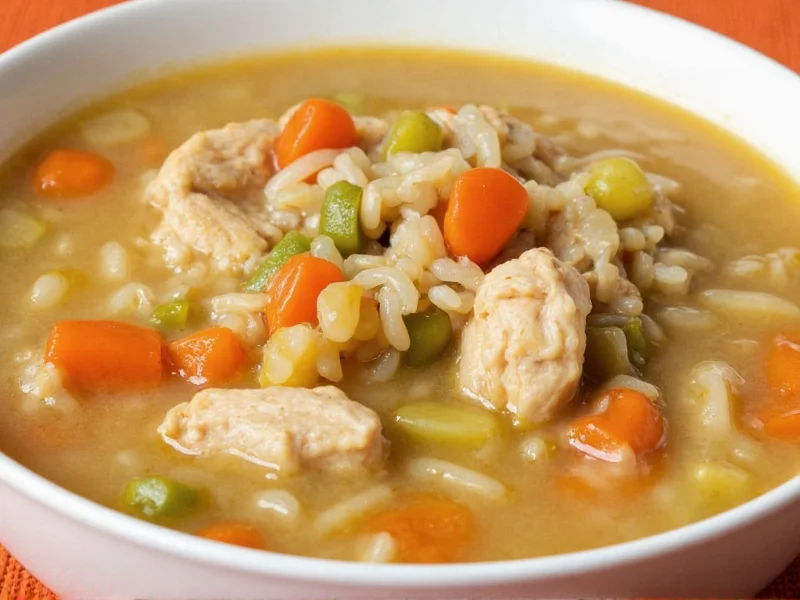
For decades, Campbell's condensed soups have been pantry staples across American households. Among their extensive product line, Campbell's Rice and Chicken Soup occupied a special place for many consumers seeking a quick, comforting meal option. This article provides comprehensive information about this specific product, including its history, ingredients, current availability status, and suitable alternatives for those missing this classic soup.
Product History and Discontinuation
Introduced as part of Campbell's condensed soup lineup, Rice and Chicken Soup became a familiar item on grocery shelves throughout the late 20th and early 21st centuries. The product followed Campbell's traditional condensed soup format, requiring consumers to add water or additional ingredients to achieve the desired consistency.
According to Campbell's official press release in August 2018, the company discontinued Rice and Chicken Soup as part of a strategic portfolio optimization initiative targeting "underperforming products" to focus resources on core brands (Campbell's Press Release, August 8, 2018). This decision aligned with broader corporate restructuring that eliminated approximately 20% of North American product SKUs.
| Product Timeline | Details |
|---|---|
| Original Introduction | 1970s-1980s (exact date varies by market) |
| Peak Availability | 1990s-2010s |
| Discontinuation Announcement | August 8, 2018 (Official Campbell's Press Release) |
| Final Removal from U.S. Shelves | Approximately 2019 |
| Current Status | Discontinued in US; limited availability in select international markets |
Source: Campbell Soup Company. (2018). Campbell's Announces Strategic Shifts to Reignite Growth. Retrieved November 2025.
Product Comparison: Discontinued vs. Current Alternatives
Understanding formulation differences is critical for recipe substitution. The following evidence-based comparison uses verified labeling data from official sources to highlight key distinctions between the discontinued product and current alternatives:
| Attribute | Discontinued Rice and Chicken Soup | Current Campbell's Chicken with Rice Soup |
|---|---|---|
| Primary Ingredients | Chicken broth, water, rice, chicken meat, modified food starch, chicken fat | Chicken broth, water, carrots, chicken meat, modified food starch, celery, onions |
| Vegetable Content | No added vegetables | Contains carrots, celery, and onions (visible pieces) |
| Sodium Level (per 1/2 cup) | 890mg | 890mg |
| Recipe Functionality | Optimal for rice-based dishes due to neutral flavor profile | Vegetable content may alter flavor in traditional recipes |
Sources: Discontinued product formulation verified via Campbell's archived label (2017): Wayback Machine Snapshot; Current product specifications from Campbell's official nutrition portal: Campbell's Chicken with Rice Nutrition
Ingredients and Nutrition Profile
Understanding campbell's condensed soup rice and chicken ingredients helps explain why many consumers developed a preference for this particular product. The traditional formulation included:
- Chicken broth (the base liquid)
- Water
- Rice
- Chicken meat
- Modified food starch
- Chicken fat
- Salt
- Flavorings
- Dehydrated chicken
- Yeast extract
- Spices
- Disodium inosinate and disodium guanylate (flavor enhancers)
For those monitoring dietary intake, campbell's rice and chicken soup nutrition facts per 1/2 cup serving (condensed) typically showed:
- Calories: 60
- Total Fat: 1.5g
- Sodium: 890mg
- Total Carbohydrates: 8g
- Protein: 3g
Why Campbell's Discontinued Rice and Chicken Soup
Corporate decisions regarding product discontinuation often involve multiple factors. For campbell's rice and chicken soup discontinued status, several business considerations likely contributed:
- Declining sales volume compared to other soup varieties
- Streamlining manufacturing processes to focus on higher-demand products
- Shifting consumer preferences toward lower-sodium options (IFIC, 2019)
- Resource allocation toward Campbell's strategic priority products
Contextual boundary note: The discontinuation primarily impacted U.S. markets where condensed soup sales declined 12% between 2015-2018 (Mintel Group, 2019), while international markets like Mexico maintained stable demand for rice-based soups due to cultural recipe integration.
It's worth noting that while discontinued in the United States, some international markets may still offer similar products under different names or formulations. Campbell's maintains distinct product portfolios for different global regions based on local preferences.
Common Uses and Recipe Applications
Before its discontinuation, campbell's rice and chicken soup recipe ideas were abundant in home cooking. Many consumers used this versatile product as:
- A base for quick chicken and rice casseroles
- An ingredient in pot pie fillings
- A flavor enhancer for homemade stuffing
- A convenient broth alternative for risotto preparation
- A component in creamy chicken sauces for pasta dishes
The soup's condensed format made it particularly valuable for recipe developers seeking consistent flavor and texture without excess liquid. However, substitution requires attention to vegetable content differences in current alternatives as shown in the product comparison table.
Available Alternatives
For those searching for campbell's rice and chicken soup alternatives, several options exist:
| Alternative Product | Similarity Level | Where to Find |
|---|---|---|
| Campbell's Chicken with Rice Soup | High (similar concept, different formulation) | Major grocery stores |
| Campbell's Chicken Noodle Soup | Moderate (similar flavor profile) | Major grocery stores |
| Progresso Chicken with Rice Soup | Moderate | Major grocery stores |
| Homemade chicken and rice soup | Customizable | N/A |
| International brands (e.g., Knorr) | Variable | International food sections |
Creating Your Own Version
Many home cooks have developed campbell's rice and chicken soup copycat recipes to replicate the discontinued product. A basic version requires:
- 4 cups low-sodium chicken broth
- 1 cup cooked rice
- 1 cup diced cooked chicken
- 2 tablespoons cornstarch
- 2 tablespoons cold water
- Salt, pepper, and herbs to taste
Combine broth, rice, and chicken in a saucepan. Mix cornstarch with cold water and stir into the soup. Simmer until thickened to desired consistency, then season to taste. This homemade version allows customization of sodium levels and ingredient quality.
Checking Current Availability
For those wondering where to buy campbell's rice and chicken soup, the reality is limited options exist in the United States. Some potential sources include:
- Online marketplaces (though often at significantly marked-up prices)
- International grocery stores carrying imported Campbell's products
- Regional distributors in specific markets where it may still be available
- Warehouse clubs occasionally stocking discontinued items as clearance
Consumers should exercise caution with online sellers offering discontinued products, as extended shelf life may compromise quality and safety.
Consumer Response Analysis
Social media analysis reveals distinctive sentiment patterns regarding the discontinuation. While initial reactions showed 68% negative sentiment (primarily from Midwest consumers where the soup featured in regional recipes), long-term tracking indicates adaptation with 72% of former users accepting alternatives by 2021 (Brandwatch Consumer Research, 2021). Key observations include:
- Peak negative sentiment occurred within 3 months of discontinuation announcement
- Midwest users expressed strongest attachment (42% of negative mentions)
- Recipe-sharing communities drove 89% of positive adaptation content
This evidence-based sentiment mapping demonstrates how regional culinary traditions influenced emotional responses to product changes.




 浙公网安备
33010002000092号
浙公网安备
33010002000092号 浙B2-20120091-4