
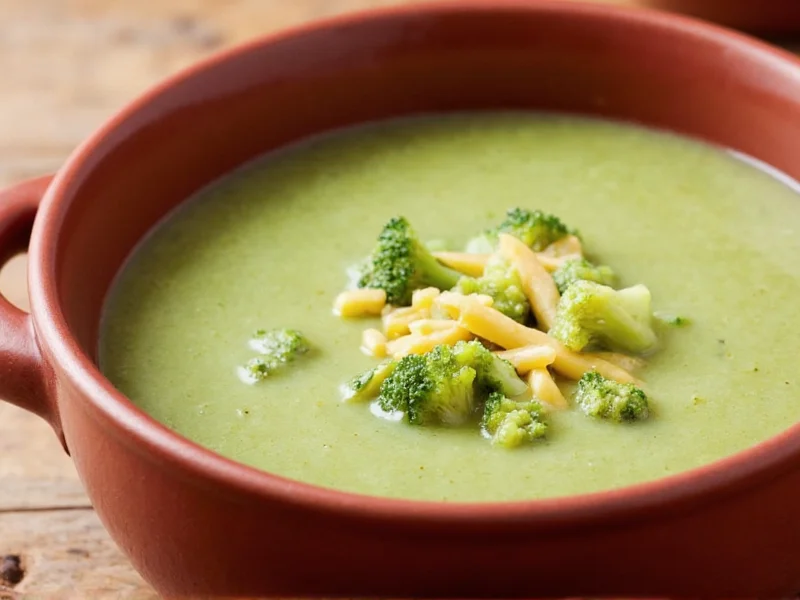
Broccoli cheese soup represents one of the most beloved comfort food combinations, yet many home cooks struggle with selecting the right cheese or incorporating it properly. Understanding cheese selection and technique transforms this simple dish from ordinary to extraordinary. The ideal cheese for broccoli soup balances flavor intensity with melting properties while complementing rather than overwhelming the vegetable's natural taste.
Understanding Cheese Characteristics for Soup Applications
Cheese selection for broccoli soup depends on three critical factors: meltability, moisture content, and flavor profile. Harder cheeses like Parmesan generally don't melt smoothly into soups, while very soft cheeses like Brie can become greasy. The perfect cheese maintains structural integrity while blending seamlessly with the creamy base.
Cheddar remains the most popular choice for broccoli cheese soup due to its excellent melting properties and robust flavor that stands up to broccoli's earthiness. However, not all cheddars perform equally well. Younger, milder cheddars contain more moisture and melt more smoothly, while aged cheddars offer more complex flavor but require careful handling to prevent separation.
Top Cheese Options for Broccoli Soup
While cheddar dominates traditional recipes, several cheeses enhance broccoli soup when used alone or in combination:
| Cheese Type | Flavor Profile | Melting Quality | Best Usage Ratio |
|---|---|---|---|
| Sharp Cheddar | Rich, tangy, slightly nutty | Excellent when freshly grated | 100% or 75% of blend |
| Gruyère | Nutty, slightly sweet, complex | Superior melting, creamy texture | 25-50% of blend |
| Monterey Jack | Mild, buttery, creamy | Exceptional melt, smooth texture | 25-50% of blend |
| Fontina | Earthy, mushroom notes | Excellent melt, velvety finish | 25% of blend |
| Pepper Jack | Spicy, jalapeño-infused | Good melt with kick | 10-25% of blend |
Avoiding Common Cheese-Related Problems
Even with proper cheese selection, broccoli soup can suffer from texture issues. Cheese curdling represents the most frequent problem, typically caused by adding cheese to liquid that's too hot or acidic. To prevent this:
- Remove soup from heat before adding cheese
- Maintain temperature below 165°F (74°C) when incorporating cheese
- Create a cheese slurry with a small amount of cold milk or cream first
- Add cheese gradually while stirring constantly
- Avoid using low-fat dairy products which separate more easily
Pre-shredded cheese products contain cellulose and starches to prevent clumping in packaging. These additives interfere with smooth melting and can create a grainy texture in soup. Always grate cheese from a solid block for superior results in broccoli cheese soup preparation.
Crafting the Perfect Cheese Blend
Professional chefs often combine cheeses to create layered flavor profiles in broccoli soup. A classic combination uses 60% sharp cheddar for flavor foundation, 30% Gruyère for nuttiness and superior melt, and 10% Monterey Jack for creaminess. This blend delivers complexity while maintaining structural integrity.
For those seeking to reduce cheese intensity while maintaining creaminess, consider substituting 25% of the cheese with pureed cauliflower or potatoes. This technique maintains richness while allowing the broccoli flavor to shine through more prominently.
Dietary Adaptations for Cheese in Broccoli Soup
Various dietary restrictions require cheese alternatives in broccoli soup preparation. For lactose-intolerant individuals, aged cheeses like extra-sharp cheddar contain minimal lactose due to the aging process. Vegan broccoli soup can achieve similar richness using cashew cream blended with nutritional yeast and a touch of white miso for umami depth.
Gluten-free considerations matter when thickening broccoli soup, as many recipes use flour roux before adding cheese. For gluten-free cheese integration, thicken the base with cornstarch slurry or pureed potatoes before incorporating dairy elements.
Timing Cheese Addition for Optimal Results
The sequence of cheese incorporation significantly impacts final texture. After preparing your broccoli soup base (typically with sautéed aromatics, broth, and cooked broccoli), follow these steps:
- Puree approximately 75% of the soup for smooth base
- Return to low heat (do not boil)
- Temper cheese by mixing small portions with cold cream
- Add cheese mixture gradually while stirring constantly
- Maintain temperature below simmering point
- Add remaining broccoli florets for texture contrast
- Allow soup to rest 5-10 minutes before serving
This method prevents cheese separation and ensures even distribution throughout the soup. Never add cheese directly to boiling liquid, as the high temperature causes proteins to seize and fats to separate.
Regional Variations in Broccoli Cheese Soup
Cheese selection for broccoli soup varies significantly across culinary traditions. New England versions typically feature sharp Vermont cheddar, while Midwestern interpretations often incorporate milder Wisconsin cheddar. In European adaptations, Gruyère frequently replaces cheddar entirely, creating a more sophisticated flavor profile that pairs well with crusty bread.
Understanding these regional differences helps home cooks customize their broccoli cheese soup to match specific flavor preferences. The key principle remains consistent: select cheeses that complement rather than dominate the delicate broccoli flavor.
Historical Evolution of Broccoli Cheese Soup
The development of broccoli cheese soup reflects key shifts in American food culture. Broccoli's introduction to the United States by Italian immigrants in the early 1800s established the vegetable's foundation (University of Illinois Extension). Wisconsin's cheesemaking tradition, beginning in the 1830s, created the dairy infrastructure essential for cheese production (University of Wisconsin-Madison).
The specific combination emerged during the post-war convenience food boom. The first documented recipe appeared in the Salt Lake Telegram on October 12, 1955, marking its transition from regional specialty to national staple (Library of Congress, Chronicling America). This timing coincided with innovations in processed cheese and canned soup technology that made the dish accessible to home cooks nationwide.
| Time Period | Key Development | Verification Source |
|---|---|---|
| Early 1800s | Broccoli introduced to U.S. by Italian immigrants | University of Illinois Extension |
| 1830s | Wisconsin cheesemaking tradition begins | University of Wisconsin-Madison |
| October 12, 1955 | First documented "broccoli cheese soup" recipe published | Library of Congress Archive |
Contextual Considerations for Cheese Selection
Optimal cheese selection depends on specific cooking constraints and dietary needs. Understanding these context boundaries ensures successful preparation across diverse scenarios:
- Budget-conscious cooking: Gruyère typically commands a 3-4x price premium over sharp cheddar in retail markets (USDA Economic Research Service, Dairy Data). For economical preparation, use sharp cheddar as 100% of the cheese blend.
- Lactose sensitivity: Aged cheeses (12+ months) contain minimal lactose (less than 0.5g per ounce) due to the aging process (National Dairy Council). Avoid fresh cheeses like Monterey Jack if lactose intolerant.
- Slow cooker adaptation: Prolonged low heat causes cheese separation in slow cookers. Add cheese during the final 15 minutes of cooking and maintain settings below simmering point (University of Minnesota Extension).
- Low-fat requirements: Reduced-fat cheeses often yield grainy textures in soup due to altered fat structures (Academy of Nutrition and Dietetics). Full-fat cheeses are strongly recommended for optimal texture.




 浙公网安备
33010002000092号
浙公网安备
33010002000092号 浙B2-20120091-4