
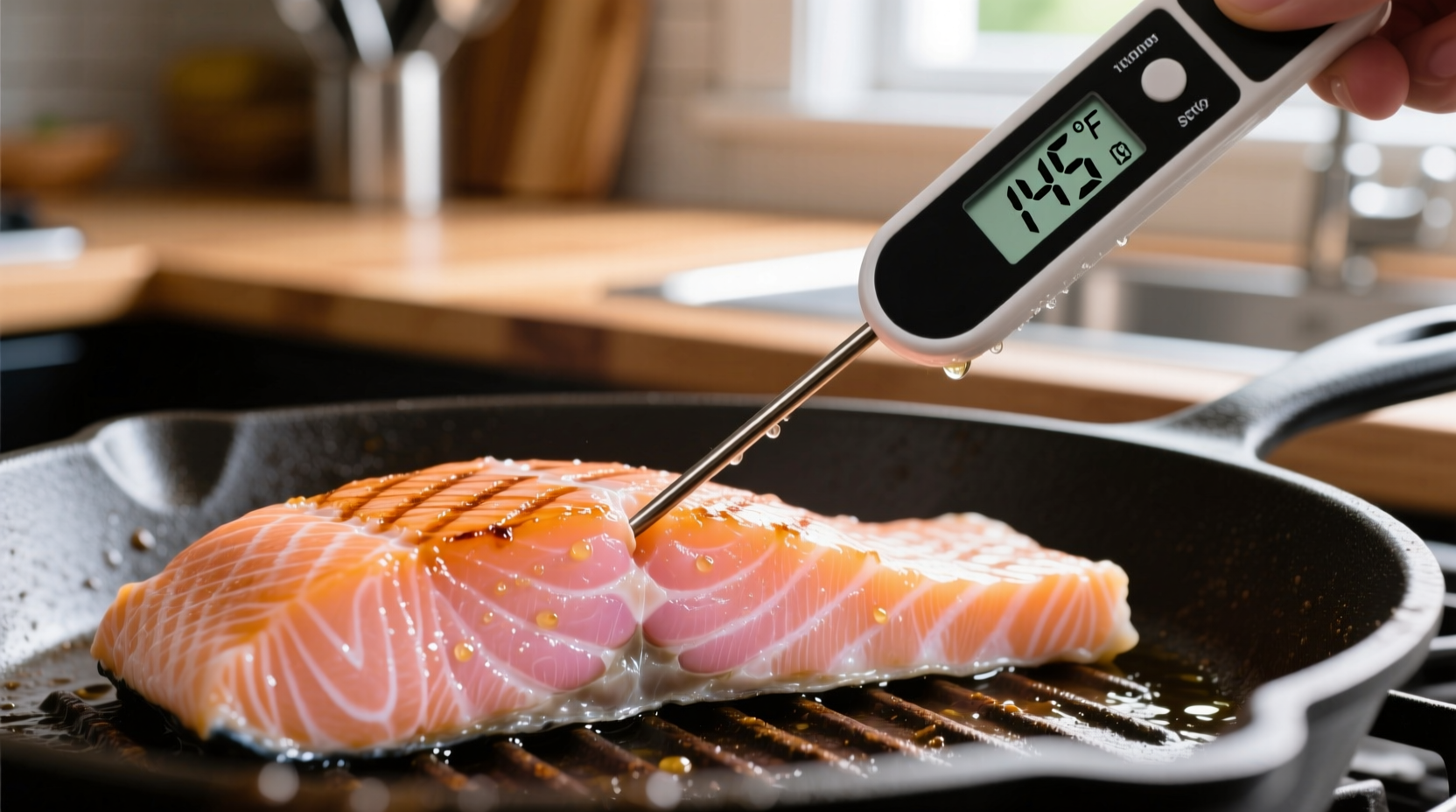
The perfect internal temperature for cooked fish is 145°F (63°C) as measured with a food thermometer at the thickest part. This temperature ensures fish is safe to eat while maintaining optimal moisture and texture. Delicate fish like salmon may be removed from heat at 140°F (60°C) as carryover cooking will bring it to the target temperature.
Why Fish Temperature Matters: Safety and Perfection
Getting the temperature right when cooking fish isn't just about preference—it's essential for food safety and achieving restaurant-quality results at home. Undercooked fish can harbor harmful bacteria like Vibrio and Listeria, while overcooked fish becomes dry and loses its delicate flavor. The USDA Food Safety and Inspection Service confirms that fish reaches a safe internal temperature at 145°F (63°C), when the flesh becomes opaque and flakes easily with a fork.
How to Measure Fish Temperature Accurately
Using a reliable instant-read thermometer is the only way to guarantee perfect results every time. Here's how to measure correctly:
- Insert the thermometer into the thickest part of the fish, avoiding bones
- Wait 10-15 seconds for an accurate reading
- For whole fish, check in multiple spots
- Clean your thermometer with hot, soapy water after each use
Cooking Method Matters: Temperature Adjustments
Different cooking techniques require slight temperature adjustments due to varying heat transfer rates and carryover cooking. Understanding these context boundaries ensures perfect results regardless of your chosen method:
| Cooking Method | Remove From Heat At | Final Target Temp | Special Considerations |
|---|---|---|---|
| Pan-searing | 140°F (60°C) | 145°F (63°C) | High heat creates significant carryover cooking |
| Baking | 142°F (61°C) | 145°F (63°C) | More gradual heat transfer requires less carryover adjustment |
| Grilling | 138°F (59°C) | 145°F (63°C) | Direct high heat causes rapid temperature rise |
| Poaching | 145°F (63°C) | 145°F (63°C) | Water-based cooking has minimal carryover effect |
| Sous vide | 145°F (63°C) | 145°F (63°C) | Precise temperature control eliminates guesswork |
This comparison comes from the USDA Food Safety and Inspection Service's comprehensive guidelines on seafood preparation (fsis.usda.gov/cooking-fish), which provides science-based recommendations for safe seafood consumption.
Fish-Specific Temperature Guide
While 145°F (63°C) is the universal safe temperature, some fish varieties have ideal doneness ranges that balance safety with optimal texture:
- Firm fish (salmon, tuna, swordfish): 125-145°F (52-63°C) depending on preference. Many chefs prefer salmon at 125°F (52°C) for medium-rare.
- Delicate fish (cod, halibut, tilapia): 140-145°F (60-63°C). These flakier fish dry out quickly past 145°F.
- Fatty fish (mackerel, sardines): 135-145°F (57-63°C). Higher fat content allows for slightly lower temperatures.
- Shellfish (shrimp, scallops): 120-145°F (49-63°C) depending on type. Shrimp turn opaque at 120°F (49°C).
Visual Indicators That Complement Temperature Readings
While a thermometer is essential, these visual cues help confirm proper doneness:
- Fish changes from translucent to opaque throughout
- Flesh flakes easily with gentle pressure from a fork
- Surface develops a light golden crust (for seared or baked fish)
- Internal juices run clear, not milky
Common Temperature Mistakes and How to Avoid Them
Even experienced home cooks make these temperature-related errors:
- Mistake: Guessing doneness without a thermometer
Solution: Invest in a quality instant-read thermometer—it's the single most important tool for perfect fish. - Mistake: Testing temperature too early
Solution: Wait until the fish is nearly done before checking, as frequent thermometer insertion causes moisture loss. - Mistake: Ignoring carryover cooking
Solution: Remove fish from heat 3-5°F below target temperature to account for residual heat. - Mistake: Using the same temperature for all fish types
Solution: Adjust based on fish thickness and fat content—delicate fish need precise timing.
Special Considerations for Different Fish Preparations
Certain cooking scenarios require special temperature awareness:
- Whole fish: Check temperature in multiple thickest areas, particularly near the backbone.
- Stuffed fish: Ensure both the fish and stuffing reach safe temperatures (stuffing should hit 165°F/74°C).
- Ceviche: While not cooked with heat, the acid "cooks" fish at room temperature over 20-30 minutes.
- Sushi-grade fish: Must be previously frozen to -4°F (-20°C) for 7 days to kill parasites, but remains raw when served.
Temperature Troubleshooting Guide
Encountering issues with your cooked fish? These temperature-related solutions can help:
- Dry, tough fish: Likely overcooked past 145°F. Remove from heat at 140°F for delicate varieties.
- Rubbery texture: Fish cooked too quickly at high temperatures. Try lower heat for more even cooking.
- Uneven cooking: Check temperature in multiple spots; thicker areas need more time.
- Fish sticks to pan: Pan wasn't hot enough before adding fish—aim for 375°F (190°C) surface temperature.




 浙公网安备
33010002000092号
浙公网安备
33010002000092号 浙B2-20120091-4