
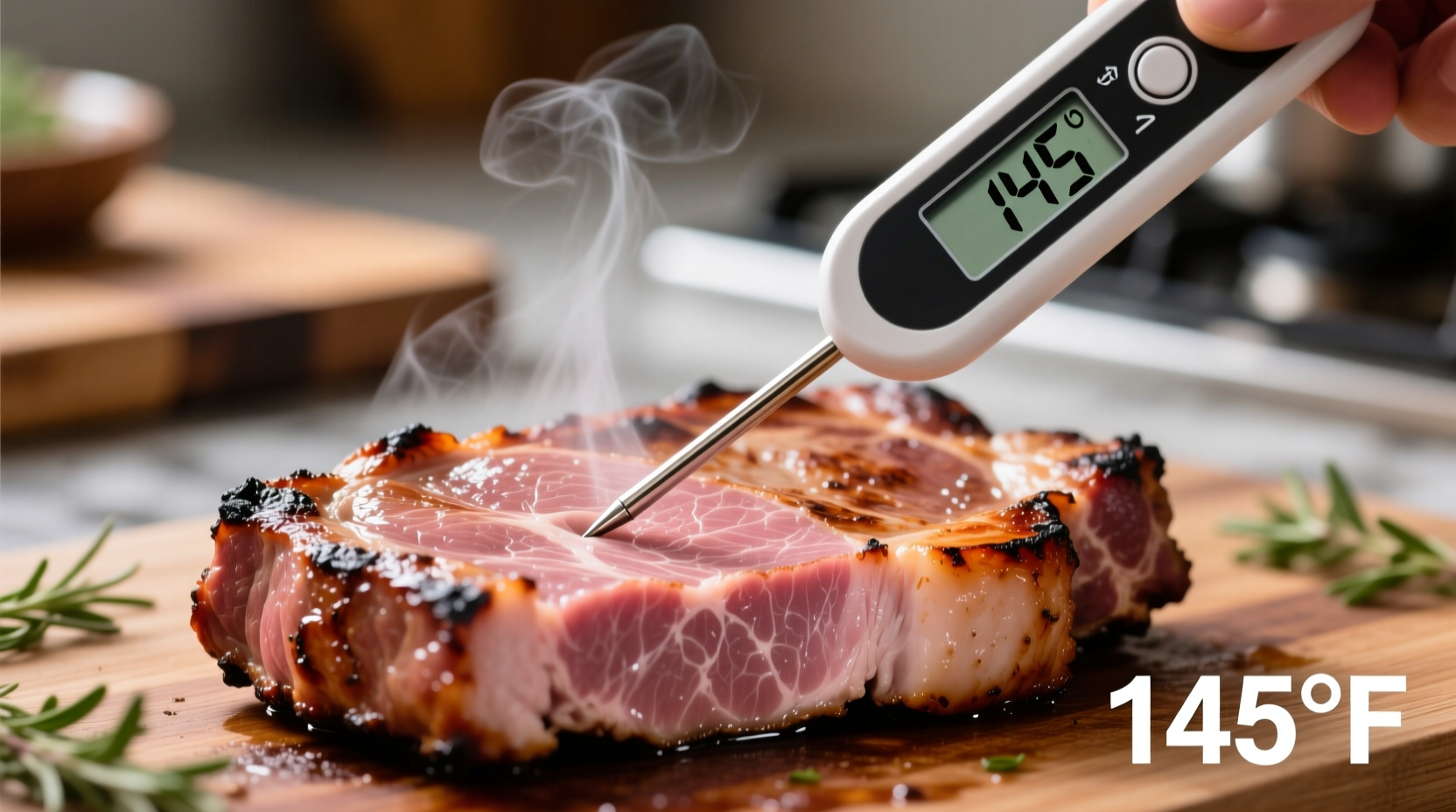
The safe minimum internal cooking temperature for whole cuts of pork (like chops, roasts, and tenderloin) is 145°F (63°C) with a 3-minute rest time. For ground pork and pork organs (liver, kidney, etc.), cook to 160°F (71°C). These temperatures ensure pork is both safe to eat and properly cooked without becoming dry.
Knowing exactly what temp do you cook pork to separates a perfectly juicy pork chop from a dry disappointment—or worse, a food safety risk. As someone who's worked in professional kitchens and taught home cooks for over 15 years, I've seen how precise temperature control transforms pork from merely edible to exceptional. Forget guesswork: today's food science gives us clear, evidence-based guidelines that guarantee both safety and quality.
Why Pork Temperature Matters: Beyond Just Safety
When determining what temperature to cook pork to, we're balancing two critical factors: food safety and culinary quality. While safety is non-negotiable, understanding the science behind temperature recommendations helps you make informed decisions in the kitchen.
The USDA's Food Safety and Inspection Service (FSIS) updated pork cooking guidelines in 2011, lowering the recommended temperature from 160°F to 145°F for whole cuts. This change reflected advances in pork production that virtually eliminated trichinosis risk in commercially raised pork while recognizing that higher temperatures often resulted in overcooked, dry meat.
| Pork Type | Minimum Internal Temperature | Rest Time |
|---|---|---|
| Whole cuts (chops, roasts, tenderloin) | 145°F (63°C) | 3 minutes |
| Ground pork | 160°F (71°C) | None |
| Pork organs (liver, kidney) | 160°F (71°C) | None |
| Pre-cooked ham (to reheat) | 140°F (60°C) | None |
This temperature evolution represents a significant shift in food safety understanding. According to the USDA FSIS guidelines, the 145°F threshold with 3-minute rest time achieves the same pathogen reduction as the previously recommended 160°F without rest time. The rest period allows residual heat to continue cooking the meat while letting juices redistribute.
How to Measure Pork Temperature Correctly
Knowing what temp you cook pork to means nothing if you don't measure it properly. Many home cooks make critical errors when checking temperatures:
- Using the wrong thermometer: Instant-read digital thermometers provide the most accurate readings for home cooks. Dial thermometers often lack precision in the critical 140-150°F range.
- Incorrect placement: Insert the probe into the thickest part of the meat, avoiding bone, fat, or gristle which can give false readings.
- Checking too early: Open your oven or grill only when you suspect the pork is near target temperature to prevent heat loss.
For best results, remove pork from heat when it's 5°F below your target temperature. During the rest period, the internal temperature will continue to rise (carryover cooking), reaching your perfect finish point.
Temperature Considerations by Cooking Method
Your cooking method affects how you should approach what temperature to cook pork to. Different techniques require slight adjustments to achieve optimal results:
Grilling and Pan-Searing
When searing pork chops or tenderloin over high heat, aim for 140°F before removing from heat. The intense surface heat creates significant carryover cooking during the rest period. For thicker cuts (over 1.5 inches), consider the reverse sear method: cook slowly to 135°F in a low oven, then sear briefly for perfect crust and interior.
Oven Roasting
For roasts like pork shoulder or loin, use an oven-safe probe thermometer. Set the alarm for 140°F, then remove from oven and tent with foil. The temperature will climb to 145°F during the 3-minute minimum rest period. Larger roasts (over 5 pounds) may require 10-15 minutes of rest time.
Sous Vide Precision
Sous vide cooking offers unparalleled control for what temp do you cook pork to. For tenderloin or chops, vacuum-seal with seasonings and cook at exactly 140°F for 1-2 hours, then sear briefly. This method eliminates guesswork and ensures perfectly cooked pork edge-to-edge.
Avoiding Common Pork Temperature Mistakes
Even with the right temperature knowledge, these pitfalls can ruin your pork:
- Skipping the rest period: Cutting into pork immediately after cooking releases precious juices. The mandated 3-minute rest allows proteins to reabsorb moisture.
- Over-relying on color: Pork can remain slightly pink at 145°F and still be perfectly safe. Color is not a reliable doneness indicator.
- Ignoring thermometer calibration: Test your thermometer in ice water (should read 32°F) or boiling water (212°F at sea level) before critical cooking sessions.
For special populations (pregnant women, elderly, immunocompromised), some food safety experts recommend cooking pork to 150°F as an extra precaution, though this exceeds standard USDA guidelines. Consult with a healthcare provider for personalized advice in these situations.
When Temperature Isn't the Only Factor
While knowing what temperature to cook pork to is essential, other elements contribute to perfect results:
- Starting temperature: Bring pork to near room temperature (about 30-60 minutes out of fridge) before cooking for more even results.
- Thermal mass: Denser cuts like pork shoulder require longer cooking times per degree of temperature rise compared to tenderloin.
- Surface moisture: Pat pork dry before cooking for better browning, which doesn't affect internal temperature but improves flavor development.
Remember that pork quality matters too. Heritage breed pork often has more marbling and can handle slightly higher temperatures without drying out compared to lean commercial varieties.
Final Temperature Verification
Before serving, always verify your pork's temperature:
- Insert thermometer into thickest part, avoiding bone
- Wait for reading to stabilize (digital thermometers take 2-5 seconds)
- Check multiple spots in larger cuts
- If below target, return to heat and recheck in 2-3 minutes
When cooking for groups, establish a temperature checkpoint system. For large gatherings, consider using multiple thermometers to verify consistency across all portions.




 浙公网安备
33010002000092号
浙公网安备
33010002000092号 浙B2-20120091-4