
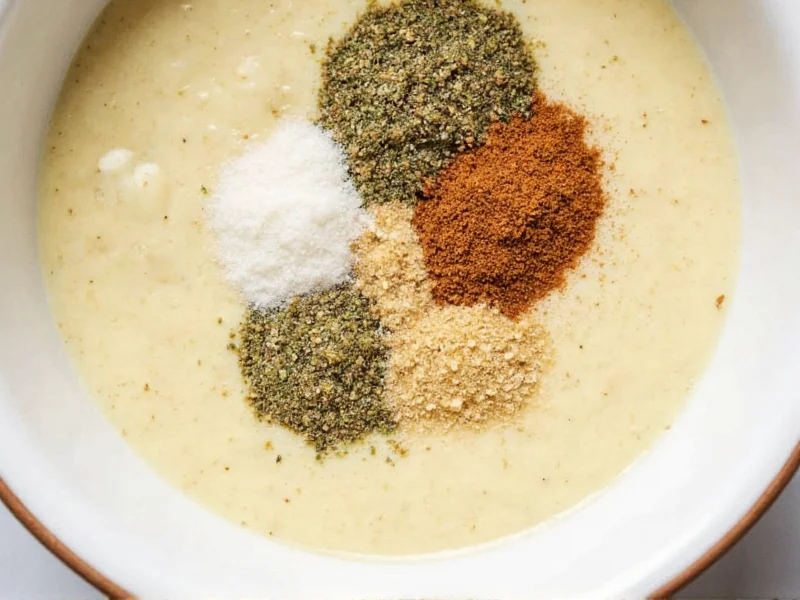
Understanding ranch dressing seasoning unlocks culinary versatility in home kitchens. This dry mix serves as the flavor foundation for America's favorite dressing, providing consistent taste without preservatives found in bottled versions. The powdered format solves common problems like separation and short shelf life while allowing precise control over dressing consistency.
What Exactly Is Ranch Dressing Seasoning?
Ranch dressing seasoning consists of dehydrated herbs (primarily dill and parsley), garlic powder, onion powder, buttermilk powder, salt, and spices. Unlike ready-to-use ranch dressing, this concentrated form requires adding liquid components. Commercial packets typically contain 0.6-0.8 ounces (17-22g) of seasoning mix designed to transform specific liquid volumes into finished dressing.
The critical distinction between ranch seasoning and prepared ranch dressing lies in water activity. The dry mix's low moisture content prevents bacterial growth, granting shelf stability for 12-18 months versus 1-2 weeks for homemade dressing. This fundamental difference explains why seasoning packets appear in pantry sections while dressings occupy refrigerated aisles.
The Evolution of Ranch Dressing: A Historical Timeline
Documented by the Smithsonian Institution, ranch dressing originated in 1954 when Steven Henson, a plumbing contractor turned rancher, created the creamy herb dressing at California's Hidden Valley Ranch. By 1956, Henson began selling dry seasoning packets to guests, establishing the foundation for commercial distribution. Clorox acquired the brand in 1972, enabling nationwide expansion that catalyzed its rise to dominance. Critical milestones include surpassing Italian dressing as America's top-selling salad dressing in 1987 (per USDA Economic Research Service food consumption data), followed by diversification into health-conscious formulations like reduced-sodium variants after 2010. Modern innovations now include globally inspired adaptations such as avocado-lime ranch, reflecting evolving consumer palates while maintaining the core flavor profile documented in Henson's original 1950s recipe.
Core Ingredients and Their Functions
Examining ranch seasoning ingredients reveals their specific roles:
| Ingredient | Function | Typical Percentage |
|---|---|---|
| Buttermilk powder | Provides tangy dairy base | 35-45% |
| Garlic powder | Delivers savory depth | 15-20% |
| Onion powder | Creates aromatic foundation | 12-18% |
| Dill weed | Contributes herbal freshness | 8-12% |
| Parsley | Adds grassy notes | 5-8% |
| Salt | Enhances flavor perception | 10-15% |
Buttermilk powder forms the backbone, reconstituting into the characteristic creamy texture when liquid is added. The herb-to-allium ratio (typically 1:3) balances freshness with savory depth. Higher-quality mixes use real dried herbs rather than artificial flavors, creating more complex flavor profiles.
Proper Usage Measurements for Perfect Results
Accurate measurements separate excellent ranch from disappointing results. The standard conversion uses one standard ranch seasoning packet (approximately 20g) with these liquid bases:
- For dressing: Mix with 1 cup buttermilk + ½ cup mayonnaise
- For dip: Combine with 1 cup sour cream + ¼ cup buttermilk
- For marinade: Blend with ¾ cup olive oil + ¼ cup lemon juice
Adjusting thickness requires precise liquid control. Adding 2 tablespoons extra buttermilk per serving thins dressing without diluting flavor. For thicker dip applications, reduce liquids by 15% and increase sour cream proportion. Never add dry seasoning directly to salads - always reconstitute first to ensure even flavor distribution.
Creative Applications Beyond Salad Dressing
Ranch seasoning's versatility extends far beyond leafy greens. Professional chefs utilize it in these unexpected ways:
1. Flavor-Boosted Proteins
Create ranch-marinated chicken by combining seasoning with buttermilk and hot sauce. The acid tenderizes while herbs penetrate meat. For salmon, mix seasoning with olive oil and lemon zest before baking. The buttermilk powder creates a flavorful crust without burning.
2. Elevated Vegetable Preparations
Toss roasted potatoes with ranch-seasoned olive oil before cooking. The dehydrated herbs adhere better to hot vegetables than wet dressings. For grilled corn, mix seasoning with melted butter - the fat-soluble compounds in garlic powder distribute evenly.
3. Bakery Enhancements
Incorporate 2 tablespoons ranch seasoning per cup of flour in biscuit or scone recipes. The buttermilk powder reacts with baking soda for superior rise while adding savory complexity. This technique transforms ordinary breadsticks into restaurant-quality accompaniments.
Contextual Boundaries: Optimal Uses and Limitations
While ranch seasoning demonstrates remarkable versatility, its effectiveness depends on specific culinary contexts. Understanding these boundaries prevents recipe failures and aligns with dietary requirements:
Ideal Applications
- Emulsified dressings and dips: Performs optimally when combined with dairy or mayo-based emulsions (pH 4.0-4.8), where buttermilk powder fully rehydrates
- Marinades for poultry and vegetables: Acidic components tenderize without curdling at concentrations below 15% seasoning-to-liquid ratio
- Baked goods under 400°F (204°C): Herbs retain flavor integrity in quick breads and biscuits
Key Limitations
- Dietary restrictions: Contains dairy-derived buttermilk powder (not vegan) and averages 4,720mg sodium per 100g [USDA FoodData Central #170250], making it unsuitable for low-sodium diets without modification
- High-heat cooking: Direct application to grilling surfaces above 425°F (218°C) causes herb scorching and bitter compounds
- Long-term storage: Reconstituted dressing exceeds safe pH levels after 7 days refrigeration, per FDA Food Code guidelines for perishable dairy products
For lactose-intolerant consumers, successful substitution requires replacing buttermilk powder with a vegan alternative (like 2 tbsp nutritional yeast + 1 tsp citric acid per ¼ cup) while maintaining the critical acid balance of pH 4.4-4.8. Always verify sodium content through USDA FoodData Central when managing dietary restrictions.
Troubleshooting Common Issues
Even experienced cooks encounter problems with ranch seasoning. Here's how to fix them:
Grainy Texture
Cause: Incomplete dissolution of buttermilk powder
Solution: Whisk seasoning into room-temperature liquids gradually. Cold ingredients cause buttermilk powder to clump. For immediate correction, blend mixture for 20 seconds using an immersion blender.
Bland Flavor
Cause: Stale seasoning or improper ratios
Solution: Add ¼ teaspoon onion powder and ⅛ teaspoon garlic powder per serving. Avoid doubling total seasoning amount, which creates chemical flavor. Freshly ground black pepper (⅛ tsp per cup) brightens dull profiles.
Separation Problems
Cause: Insufficient emulsification
Solution: Increase mayonnaise proportion by 25% when using buttermilk base. The lecithin in egg yolks stabilizes the emulsion. For dairy-free versions, add ½ teaspoon xanthan gum while blending.
Storage Guidelines for Maximum Freshness
Proper storage preserves ranch seasoning's flavor integrity. Keep unopened packets in cool, dark pantries (below 70°F/21°C) for 18 months. After opening, transfer contents to airtight containers - glass jars with rubber seals work best. Exposure to humidity causes buttermilk powder to clump and lose potency.
Reconstituted dressing maintains quality for 5-7 days refrigerated in sealed containers. The critical factor is acid balance - buttermilk's pH (4.4-4.8) inhibits bacterial growth. Discard if separation becomes irreversible or aroma turns sour. Freezing ranch dressing isn't recommended as it damages emulsion structure.
Homemade vs. Commercial Seasoning Comparison
Creating ranch seasoning from scratch offers customization but requires precision. A professional-grade homemade version uses:
- ¼ cup buttermilk powder (sifted)
- 2 tbsp dried parsley (crumbled)
- 1 tbsp dried dill weed
- 1½ tsp garlic powder
- 1 tsp onion powder
- 1 tsp paprika
- ½ tsp black pepper
- 1 tsp citric acid (for tang)
- 1½ tsp salt
The commercial advantage lies in particle size consistency. Industrial mills create uniform powder that dissolves instantly, while home blends often contain larger herb fragments. For equivalent results, pulse dried herbs in food processors until passing through a fine mesh sieve. Citric acid substitution is crucial - lemon zest lacks the precise tartness profile of buttermilk's natural acids.
Frequently Asked Questions
How much liquid do I need for one ranch seasoning packet?
One standard ranch seasoning packet (approximately 20g) requires 1 cup buttermilk plus ½ cup mayonnaise for dressing, or 1 cup sour cream plus ¼ cup buttermilk for dip. Adjust liquid amounts by 2 tablespoons per serving for desired thickness.
Can I use ranch seasoning mix as a dry rub?
Yes, ranch seasoning works effectively as a dry rub for proteins. Apply generously to chicken, pork, or vegetables before cooking. The buttermilk powder creates a flavorful crust while herbs remain intact at cooking temperatures up to 400°F (204°C).
Why does my homemade ranch taste different than store-bought?
Commercial ranch contains precise buttermilk powder formulations and citric acid for consistent tang. Home versions often lack sufficient acid balance. Add ¼ teaspoon citric acid or 1 teaspoon lemon juice per cup of dressing to match professional flavor profiles.
How long does ranch dressing last after mixing?
Properly stored ranch dressing remains fresh for 5-7 days in the refrigerator. Use airtight containers to prevent absorption of other food odors. Discard if separation becomes irreversible or if sour aromas develop, indicating bacterial growth.
Can I make ranch dressing without buttermilk?
Yes, substitute buttermilk with plain yogurt thinned with milk (1:1 ratio) or sour cream diluted with water. The critical element is acidity - add ½ teaspoon vinegar per cup if using neutral dairy bases. Buttermilk powder in the seasoning provides some tang, but additional acid improves flavor balance.




 浙公网安备
33010002000092号
浙公网安备
33010002000092号 浙B2-20120091-4