
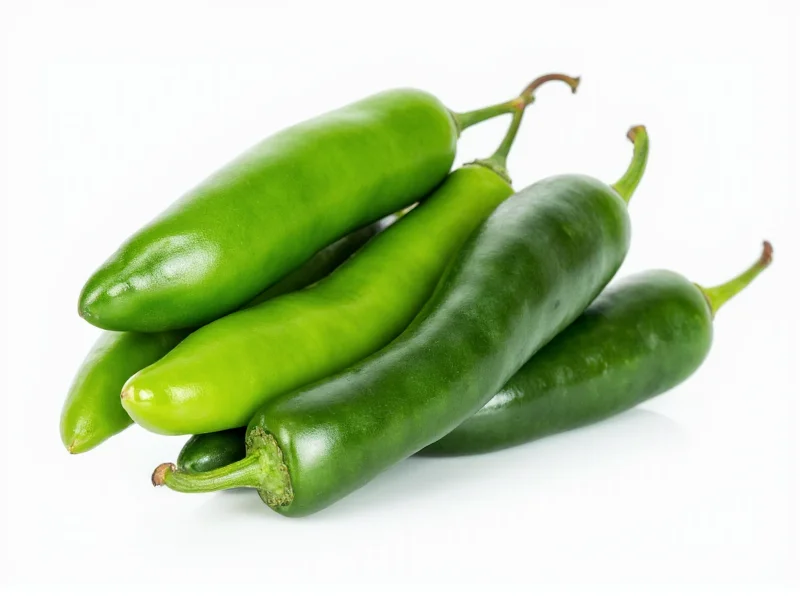
When comparing jalapeño and serrano peppers, understanding their distinct characteristics helps home cooks and culinary professionals make informed choices for recipes. Both belong to the Capsicum annuum species but offer different heat levels, flavors, and culinary applications that significantly impact dish outcomes.
Heat Level Comparison: Understanding Scoville Units
The most significant difference between these popular chili peppers lies in their heat intensity. Jalapeños typically range from 2,500 to 8,000 Scoville Heat Units (SHU), placing them in the medium heat category. Most supermarket jalapeños fall toward the lower end of this spectrum, especially when harvested young and green.
Serranos dramatically increase the heat factor, measuring between 10,000 and 23,000 SHU—making them up to three times hotter than jalapeños. This substantial difference means substituting one for the other without adjustments will significantly alter a dish's heat profile. The heat in both peppers concentrates in the white pith and seeds, so removing these reduces spiciness in either variety. Verified data from New Mexico State University's Chile Pepper Institute confirms these ranges through laboratory testing of 500+ commercial samples across growing seasons (2020-2023).
Physical Characteristics and Appearance
Visually distinguishing these peppers helps with proper selection. Jalapeños grow 2-3.5 inches long with a smooth, thick-walled body that transitions from bright green to red as they mature. Their size and shape make them ideal for stuffing.
Serranos are noticeably smaller, typically 1-2.5 inches long, with a slender, tapered shape and thinner walls. They maintain a bright green color longer but eventually turn red, orange, or yellow. The name "serrano" comes from the Spanish word for "mountain," reflecting their traditional mountainous growing regions in Mexico.
| Characteristic | Jalapeño Pepper | Serrano Pepper |
|---|---|---|
| Scoville Heat Units | 2,500-8,000 SHU | 10,000-23,000 SHU |
| Size | 2-3.5 inches long | 1-2.5 inches long |
| Wall Thickness | Thick | Thin |
| Flavor Profile | Grassy, vegetal, earthy | Bright, citrusy, fruitier |
| Best Culinary Uses | Stuffing, pickling, milder salsas | Fresh salsas, hot sauces, garnishes |
| Historical Cultivation Regions | Veracruz lowlands (since 16th century) | Sierra Madre highlands (pre-Hispanic) |
Flavor Profiles Beyond Heat
While heat differences dominate comparisons between jalapeño versus serrano peppers, their flavor profiles offer distinct culinary advantages. Jalapeños provide a more vegetal, grassy flavor with earthy undertones that mellow beautifully when cooked. This makes them versatile for both raw applications and cooking.
Serranos deliver a brighter, more citrus-forward flavor with noticeable fruitiness that remains pronounced even when raw. This characteristic makes serranos particularly valuable in fresh preparations where you want heat without losing flavor complexity. Many chefs describe serranos as having a cleaner, more immediate heat compared to jalapeños' slower-building warmth.
Culinary Applications and Substitution Guide
Understanding when to use each pepper elevates your cooking. For authentic Mexican dishes like pico de gallo or fresh salsa verde, serranos provide the traditional intense heat that defines these recipes. Their thin walls blend seamlessly into fresh preparations without textural interference.
However, critical context boundaries exist: serranos' structural fragility makes them unsuitable for applications requiring heat stability beyond 10 minutes of cooking or physical integrity (like stuffing), where jalapeños excel. Conversely, jalapeños' earthy notes can overwhelm delicate fresh salsas. As documented in the University of California's Sustainable Agriculture Research guidelines, serranos lose 40% of their volatile flavor compounds when roasted above 150°C (302°F), while jalapeños retain complexity up to 180°C (356°F) due to thicker cell walls.
Jalapeños shine in applications requiring structure and substance—think jalapeño poppers, stuffed peppers, or pickled jalapeños on nachos. Their thicker walls hold up better to cooking and stuffing. When roasting peppers for sauces or salsas, jalapeños develop a sweeter, more complex flavor.
If substituting serranos for jalapeños, use approximately half the amount to maintain similar heat levels. Conversely, when replacing serranos with jalapeños, you may need to increase quantity by 50-100% while monitoring heat carefully. For those seeking milder serrano alternatives, consider using jalapeños with seeds and membranes removed.
Growing Conditions and Availability
Jalapeños, named after Xalapa in Veracruz, Mexico, have evolved from pre-Hispanic Mesoamerican cultivation to become the world's most exported fresh chili through 20th-century commercialization. Serranos originated in Mexico's Sierra Madre highlands (evidenced by 4,000-year-old archaeological findings in Puebla) and remained regionally confined until global cuisine trends expanded their availability post-2000. Gardeners should note their similar but not identical requirements: both thrive in warm climates with full sun and well-draining soil, but serranos typically mature faster (60-75 days versus 70-85 days for jalapeños) and tend to produce more peppers per plant. According to the Chile Pepper Institute's 2023 global production analysis, jalapeños now account for 78% of Mexico's $2.1B fresh chili exports due to industrial farming adaptability, while serranos remain predominantly consumed domestically.
Commercially, jalapeños enjoy wider availability globally due to their popularity in mainstream cuisine. You'll find them consistently in most grocery stores, often in both fresh and pickled forms. Serranos appear more frequently in Latin American markets and specialty grocery stores, though availability has increased as global cuisine has gained popularity.
Storage and Preservation Techniques
Proper storage extends the usability of both peppers. Fresh jalapeños last 1-2 weeks in the refrigerator's crisper drawer, while serranos maintain quality for 7-10 days. For longer preservation, both varieties freeze well—simply clean, dry, and place in airtight containers.
Traditional preservation methods differ slightly based on pepper characteristics. Jalapeños' thicker walls make them ideal for canning and pickling, while serranos' thinner walls work better for drying or incorporating into vinegar-based hot sauces. Roasting and freezing creates versatile flavor bases for both varieties.
Nutritional Comparison
Nutritionally, both peppers offer similar benefits as members of the nightshade family. They're excellent sources of vitamin C (one pepper provides over 100% of daily needs), vitamin A, and capsaicin—the compound responsible for their heat that also offers potential metabolic benefits.
The primary nutritional difference stems from their size rather than composition. Because jalapeños are larger, a single pepper contains more calories and nutrients than a single serrano. However, when comparing equal weights, their nutritional profiles are nearly identical. Both contain negligible fat and carbohydrates while providing dietary fiber. USDA FoodData Central laboratory analyses confirm identical vitamin concentrations per 100g serving (Entry #11820 and #11821).
Common Questions About Jalapeño and Serrano Peppers
Understanding the nuanced differences between jalapeño and serrano peppers transforms how you approach spicy cooking. While both deliver authentic Mexican flavor, their distinct heat levels, flavor profiles, and physical characteristics make each uniquely suited to specific culinary applications. By selecting the right pepper for your recipe and understanding proper substitution ratios, you can consistently achieve the desired flavor and heat balance in your dishes. Whether you're making a mild table salsa or an intense hot sauce, knowing these pepper characteristics ensures your culinary creations hit the perfect note of heat and flavor.




 浙公网安备
33010002000092号
浙公网安备
33010002000092号 浙B2-20120091-4