
Learning how to cook ghee properly transforms ordinary butter into a versatile cooking fat with a higher smoke point and rich, nutty flavor. This traditional clarified butter removes milk solids completely, making it suitable for lactose-sensitive individuals while enhancing shelf stability. Unlike store-bought versions that may contain additives, homemade ghee offers pure, customizable quality you can control from start to finish.
What Exactly Is Ghee and Why Make It Yourself?
Ghee, a form of clarified butter with ancient roots in Indian cuisine, has been used for thousands of years in both cooking and Ayurvedic medicine. The clarification process involves simmering butter to remove water content and separate milk solids, resulting in a pure butterfat that won't burn at high temperatures. When you cook ghee yourself, you control the quality of ingredients and the cooking process, ensuring optimal flavor development without preservatives or artificial ingredients commonly found in commercial products.
| Ingredient | Quantity | Notes |
|---|---|---|
| Unsalted butter | 1 pound (4 sticks) | Use high-quality, preferably grass-fed butter for best flavor |
| Water | ¼ cup | Helps prevent scorching during initial melting phase |
Essential Equipment Checklist
- Medium heavy-bottomed saucepan (stainless steel preferred)
- Fine mesh strainer or cheesecloth
- Heat-resistant glass measuring cup
- Wooden spoon or silicone spatula
- Clean glass jar with airtight lid for storage
Your Step-by-Step Guide to Perfect Homemade Ghee
Preparation Phase: Setting Up for Success
Cut your butter into uniform cubes to ensure even melting. Place the cubed butter and water in your saucepan over medium-low heat. The water helps prevent the butter from burning during the initial melting phase and creates steam that helps separate the milk solids. Never use high heat at this stage—patience is crucial for how to cook ghee properly without scorching.
Cooking Process: The Critical Transformation Stages
As the butter melts, it will foam significantly. This is normal. Continue cooking uncovered, stirring occasionally with your wooden spoon to prevent sticking. The cooking process follows distinct stages you must recognize:
- Melting stage (3-5 minutes): Butter liquefies completely with moderate foaming
- Emulsification stage (5-8 minutes): Foam increases dramatically as water evaporates
- Clarification stage (8-12 minutes): Foam reduces and turns golden as milk solids separate
- Browning stage (2-5 minutes): Milk solids sink and turn golden brown while ghee becomes clear golden
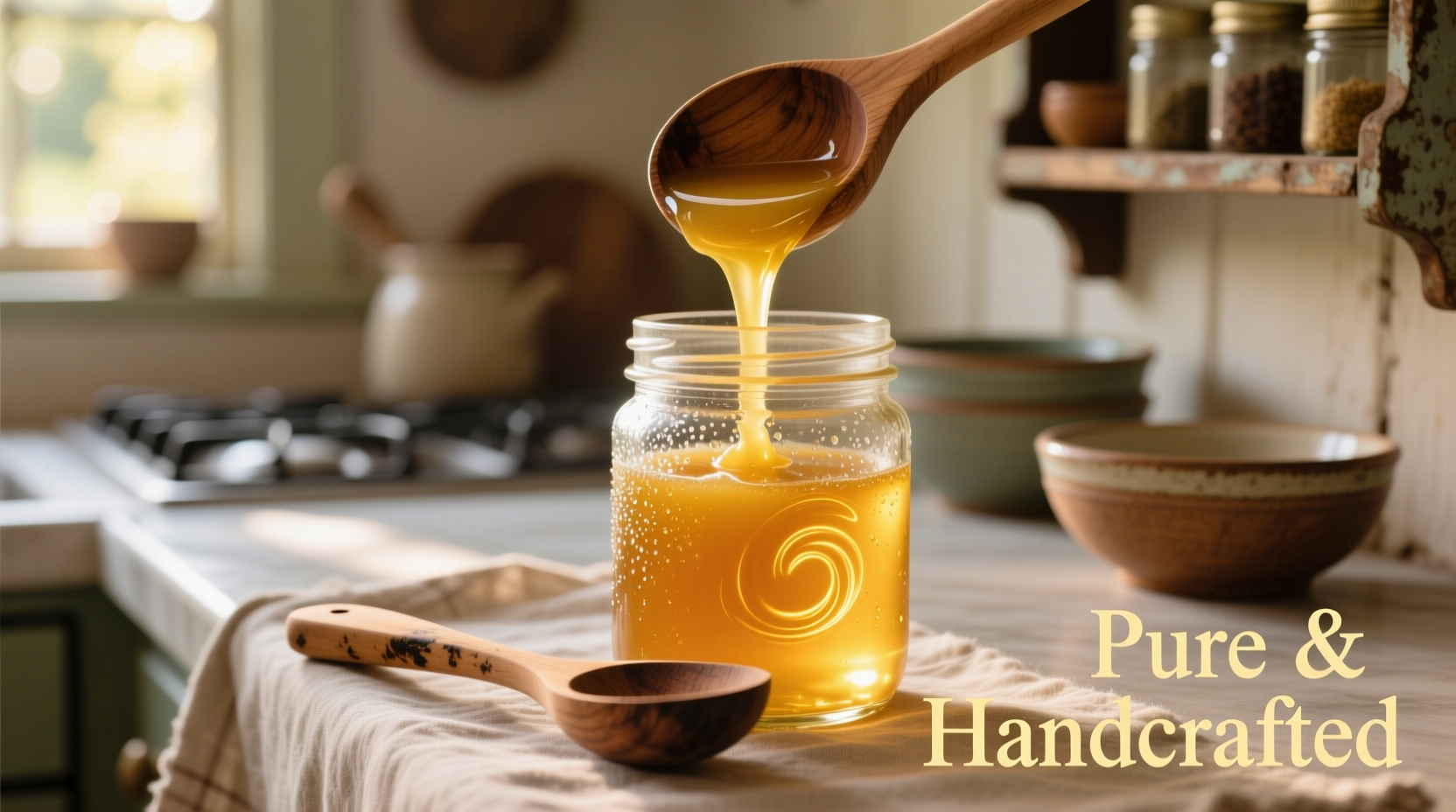
When learning how to cook ghee, the visual cues are more reliable than timing alone. The transformation from opaque yellow liquid to clear golden oil with browned milk solids at the bottom indicates completion. Properly cooked ghee should have a rich nutty aroma without any burnt notes.
Straining and Storage: Preserving Your Perfect Ghee
Once the milk solids have turned golden brown and the ghee appears clear golden, immediately remove from heat. Carefully pour the liquid through your fine mesh strainer or cheesecloth into your heat-resistant measuring cup, leaving the milk solids behind. Transfer to your clean glass jar, ensuring no moisture contaminates your ghee. Properly stored homemade ghee keeps at room temperature for 3 months or up to 1 year refrigerated.
Historical Evolution of Ghee Preparation
The technique for how to cook ghee has evolved significantly while maintaining core principles. Ancient Indian texts from 1500 BCE describe ghee preparation in clay pots over wood fires, requiring constant attention to prevent burning. Traditional methods involved hand-churning cultured butter before clarification, adding complex flavor dimensions. By the Mughal era (1526-1857), ghee production became more refined with specialized copper vessels that distributed heat evenly. Modern home cooks benefit from precise temperature control with today's cookware, though the fundamental process remains unchanged for millennia—simmering butter to separate its components through careful heat management.
| Characteristic | Ghee | Regular Butter |
|---|---|---|
| Smoke Point | 485°F (252°C) | 302°F (150°C) |
| Lactose Content | Nearly zero | Approximately 1% |
| Shelf Stability | 3+ months unrefrigerated | Requires refrigeration |
| Flavor Profile | Nutty, caramelized | Creamy, dairy-forward |
When Ghee Isn't the Right Choice: Important Limitations
Understanding how to cook ghee properly includes recognizing its limitations. While versatile, ghee isn't suitable for all applications. Avoid using ghee in recipes where dairy flavor is essential, such as traditional French pastries that rely on butter's water content for proper texture development. Ghee also lacks the emulsifying properties of regular butter, making it unsuitable for sauces like hollandaise that require the milk proteins found in whole butter. Additionally, while ghee contains less lactose than butter, individuals with severe dairy allergies should consult medical professionals before consumption, as trace proteins may remain.
Pro Tips for Flawless Ghee Every Time
- Temperature control is critical: Maintain medium-low heat throughout—never rush the process with high heat
- Watch the color, not just the clock: Golden brown milk solids indicate perfect doneness; darker indicates burnt flavor
- Use stainless steel cookware: Dark-bottomed pans make it difficult to monitor milk solid color changes
- Never leave unattended: The transition from perfect to burnt happens in seconds during the final stages
- Cool before storing: Ensure ghee reaches room temperature to prevent condensation in storage container
Troubleshooting Common Ghee-Making Problems
If your ghee turns out cloudy, this indicates incomplete water removal—return to low heat and simmer 2-3 minutes longer. Burnt-tasting ghee results from excessive heat during the browning stage; unfortunately, this batch cannot be salvaged. If your ghee spoils quickly, moisture contamination is likely the culprit—always use completely dry equipment and containers. For optimal results when learning how to cook ghee, start with smaller batches (½ pound) until you master the visual and aromatic cues of the process.




 浙公网安备
33010002000092号
浙公网安备
33010002000092号 浙B2-20120091-4