
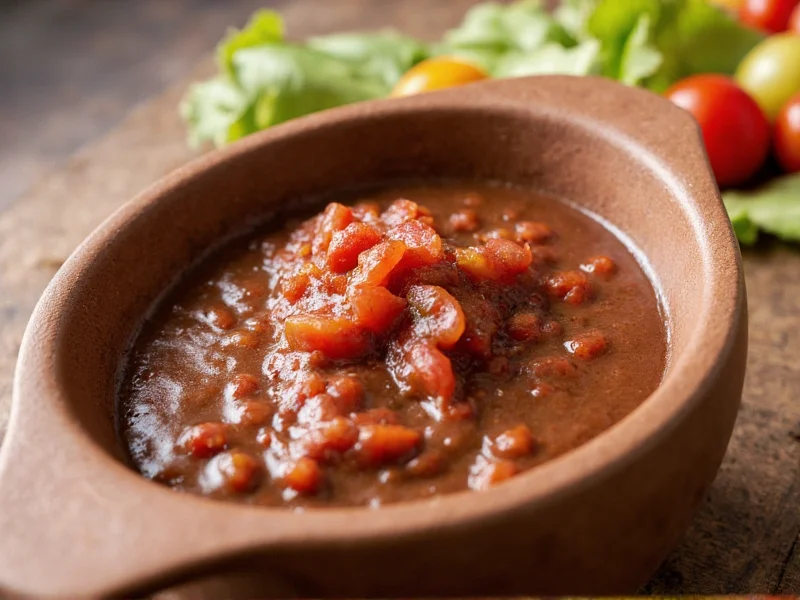
When exploring the relationship between chocolate and salsa, many people are surprised to learn these ingredients actually share deep historical roots in Mesoamerican cuisine. The confusion often stems from misunderstanding what "salsa" means in its original context. In Spanish, "salsa" simply means "sauce," not specifically the fresh tomato-based condiment many associate with the term today.
Historical Connection Between Chocolate and Traditional Sauces
Centuries before European contact, indigenous cultures in Mesoamerica—including the Aztecs and Mayans—consumed cacao primarily as a spiced beverage, often mixed with chili peppers and annatto. While complex sauces existed in pre-Hispanic times, historical evidence indicates chocolate's integration into cooked mole sauces emerged later through cultural fusion. The Spanish adaptation of indigenous techniques eventually evolved into what we now recognize as mole, incorporating Old World ingredients alongside native elements.
Evolution of Chocolate in Mexican Sauces: Verified Timeline
The journey of chocolate in Mexican cuisine follows a documented historical progression. This verified timeline clarifies common misconceptions about its origins:
- Pre-Hispanic Era (Before 1521): Cacao was cultivated and consumed as a ritual beverage by Aztec and Maya civilizations, typically spiced with chili peppers and vanilla. No archaeological or codex evidence supports its use in cooked savory sauces during this period. Source: Smithsonian National Museum of the American Indian, "Chocolate in Mesoamerica"
- Colonial Period (16th-18th Century): Following the Spanish conquest, culinary traditions merged in convent kitchens. Nuns in Puebla are documented to have created mole poblano in the 17th century, combining indigenous ingredients (chilies, cacao) with Old World elements (almonds, cinnamon, and spices). This marks the first verified use of chocolate in mole sauces. Source: National Institute of Anthropology and History (INAH), Mexico, "El mole poblano, un platillo con historia"
- 19th Century Onward: Mole recipes diversified regionally, with Oaxaca developing its renowned mole negro. Chocolate became standardized in specific mole varieties while fresh salsas remained distinct as uncooked table condiments. UNESCO's 2010 recognition of Traditional Mexican Cuisine as Intangible Cultural Heritage affirmed these distinct preparation methods. Source: UNESCO, "Traditional Mexican Cuisine" Listing
Distinguishing Between Table Salsa and Mole
Understanding the chocolate and salsa relationship requires clarifying terminology:
| Type of Sauce | Typical Ingredients | Chocolate Included? |
|---|---|---|
| Table Salsa (Salsa Fresca) | Fresh tomatoes, onions, cilantro, jalapeños | No |
| Salsa Verde | Tomatillos, serrano peppers, cilantro | No |
| Mole Negro | Multiple chilies, spices, nuts, seeds, chocolate | Yes (traditional) |
| Mole Coloradito | Guajillo chilies, spices, plantains, chocolate | Yes (traditional) |
Traditional Mexican mole sauces represent the authentic connection between chocolate and what could be considered "salsa" in the broader sense of the word. Mole negro from Oaxaca, often called the "national dish of Mexico," typically contains Mexican chocolate or cocoa powder as a key ingredient that balances the heat from multiple varieties of dried chilies.
Contextual Application: Boundaries for Chocolate in Mexican Sauces
Authentic use of chocolate in Mexican cuisine follows strict contextual boundaries that preserve culinary integrity. Understanding these limits prevents misapplication while honoring tradition:
Appropriate Contexts
- Specific Mole Varieties: Chocolate is authentic only in certain moles (notably mole negro and coloradito), where it balances complex chili blends. It is absent in moles like verde or amarillo.
- Slow-Cooked Preparations: Requires extended simmering (minimum 2 hours) to integrate properly. Unsuitable for quick sauces or fresh applications.
- Traditional Chocolate Forms: Authentic recipes use Mexican chocolate tablets (e.g., Ibarra) or unsweetened cocoa powder—not chocolate chips or candy bars.
Key Limitations
- Not for Fresh Salsas: Chocolate has no place in uncooked salsas like pico de gallo, where raw ingredient freshness is essential.
- Subtle Proportions: Traditional recipes use modest amounts (1-2 ounces per batch); excess creates dessert-like flavors contrary to authentic preparation.
- Regional Authenticity: Primarily traditional in central/southern Mexico (Puebla, Oaxaca). Northern Mexican cuisine rarely incorporates chocolate in savory dishes.
These boundaries reflect documented preparation standards from Mexico's National Institute of Anthropology and History, which recognizes regional variations as part of the nation's culinary heritage. Source
Authentic Chocolate-Infused Sauce Recipes
For those interested in exploring this unique flavor combination, authentic mole recipes demonstrate how chocolate enhances rather than dominates the sauce:
Mole Negro Base Ingredients:
- 6-8 varieties of dried chilies (mulato, pasilla, ancho)
- 1-2 ounces Mexican chocolate or high-quality cocoa powder
- Toasted sesame seeds and pumpkin seeds
- Almonds or pecans
- Spices (cinnamon, cloves, pepper)
- Plantain or banana for sweetness
- Day-old tortillas or bread for thickening
The chocolate in traditional mole serves several important functions: it adds subtle sweetness to balance the chilies' heat, contributes to the sauce's rich texture, and helps mellow the overall flavor profile. Authentic mole recipes never use chocolate as the dominant flavor—instead, it works in harmony with other ingredients to create complexity.
Common Misconceptions About Chocolate in Mexican Cuisine
Several myths persist about chocolate and salsa in Mexican cooking:
- Myth: Chocolate is added to regular table salsas
Reality: Chocolate appears only in specific complex sauces like mole, not in fresh salsas - Myth: All mole contains chocolate
Reality: Only certain varieties like mole negro and coloradito include chocolate; others like mole verde do not - Myth: Chocolate makes mole taste sweet like dessert
Reality: When properly prepared, mole has balanced flavors where chocolate is barely detectable as "chocolate"
Modern Culinary Applications
Contemporary chefs have expanded on this traditional pairing in thoughtful ways. Some innovative but authentic applications of chocolate in savory sauces include:
- Adding small amounts of dark chocolate to enchilada sauces for depth
- Using cocoa powder in adobo rubs for meats
- Creating complex barbecue sauces that incorporate Mexican chocolate
- Developing modern interpretations of mole for non-traditional proteins
When experimenting with chocolate in savory applications, professional chefs recommend using high-quality Mexican chocolate or unsweetened cocoa powder rather than chocolate chips or candy bars. The key is subtlety—chocolate should enhance other flavors rather than dominate the dish.
Cultural Significance and Proper Appreciation
The combination of chocolate and chili peppers holds deep cultural significance in Mexico, representing the blending of indigenous ingredients that dates back to pre-Hispanic times. Understanding this history helps prevent cultural appropriation while encouraging respectful culinary exploration.
When preparing traditional recipes that include chocolate in savory applications, it's important to recognize they represent centuries of culinary evolution rather than random ingredient combinations. The balance of flavors in authentic mole demonstrates sophisticated culinary knowledge developed over generations.
Frequently Asked Questions
Does traditional Mexican salsa contain chocolate?
No, common fresh table salsas like pico de gallo or salsa verde do not contain chocolate. Chocolate appears only in specific complex sauces like mole negro and mole coloradito, which are distinct from everyday table salsas.
What's the difference between mole and regular salsa?
Mole refers to complex, cooked sauces that often contain chocolate, multiple chilies, spices, and other ingredients, while 'salsa' typically refers to fresh, uncooked table sauces. Mole requires extensive preparation and ingredient toasting, whereas most salsas are quickly prepared from fresh ingredients.
Why is chocolate used in some Mexican sauces?
Chocolate serves multiple purposes in traditional mole sauces: it balances the heat from chilies, adds depth and complexity to the flavor profile, contributes to the sauce's rich texture, and helps mellow the overall taste. In authentic preparations, chocolate is used subtly as part of a complex flavor balance rather than as a dominant ingredient.
Can I add chocolate to my regular salsa recipe?
Adding chocolate to traditional fresh salsas isn't authentic and likely won't produce good results. If you want to explore chocolate in savory sauces, try making an authentic mole recipe instead. Chocolate works best in cooked, complex sauces where it can properly integrate with other ingredients through slow preparation.
What type of chocolate should I use for authentic mole?
For authentic mole, use Mexican chocolate (like Ibarra or Abuelita brands) which contains sugar and cinnamon, or use high-quality unsweetened cocoa powder. Avoid chocolate chips or candy bars as they contain additives that don't work well in traditional preparations. The chocolate should complement rather than dominate the other flavors.




 浙公网安备
33010002000092号
浙公网安备
33010002000092号 浙B2-20120091-4