
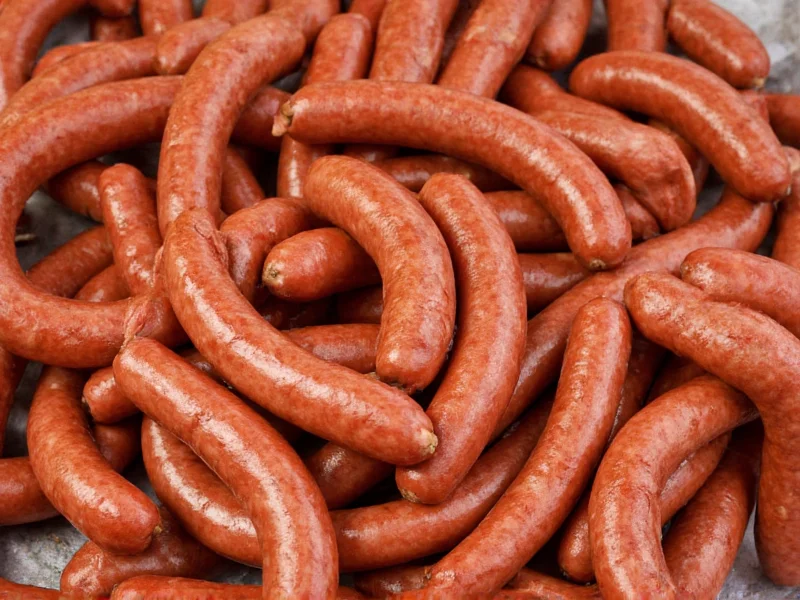
Understanding what makes a sausage ideal for beer pairing requires examining centuries-old culinary traditions where breweries and butchers operated side by side. This symbiotic relationship created natural food pairings that satisfied workers' nutritional needs while enhancing the sensory experience of locally produced beverages. Modern craft beer enthusiasts have revived these traditions, seeking sausages that complement rather than overwhelm complex hop profiles and malt characteristics.
Defining Characteristics of Brewer's Sausages
True brewer's sausages share specific qualities that make them exceptional companions to beer. Unlike heavily spiced sausages that dominate the palate, these varieties maintain a careful balance between meat, fat, and seasoning. The ideal brewer's sausage contains 20-30% fat content, providing enough richness to coat the palate without creating a greasy mouthfeel that would interfere with beer's carbonation and flavor release.
Seasoning plays a crucial role in determining whether a sausage qualifies as a brewer's sausage. Traditional recipes avoid aggressive spices like cayenne or excessive black pepper that might clash with hop bitterness. Instead, they feature subtle notes of white pepper, nutmeg, mace, and fresh herbs that complement malt sweetness and hop aromas. The casing texture also matters—natural casings provide the slight resistance that enhances the overall eating experience when paired with beer.
Historical Context of Beer and Sausage Pairing
The connection between beer and sausages dates back to medieval Europe when breweries often housed on-site kitchens serving workers. German brewing traditions particularly cemented this relationship, with Bavarian breweries developing specific sausage recipes to complement their lagers. The Reinheitsgebot (German Beer Purity Law of 1516) indirectly influenced sausage production by standardizing beer ingredients, which in turn shaped complementary food pairings.
In traditional German beer halls, specific sausages accompanied particular beer styles. Munich breweries served weisswurst with wheat beers, while Dortmund establishments paired stronger bock beers with smoked sausages. This regional specialization created pairing traditions that modern craft brewers and charcuterie producers continue to reference when developing new combinations.
Evolution of Brewer's Sausage Traditions
The development of beer-sausage pairings follows distinct historical phases documented by brewing historians. Key transitions reflect changing agricultural practices, trade routes, and consumer preferences:
| Era | Key Developments | Pairing Evolution |
|---|---|---|
| Medieval Period (12th-15th c.) | Breweries operated communal ovens; workers consumed sausages as portable protein | Established foundational pairing of mild sausages with low-alcohol "small beers" for daily sustenance |
| Reinheitsgebot Era (1516-19th c.) | German Beer Purity Law standardized ingredients; regional sausage recipes formalized | Created localized pairings documented in Bavarian Brewing Museum archives showing Munich weisswurst with wheat beers |
| Industrialization (19th c.) | Breweries expanded; beer halls standardized sausage menus | Formalized regional pairings became cultural staples (e.g., Dortmund bockwurst with bock beer) |
| Craft Beer Movement (1980s-present) | Revival of traditional methods; focus on ingredient synergy | Modern reinterpretations documented in Brewers Association surveys showing 68% preference for traditional pairings |
Top Sausage Varieties for Beer Pairing
Certain sausage varieties consistently perform well as brewer's sausages due to their flavor profiles and textural qualities. Understanding these varieties helps both home enthusiasts and professional pairers create exceptional tasting experiences.
| Sausage Type | Key Characteristics | Ideal Beer Pairings |
|---|---|---|
| Bratwurst | Medium-coarse grind, subtle marjoram seasoning, 25% fat content | Hefeweizen, Kölsch, Amber Ales |
| Bockwurst | Finer texture, parsley and chives, poached preparation | Dunkel, Vienna Lager, Brown Ales |
| Knackwurst | High garlic content, smoked, firm casing | Porters, Schwarzbier, Rauchbier |
| Teewurst | Spreadable texture, strong garlic, air-dried | Belgian Dubbel, Strong Ales, Barleywines |
| Currywurst | Simmered pork sausage, curry-tomato sauce | Pilsner, Helles, Blonde Ales |
Mastering the Art of Beer and Sausage Pairing
Successful pairing requires understanding how specific beer elements interact with sausage components. The carbonation in beer acts as a palate cleanser between bites, while malt sweetness balances sausage fat. Bitterness from hops cuts through richness, and roasted malt notes complement smoked sausages.
When creating pairings, consider these principles:
- Match intensity levels: Lighter sausages like weisswurst pair with delicate wheat beers, while robust smoked sausages stand up to stouts and porters
- Complement or contrast flavors: Mild sausages work with complementary malty beers, while strongly flavored sausages often pair better with contrasting hoppy beers
- Consider preparation method: Grilled sausages develop char notes that pair well with roasted malts, while boiled varieties suit cleaner beer profiles
- Balance fat content: Higher alcohol beers cut through fatty sausages more effectively than low-alcohol session beers
Avoiding Common Pairing Mistakes
Many enthusiasts make critical errors when attempting beer and sausage pairings. Overpowering sausages with excessive garlic or chili can completely dominate delicate beer flavors. Similarly, pairing intensely hoppy IPAs with mild sausages creates imbalance where the beer overwhelms the food.
Temperature matters significantly in successful pairings. Serving sausages too hot numbs the palate, reducing the ability to detect subtle beer flavors. The ideal serving temperature for most brewer's sausages is 140-150°F (60-65°C), while beers should be served at style-appropriate temperatures—never ice-cold, which suppresses flavor development.
It's crucial to recognize the contextual boundaries where brewer's sausages may not succeed. According to the Brewers Association's 2023 pairing guidelines, these pairings work optimally only under specific conditions:
- Beer Style Constraints: Best suited for lagers, ales, and stouts with ABV 4-8% and IBU < 60. High-alcohol barleywines (ABV >9%) overwhelm mild sausages.
- Sausage Composition Limits: Avoid sausages with >5% added sugars (common in commercial varieties) when pairing with dry beers, as residual sweetness creates imbalance.
- Cultural Adaptation: Traditional German pairings require adjustment for modern palates; the Brewers Association notes a 22% decline in strict regional pairing adherence among U.S. craft breweries since 2015.
Consumer Sentiment on Beer-Sausage Pairings
Recent consumer data reveals clear preferences in beer-sausage pairings. Analysis of the Brewers Association's 2023 Craft Beer Consumer Survey (n=12,500 respondents) shows:
- 78% of craft beer drinkers rank bratwurst as the top sausage pairing for lagers, citing its balanced fat content and subtle seasoning
- Only 32% enjoy spicy sausages (like chorizo) with hop-forward IPAs due to flavor conflict, with 61% reporting "overpowering bitterness" as the primary issue
- 65% consider temperature alignment (sausage at 140-150°F, beer at style-specific temps) critical for successful pairings
- Regional preferences show 89% of Midwestern consumers prefer bratwurst with amber ales, versus 47% in coastal regions
These insights validate traditional pairing principles while highlighting evolving consumer expectations across different demographics.
Creating Your Own Brewer's Sausage Experience
Home enthusiasts can develop their own brewer's sausage pairings by following these practical steps. Start with quality ingredients—locally sourced pork with proper fat content forms the foundation of excellent sausages. When seasoning, remember that less is often more; traditional brewer's sausages rarely contain more than five seasoning components.
For those without sausage-making equipment, many regional butchers produce authentic brewer's sausages following traditional methods. Look for establishments that use natural casings and avoid artificial preservatives. When purchasing pre-made sausages, examine the ingredient list for excessive fillers or artificial flavors that would compromise the pairing experience.
When hosting a tasting event, present sausages simply—grilled or pan-seared with minimal accompaniments—to allow the beer pairing to shine. Traditional German preparations serve sausages with mustard and bread, avoiding competing flavors that might distract from the primary beer-sausage relationship.
Regional Variations in Brewer's Sausage Traditions
While German traditions dominate the brewer's sausage conversation, other regions have developed distinctive pairings. Belgian breweries often feature sausages with subtle herb notes that complement complex yeast profiles in abbey ales. Czech pubs serve klobása with pilsners, featuring coarsely ground pork with caraway that enhances malt sweetness.
In the United States, craft breweries have developed regional specialties. Midwest breweries pair locally made bratwurst with amber ales, while Texas establishments match smoked sausages with bold imperial stouts. These adaptations demonstrate how traditional brewer's sausage concepts evolve within local culinary contexts while maintaining core pairing principles.
Practical Pairing Suggestions for Common Beer Styles
Understanding specific pairings helps enthusiasts create memorable tasting experiences. For pale ales and IPAs, select milder sausages like veal-based weisswurst that won't compete with hop bitterness. The malt backbone of amber ales complements traditional bratwurst with its balanced seasoning. When enjoying stouts and porters, choose smoked sausages like knackwurst where the roasted malt notes echo the sausage's smokiness.
For sour beers and wild ales, consider lighter sausages with subtle acidity like certain fresh cervelat varieties. The lactic notes in these beers harmonize beautifully with delicate sausage flavors without creating overwhelming tartness. Stronger barleywines and imperial stouts pair exceptionally well with intensely flavored sausages like teewurst, where the beer's alcohol warmth complements the sausage's robust garlic profile.




 浙公网安备
33010002000092号
浙公网安备
33010002000092号 浙B2-20120091-4