
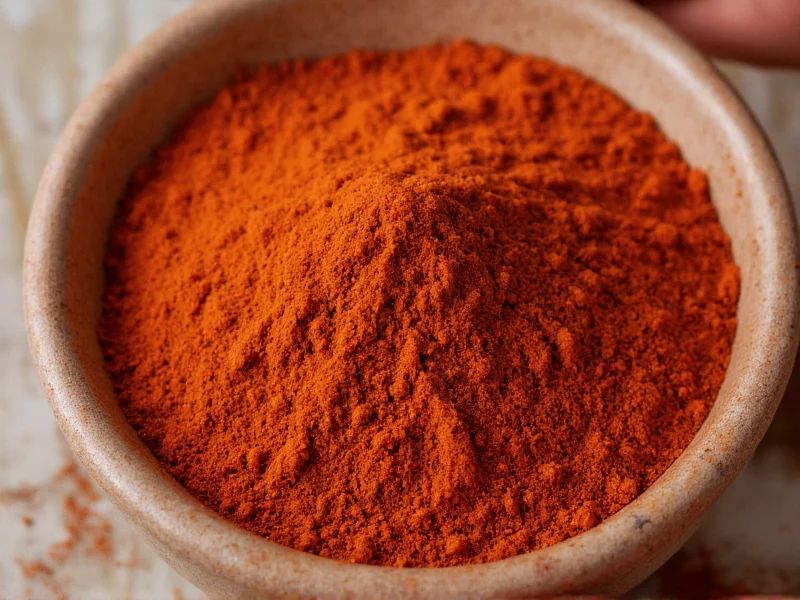
Understanding the Different Meanings of Spice Visual
When searching for "spice visual," users often encounter confusion due to multiple interpretations of this term. This comprehensive guide clarifies each meaning with practical applications and helps you determine which interpretation applies to your specific needs. Understanding these distinctions is essential whether you're an electronics engineer, food scientist, or simply researching visualization techniques.
SPICE Circuit Simulation Visualization
For electronics professionals, "spice visual" most commonly refers to visualization components within SPICE (Simulation Program with Integrated Circuit Emphasis) software. SPICE is the industry-standard tool for electronic circuit simulation, and its visualization capabilities have evolved significantly.
Modern SPICE implementations include sophisticated visualization features that transform complex circuit data into understandable graphical representations. These spice visualization software tools allow engineers to:
- View voltage and current waveforms across multiple circuit nodes simultaneously
- Generate 3D representations of frequency responses
- Visualize thermal distributions across circuit components
- Create interactive schematics with real-time simulation feedback
Context Boundaries for SPICE Visualization
SPICE circuit simulation visualization excels in specific contexts but has well-defined limitations:
- Ideal for: Analog and mixed-signal circuit design below 1 GHz, DC/AC/transient analysis, and thermal profiling of integrated circuits
- Not suitable for: High-frequency RF design (above 1 GHz), electromagnetic interference analysis, or full-system digital simulation without co-simulation
According to the National Institute of Standards and Technology (NIST), "SPICE-based circuit simulators are not adequate for high-frequency design because they do not model electromagnetic effects," necessitating specialized electromagnetic field solvers for such applications.
Source: NIST Special Publication 500-266: Electronic Design Automation
Leading electronic design automation (EDA) platforms like LTspice, NGSPICE, and commercial tools from Cadence and Synopsys incorporate advanced spice circuit simulation visualization tools that help engineers identify potential design flaws before physical prototyping.
Visual Representation of Spices in Food Science
In the culinary and food science fields, "spice visual" typically refers to imaging and visualization techniques used to analyze and present spice characteristics. This application focuses on the physical properties of spices rather than electronic simulation.
Food scientists employ various spice imaging techniques to examine:
- Microscopic structures of spice particles
- Color variations indicating quality or freshness
- Chemical composition through spectral imaging
- Packaging presentation for consumer appeal
| Visualization Technique | Application in Spice Analysis | Common Tools Used |
|---|---|---|
| Scanning Electron Microscopy | Surface structure analysis | SEM equipment |
| Hyperspectral Imaging | Chemical composition mapping | Spectral cameras |
| 3D Surface Profiling | Particle morphology assessment | Laser scanners |
| Colorimetry | Quality grading based on color | Spectrophotometers |
Context Boundaries for Spice Imaging Techniques
Selecting the appropriate spice imaging technique requires understanding its operational boundaries:
- Hyperspectral imaging provides comprehensive chemical analysis but is cost-prohibitive for small-scale operations and too slow for high-speed production lines
- Scanning Electron Microscopy (SEM) delivers nanometer-scale resolution for particle morphology but requires vacuum conditions and conductive coating, making it impractical for routine quality control
- Colorimetry offers rapid, low-cost color assessment but cannot detect microscopic contaminants or structural defects
The U.S. Food and Drug Administration emphasizes a risk-based approach in spice safety, recommending advanced imaging like hyperspectral analysis for high-risk contaminants while simpler methods suffice for basic quality attributes.
Source: FDA Draft Guidance: Reducing Food Safety Risks Associated with Imported Spices
These visual representation of spices in food industry applications help manufacturers maintain quality control, develop new spice blends, and create compelling marketing materials that showcase product characteristics to consumers.
Spice Visual as a Company or Product Name
Some businesses incorporate "Spice Visual" in their branding, which adds another layer of complexity to this search term. When researching spice visualization software for electronics design or spice imaging techniques for culinary applications, it's important to verify whether results refer to specific companies rather than general concepts.
Legitimate businesses using this terminology typically specialize in either:
- Electronics design visualization software
- Food photography and spice presentation services
- Marketing agencies focusing on spice-related products
When evaluating companies with "spice visual" in their name, consider these verification steps:
- Check for clear identification of business ownership and physical address
- Look for detailed service descriptions matching their claimed expertise
- Verify client testimonials through independent channels
- Assess the technical depth of their content for subject matter expertise
Common Misunderstandings and Clarifications
Several common confusions surround the term "spice visual":
- SPICE vs. spice: The electronics term SPICE is an acronym (all caps), while culinary spices are lowercase. This distinction often gets lost in search queries.
- Visual vs. visualization: "Spice visual" typically refers to the concept, while "spice visualization" describes the actual process or tools.
- Regional variations: In some markets, "spice visual" may refer to local businesses not widely recognized internationally.
Understanding these nuances helps in conducting more effective research. When searching for specific information, consider adding contextual terms like "electronics" or "food science" to your query to receive more relevant results about spice data visualization or spice imaging techniques.
Practical Applications Across Industries
Both interpretations of spice visual serve critical functions in their respective fields:
For electronics engineers: Advanced spice circuit simulation visualization tools reduce development time by 30-50% compared to traditional methods. The ability to visually identify signal integrity issues, thermal hotspots, and component interactions before physical prototyping saves significant resources.
For food scientists and marketers: Sophisticated spice imaging techniques enable quality control at microscopic levels, helping identify contaminants, verify authenticity, and optimize grinding processes. These visual representation methods also enhance packaging design and digital marketing by showcasing product characteristics that influence consumer purchasing decisions.
Whether you're working with electronic circuits or culinary spices, understanding the appropriate visualization techniques for your field can significantly improve your workflow and outcomes.




 浙公网安备
33010002000092号
浙公网安备
33010002000092号 浙B2-20120091-4