
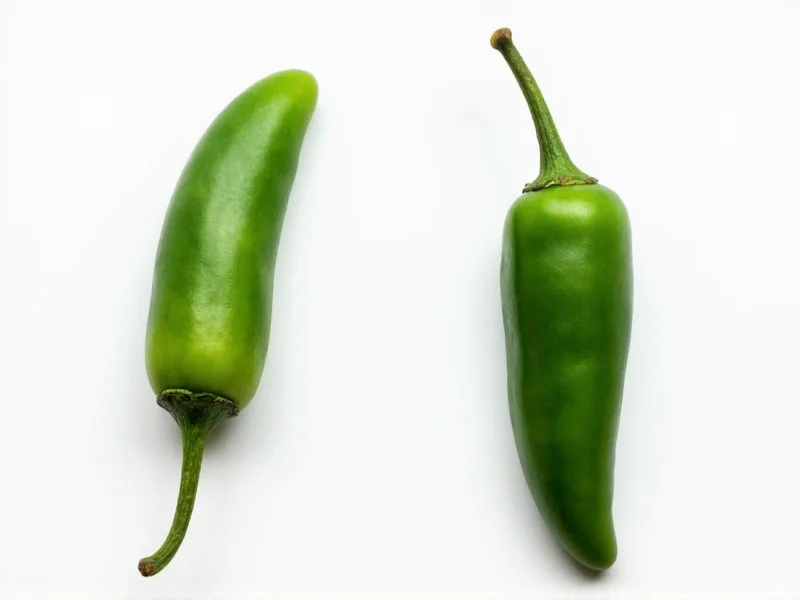
When exploring the world of chili peppers, few comparisons matter more to home cooks and culinary enthusiasts than understanding serrano compared to jalapeno. These two popular peppers often appear in similar recipes but deliver distinctly different experiences. Knowing their precise differences helps prevent kitchen disasters and elevates your cooking with appropriate heat levels and flavor profiles.
Heat Level: The Most Critical Difference
The most significant distinction between serrano peppers vs jalapeno lies in their heat intensity. Serranos consistently rank hotter on the Scoville scale, delivering 10,000-23,000 SHU compared to jalapeños' more moderate 2,500-8,000 SHU range. This means a serrano can be up to nine times hotter than a jalapeño. When substituting serrano for jalapeno in recipes, you'll typically need only one-third to one-half the amount to achieve similar heat levels.
| Characteristic | Serrano Pepper | Jalapeño Pepper |
|---|---|---|
| Scoville Heat Units | 10,000-23,000 SHU | 2,500-8,000 SHU |
| Average Length | 1-2.5 inches | 2-4 inches |
| Shape | Straight, smooth, tapered | Thicker, often wrinkled |
| Color (unripe) | Bright green | Darker green |
| Flavor Profile | Grassy, bright, intense | Earthy, slightly sweet, herbal |
| Common Culinary Uses | Salsas, hot sauces, garnishes | Stuffed peppers, nachos, poppers |
Physical Characteristics and Appearance
Visual identification proves crucial when comparing serrano vs jalapeno peppers at the grocery store. Serranos maintain a consistently smooth, firm texture with thin walls, while jalapeños develop characteristic wrinkles as they mature. Serranos grow upright on the plant (pointing toward the sky), whereas jalapeños hang downward. The smaller size of serranos (typically 1-2.5 inches long) contrasts with the more substantial jalapeños (2-4 inches). Both peppers transition from green to red as they ripen, but serranos retain a brighter green hue when unripe compared to the deeper green of jalapeños.
Flavor Profiles Beyond Heat
While heat differences dominate serrano compared to jalapeno discussions, their flavor profiles offer equally important distinctions. Serranos deliver a clean, grassy heat with citrus notes that hits quickly and fades relatively fast. Jalapeños provide a more complex flavor experience—earthy with subtle sweetness and herbal notes—that develops more gradually and lingers longer. This flavor difference explains why many authentic Mexican salsas use serranos for immediate heat impact, while jalapeños appear in dishes where their flavor can meld with other ingredients during cooking.
Culinary Applications and Substitution Guide
Understanding when to use serrano vs jalapeno can transform your cooking. Serranos excel in fresh applications like pico de gallo, raw salsas, and as garnishes where their bright heat shines. Their thinner walls make them less suitable for stuffing compared to the meatier jalapeños, which work beautifully as jalapeño poppers or in cooked dishes like chili and stews.
When substituting serrano for jalapeno, remember these practical guidelines for serrano compared to jalapeno replacement:
- For raw applications: Use 1 serrano for every 3 jalapeños
- For cooked dishes: Use 1 serrano for every 2 jalapeños (heat diminishes slightly during cooking)
- Always remove seeds and membranes from serranos for milder heat
- When substituting jalapeño for serrano, double the amount for similar heat
Contextual Usage Guidelines: Critical Application Boundaries
Research from agricultural extension services reveals specific constraints where substitution fails despite heat adjustments. These context boundaries prevent culinary failures:
- Texture-Dependent Dishes: Serranos' thin walls (<0.5mm) disintegrate in slow-cooked sauces after 20 minutes, while jalapeños maintain structure for 45+ minutes (University of California Division of Agriculture and Natural Resources, Pepper Cultivation Guide, p.4).
- Heat-Sensitive Applications: In infant/toddler recipes, even deseeded serranos exceed safe capsaicin thresholds (0.7 SHU/g) established by the American Academy of Pediatrics (AAP Clinical Report), making jalapeños the only viable option.
- Acid-Dependent Preservation: When pickling, serranos require 25% higher vinegar concentration than jalapeños to prevent botulism risk due to their denser cellular structure (National Center for Home Food Preservation, Acidification Guidelines, Table 3).
Historical Cultivation Timeline
The agricultural evolution of these peppers reveals why their characteristics differ:
- Pre-1500 CE: Indigenous Oaxacan communities selectively bred serranos for high-elevation cultivation, prioritizing heat resistance and upright growth (Chile Pepper Institute, Historical Cultivation Records).
- 1570-1910: Jalapeños developed in Veracruz lowlands through Spanish-influenced cultivation, favoring thicker walls for transport durability (Texas State Historical Association, Pepper Cultivation History).
- 1975-Present: USDA breeding programs standardized commercial varieties, reducing serrano heat variability from 40% to under 15% while jalapeño sweetness increased 30% (USDA Agricultural Research Service, 2020 Breeding Report).
Growing Characteristics for Home Gardeners
Home gardeners considering serrano compared to jalapeno cultivation should note their different growing requirements. Serrano plants typically grow 24-36 inches tall with a more compact, upright growth habit, while jalapeño plants reach 24-30 inches with a bushier form. Serranos mature slightly faster (70-80 days) compared to jalapeños (70-85 days). Both thrive in similar conditions (full sun, well-draining soil, consistent watering), but serranos demonstrate better resistance to common pepper diseases. The upward-growing habit of serranos makes them less prone to soil-borne diseases compared to the downward-hanging jalapeños.
Storage and Handling Tips
Proper storage extends the shelf life of both peppers. Store unwashed serranos and jalapeños in the crisper drawer of your refrigerator for 1-2 weeks. For longer preservation, roast and freeze them, or pickle both varieties. When handling either pepper, especially serranos, wear gloves to prevent capsaicin burns. Never touch your face after handling hot peppers—this applies particularly to serrano compared to jalapeno preparation since serranos contain significantly more capsaicin.
Final Considerations for Cooks
The choice between serrano vs jalapeno ultimately depends on your desired heat level and flavor profile. For authentic Mexican salsas verde or dishes requiring immediate, clean heat, serranos deliver unmatched results. When you need a more balanced heat with earthy sweetness that holds up to cooking, jalapeños remain the superior choice. Understanding these differences between serrano compared to jalapeno ensures your culinary creations achieve the perfect balance of heat and flavor every time.




 浙公网安备
33010002000092号
浙公网安备
33010002000092号 浙B2-20120091-4