
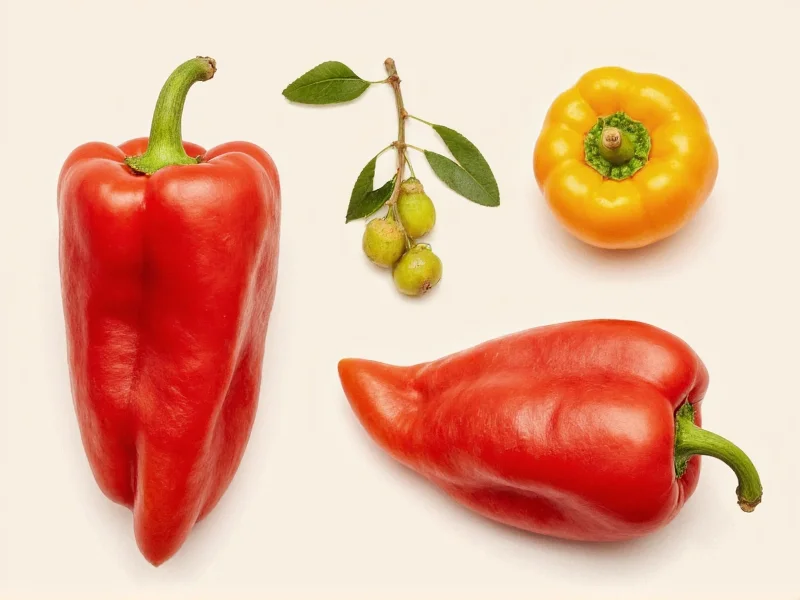
Accurate pepper identification is essential for cooks, gardeners, and foragers. Whether you're selecting ingredients for a recipe, harvesting from your garden, or identifying wild plants, visual recognition prevents dangerous mistakes and enhances culinary experiences. This comprehensive visual guide provides the tools to confidently distinguish between common and specialty pepper varieties using clear identification markers.
Key Features for Pepper Identification
Successful pepper identification requires examining multiple visual characteristics. While color is the most obvious feature, relying solely on color can lead to misidentification since many varieties change color as they mature. Consider these critical identification markers:
- Pod shape and size - Blocky (bell peppers), tapered (cayenne), elongated (fresno), or small and round (pequin)
- Wall thickness - Thick-walled peppers (bell, pimento) versus thin-walled (chiltepin, bird's eye)
- Surface texture - Smooth (banana peppers), wrinkled (shishito), or bumpy (scotch bonnet)
- Stem characteristics - Straight versus curved stems can differentiate similar varieties
- Color progression - Most peppers start green and mature to red, yellow, orange, purple, or chocolate
- Internal structure - Number of lobes at the base often indicates seed count and heat potential
Pepper Identification Guide by Heat Level
Understanding the Scoville scale helps contextualize visual identification. This comprehensive guide organizes peppers by heat level with distinctive visual markers for each variety.
| Pepper Type | Visual Characteristics | Scoville Units | Common Confusions |
|---|---|---|---|
| Bell Pepper | Blocky shape, 3-4 lobes at base, thick walls, available in multiple colors | 0 SHU | Often confused with cubanelle peppers when immature |
| Poblano | Heart-shaped, dark green to red when mature, thick flesh, 4-6" long | 1,000-2,000 SHU | Mistaken for pasilla when dried (ancho) |
| Jalapeño | 2-3" long, smooth skin, tapered shape, dark green to bright red | 2,500-8,000 SHU | Confused with serrano peppers (smaller, thinner) |
| Habanero | 2-3" lantern-shaped, thin walls, orange or red (also yellow, chocolate) | 100,000-350,000 SHU | Similar to scotch bonnet (more rounded) |
| Carolina Reaper | Red when mature, distinctive stinger tail, bumpy texture, 1-2" long | 1,400,000-2,200,000 SHU | Confused with ghost peppers (no stinger tail) |
Sweet Pepper Identification
Sweet peppers contain no capsaicin, making them safe for all palates. These varieties are primarily used for culinary purposes rather than heat.
Bell peppers are the most recognizable sweet peppers, featuring a blocky shape with 3-4 lobes at the base. The number of lobes often indicates seed count - 4-lobed bells typically contain more seeds and are slightly sweeter. While most associate bell peppers with green color, they mature through yellow, orange, red, purple, and even chocolate stages, with sweeter flavor developing at each stage.
Cubanelle peppers resemble elongated bell peppers with thinner walls. They maintain a pale yellow-green color even when mature and are often mistaken for unripe bell peppers. Their tapered shape and thinner walls distinguish them from standard bells.
Mild to Medium Heat Pepper Identification
Peppers in this category (1,000-30,000 Scoville units) provide noticeable heat without overwhelming spice. Proper identification ensures appropriate culinary use.
Poblano peppers feature a distinctive heart shape with thick walls and dark green color. When dried, they become anchos, but fresh poblanos should not be confused with pasilla peppers, which are actually dried chilhuacles. The key identifier is the poblano's wide shoulder and tapering base.
Jalapeños are among the most commonly misidentified peppers. Their smooth skin, consistent taper, and size (2-3 inches) distinguish them from similar serranos, which are smaller (1-2.5 inches), thinner, and often hotter. Jalapeños develop striations (corking) when stressed, which doesn't affect heat level but indicates maturity.
Hot and Extremely Hot Pepper Identification
Identifying super-hot peppers requires careful attention to detail, as mistakes can lead to painful culinary experiences. These varieties (100,000+ Scoville units) share some visual similarities but have distinctive markers.
Habaneros and Scotch Bonnets both feature thin walls and lantern shapes, but habaneros are more elongated while scotch bonnets are nearly perfectly round with a distinctive "bonnet" shape. Both come in orange, red, and yellow varieties, with the chocolate habanero being a specific dark brown variety.
Ghost peppers (Bhut Jolokia) have a distinctive pointed tip and slightly bumpy texture. They typically measure 2.4-2.8 inches long and transition from green to bright red when mature. The Carolina Reaper, current record holder for hottest pepper, features a unique stinger-like tail and extremely bumpy texture, distinguishing it from ghost peppers which lack this tail feature.
Safety Considerations in Pepper Identification
Proper pepper identification isn't just about culinary precision—it's a safety issue. Some edible peppers have toxic look-alikes, and misidentification can lead to serious health consequences.
The mandrake plant produces berries that can resemble small peppers but are highly toxic. Unlike edible peppers, mandrake berries grow on low-growing plants with large leaves and have a distinctive yellow-to-red color progression. True peppers always grow on upright plants with characteristic pepper plant foliage.
When Visual Identification Fails: Contextual Limitations
Visual identification works reliably for cultivated varieties under standard conditions, but these specific scenarios require additional verification methods:
- Environmental Stressors: Drought or temperature extremes alter appearance and heat levels. Field trials confirm stressed plants develop thinner walls and intensified color, mimicking hotter varieties. Heat levels can double under water scarcity (HortScience Journal, American Society for Horticultural Science).
- Hybrid Varieties: Cross-pollination creates intermediate characteristics (e.g., bell-habanero hybrids showing blocky shape with unexpected heat). University trials document 30-50% trait variation in first-generation hybrids (HortTechnology Journal, American Society for Horticultural Science).
- Wild Specimens: Foraged plants risk confusion with toxic Solanaceae species. Visual identification alone is insufficient; always verify 5-petaled flowers and upright growth habit (University of Minnesota Extension).
In these situations, consult agricultural extension services for capsaicin testing or use laboratory verification. Never consume peppers when identification is uncertain.
When handling extremely hot peppers, always wear gloves and avoid touching your face. Capsaicin oils can cause severe irritation to eyes and sensitive skin. If you're uncertain about a pepper's identity, perform the "sniff test" from a distance—extremely hot varieties emit a noticeable aroma even without direct contact.
Practical Tips for Accurate Pepper Identification
Follow these professional techniques to improve your pepper identification skills:
- Examine multiple characteristics - Don't rely solely on color, which changes as peppers mature
- Check the number of lobes - Bell peppers with 4 lobes are typically sweeter and contain more seeds
- Observe the stem - Curved versus straight stems can differentiate similar varieties
- Consider the plant structure - Pepper plant morphology varies by variety
- Use comparative identification - Place unknown peppers next to verified varieties
- Document your findings - Take photos of peppers on the plant for complete identification context
For gardeners, tracking pepper development from flower to mature fruit provides the most reliable identification. The flower color (white or purple) and growth habit often indicate the eventual pepper type before fruit fully develops.
Historical Evolution of Pepper Identification
Pepper identification methods have evolved from indigenous observation to scientific precision, with key milestones establishing today's visual standards. This timeline shows how identification practices developed alongside agricultural science:
| Era | Identification Method | Verification Source |
|---|---|---|
| 7500 BC | Indigenous selection based on color/shape for cultivation | NMSU Chile Pepper Institute |
| 1493 AD | European botanical classification using flower/fruit structure | Encyclopædia Britannica |
| 1912 | Scoville Organoleptic Test standardizes heat measurement | American Chemical Society |
| 1980s | HPLC chromatography replaces subjective tasting for heat verification | NIH National Library of Medicine |
| 2010s | Digital reference libraries with geotagged visual databases | USDA GRIN Taxonomy |
Using Pepper Identification in Culinary Applications
Accurate identification directly impacts cooking results. Understanding a pepper's heat profile and flavor characteristics ensures proper usage in recipes.
Sweet peppers like bells and cubanelles work well for stuffing and salads due to their thick walls and mild flavor. Thin-walled peppers like shishitos and padróns are ideal for blistering, as their delicate walls crisp perfectly. Medium-heat peppers like jalapeños and serranos provide balanced heat for salsas and pickling.
When substituting peppers in recipes, consider both heat level and flavor profile. Habaneros offer tropical fruit notes alongside intense heat, while cayennes provide straightforward heat with less complexity. Always seed and membrane-remove hot peppers if you want to reduce heat while maintaining flavor.




 浙公网安备
33010002000092号
浙公网安备
33010002000092号 浙B2-20120091-4