
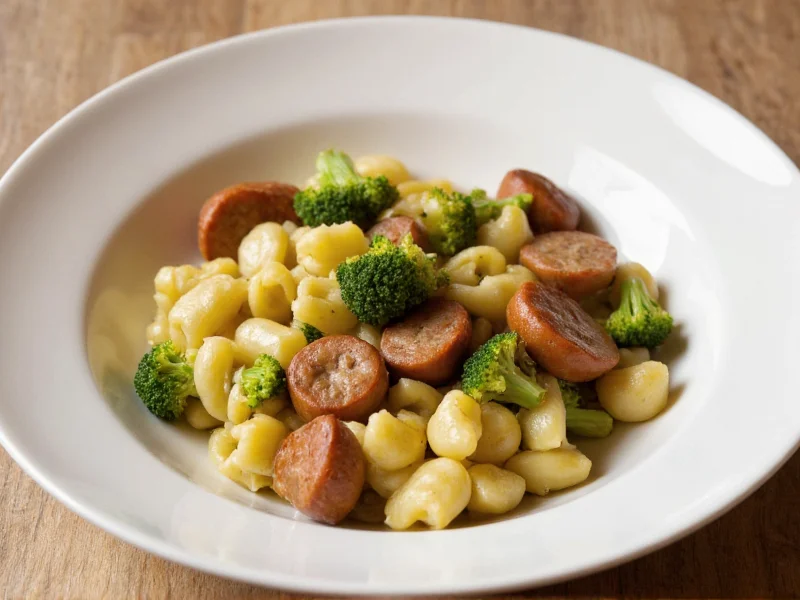
Orecchiette with sausage and broccoli represents one of Puglia's most beloved culinary traditions, where the "little ears" pasta shape perfectly captures the rich sausage and vegetable sauce. This authentic preparation method creates a harmonious balance between the meaty sausage, slightly bitter broccoli rabe, and chewy pasta texture that defines true Southern Italian cooking.
The Authentic Puglian Dish You Need to Try
Originating from Italy's "heel," this orecchiette con salsiccia e broccoli rabe recipe showcases the simplicity and elegance of Puglian cuisine. Unlike Americanized versions that often substitute regular broccoli, the traditional preparation uses broccoli rabe (also called rapini), which provides the distinctive bitter note that balances the richness of the sausage. The dish's magic lies in how the concave shape of orecchiette pasta traps the flavorful sausage and vegetable sauce, creating bursts of flavor in every bite.
Why This Orecchiette Recipe Works
Many home cooks struggle with achieving restaurant-quality orecchiette with sausage and broccoli, but understanding three key elements transforms this simple dish:
- Proper broccoli rabe preparation - Blanching removes excess bitterness while preserving texture
- Sausage browning technique - Creating fond (those delicious browned bits) builds foundational flavor
- Pasta water utilization - The starchy cooking liquid creates a silky sauce that clings to the pasta
These elements separate an authentic orecchiette with sausage and broccoli rabe from ordinary pasta dishes. The traditional Puglian approach emphasizes ingredient quality over complexity, with premium Italian sausage and fresh broccoli rabe making all the difference.
Historical Evolution of Orecchiette in Puglia
Understanding orecchiette's deep roots in Puglian culture enhances appreciation for this simple yet profound dish. According to the Puglia Region's official cultural authority, the pasta's history reflects centuries of adaptation to the region's agricultural landscape:
| Historical Period | Key Development |
|---|---|
| Ancient Greek Colonization (8th-5th century BCE) | Early forms of ear-shaped pasta may have been introduced by Greek settlers in Southern Italy, though evidence is debated among historians. |
| Middle Ages (5th-15th century) | Orecchiette became a staple of Puglian peasant cuisine due to its simple preparation with durum wheat and water, requiring no special equipment. |
| 19th Century | First documented appearances in regional cookbooks as a signature dish of Puglia, particularly the province of Bari. |
| Modern Era (20th century-present) | Recognition as an iconic Italian pasta, with Puglian orecchiette gaining Protected Geographical Indication (PGI) status in 2017 for traditional production methods. |
Ingredient Guide for Perfect Orecchiette
Understanding each component ensures your orecchiette with sausage and broccoli turns out perfectly every time:
| Ingredient | Why It Matters | Substitution Options |
|---|---|---|
| Italian sausage (mild or hot) | Provides rich, savory base; fat renders to cook vegetables | Ground pork with Italian seasoning; turkey sausage (less traditional) |
| Broccoli rabe (rapini) | Traditional bitter green that balances richness | Regular broccoli (less authentic); broccolini; asparagus |
| Orecchiette pasta | Shape captures sauce; traditional to region | Bucalette; small shells; cavatelli (other Puglian shapes) |
| Red pepper flakes | Authentic Puglian heat element | Calabrian chili paste; fresh red chilies |
| Pecorino Romano | Salty, sharp finish that enhances flavors | Parmigiano-Reggiano (milder) |
The Bitterness Factor: Science Behind Broccoli Rabe Perception
Broccoli rabe's characteristic bitterness isn't merely subjective—it's influenced by genetic factors that create distinct taste experiences across populations. As documented in a National Institutes of Health study, approximately 25% of people are "supertasters" with heightened sensitivity to bitter compounds like those in broccoli rabe. This biological variation explains why:
- Supertasters (25% of population) perceive intense bitterness requiring thorough blanching
- Medium tasters (50%) detect moderate bitterness balanced by sausage richness
- Nontasters (25%) barely register the bitter notes, potentially missing the dish's traditional complexity
Traditional Puglian preparation techniques evolved to accommodate these differences, ensuring the dish's bitter-savory balance appeals to the widest possible audience while maintaining authenticity.
Step-by-Step Orecchiette Preparation
Follow these detailed instructions for authentic orecchiette with sausage and broccoli that rivals your favorite Italian restaurant:
Blanching the Broccoli Rabe
Bring a large pot of salted water to boil. Add 1 pound broccoli rabe and blanch for 2 minutes. Immediately transfer to ice water to stop cooking, then drain thoroughly and chop into 2-inch pieces. This crucial step removes excess bitterness while preserving the vegetable's vibrant color and crisp-tender texture.
Cooking the Sausage
Remove casings from 1 pound Italian sausage and crumble into a large skillet over medium-high heat. Cook, breaking into small pieces, until well-browned (about 8-10 minutes). The sausage should develop a deep golden crust - this fond is essential for flavor development. Remove sausage with a slotted spoon, leaving 2 tablespoons of rendered fat in the skillet.
Building the Sauce
Add 4 minced garlic cloves and 1 teaspoon red pepper flakes to the sausage fat. Cook for 1 minute until fragrant but not browned. Return sausage to skillet along with blanched broccoli rabe. Cook for 5 minutes, stirring occasionally, allowing flavors to meld.
Perfect Pasta Technique
While vegetables cook, bring 4 quarts salted water to a rolling boil. Add 12 ounces orecchiette and cook until al dente (about 10-12 minutes). Reserve 1½ cups pasta water before draining. Add drained pasta to sausage and broccoli mixture.
Finishing the Dish
Add ½ cup reserved pasta water to skillet and toss vigorously over medium heat for 2-3 minutes. The starch in the water combines with sausage fat to create a silky sauce that coats each piece of pasta. Add more pasta water as needed until sauce clings perfectly to the orecchiette. Finish with ½ cup grated Pecorino Romano and additional salt to taste.
Pro Tips for Restaurant-Quality Results
Elevate your orecchiette with sausage and broccoli with these professional techniques:
- Don't skip the blanching - This essential step for broccoli rabe prevents overwhelming bitterness
- Reserve extra pasta water - You'll need more than you think to create the perfect sauce consistency
- Finish cooking pasta in the sauce - The final 2-3 minutes of tossing creates emulsification
- Use high-quality sausage - Look for Italian sausage with visible meat chunks, not overly processed
- Add lemon zest - A teaspoon of lemon zest brightens the dish without making it taste citrusy
Serving Suggestions
Authentic Puglian tradition serves orecchiette with sausage and broccoli simply, allowing the ingredients to shine. Pair with:
- A crisp green salad with lemon vinaigrette
- Crusty bread for soaking up any remaining sauce
- A medium-bodied red wine like Primitivo or Negroamaro
- Additional Pecorino Romano for grating at the table
For a complete meal experience, serve immediately in warmed bowls - this dish doesn't wait well as the pasta continues to absorb sauce. The ideal texture features al dente pasta, tender but crisp broccoli rabe, and sausage that's browned but still juicy.
Storage and Reheating Instructions
While best enjoyed fresh, leftovers can be stored properly:
- Refrigerate in airtight container for up to 3 days
- Add a splash of water or broth when reheating to restore moisture
- Microwave at 50% power or gently reheat in a skillet over medium-low heat
- Avoid freezing as broccoli rabe becomes mushy upon thawing
Frequently Asked Questions
What's the difference between broccoli and broccoli rabe in orecchiette recipes?
Broccoli rabe (rapini) has a distinctive bitter flavor that balances the richness of sausage in authentic Puglian cooking, while regular broccoli is sweeter and milder. Broccoli rabe's bitterness is essential to the traditional flavor profile, though regular broccoli can substitute in a pinch with added lemon juice to mimic some complexity.
Can I make orecchiette with sausage and broccoli ahead of time?
While best served immediately, you can prepare components ahead: blanch broccoli rabe up to 24 hours in advance, cook sausage up to 2 days ahead, and store separately. Combine and finish with freshly cooked pasta for optimal texture. The dish doesn't reheat well as pasta continues absorbing sauce, so same-day preparation yields best results.
Why is my orecchiette with sausage and broccoli too dry?
Dry orecchiette typically results from insufficient pasta water. Always reserve at least 1½ cups before draining, and add gradually while finishing the dish. The starch in pasta water combines with sausage fat to create a silky sauce. If too dry, add small amounts of hot water while tossing vigorously over heat to emulsify the sauce properly.
What wine pairs best with orecchiette and sausage?
Traditional Puglian reds like Primitivo or Negroamaro complement orecchiette with sausage and broccoli perfectly, with enough body to match the sausage but sufficient acidity to cut through the richness. For white wine lovers, a crisp Vermentino works well. Avoid heavy tannic wines that compete with the dish's delicate balance of bitter and savory flavors.
How do I prevent broccoli rabe from being too bitter in my pasta?
Blanching broccoli rabe in salted boiling water for 2 minutes followed by an ice bath significantly reduces bitterness while preserving texture. Choosing younger, smaller-stemmed broccoli rabe also helps, as mature plants develop more pronounced bitterness. The sausage's richness and finishing cheese naturally balance any remaining bitterness in authentic preparation.




 浙公网安备
33010002000092号
浙公网安备
33010002000092号 浙B2-20120091-4