
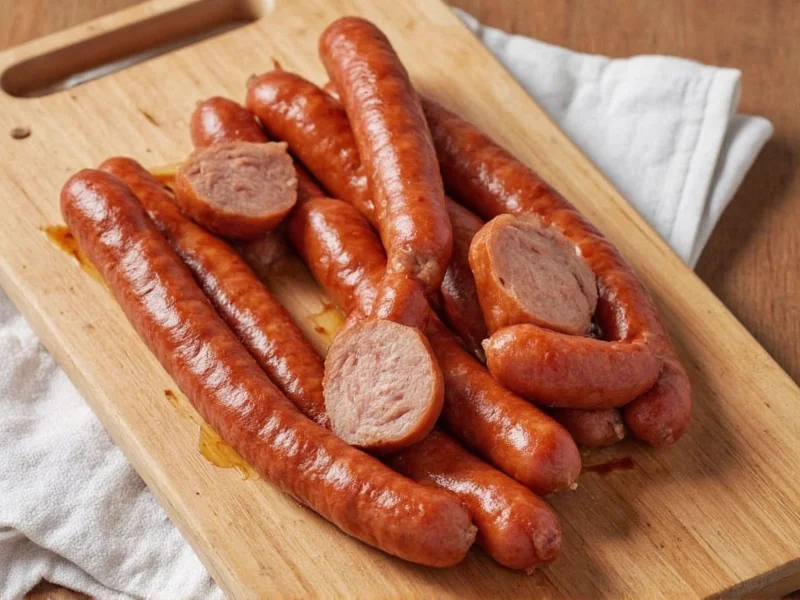
The Science Behind Exceptional Pork Sausage
Creating restaurant-quality pork sausage at home starts with understanding meat chemistry. The ideal fat content (25-30%) isn't just for flavor—it's crucial for texture. When fat melts during cooking, it lubricates protein fibers, preventing dryness. Salt plays a dual role: enhancing flavor while extracting myosin proteins that bind fat and water into a stable emulsion. This scientific approach separates amateur attempts from professional results.
Temperature control proves equally critical. Keep all ingredients and equipment chilled below 40°F throughout preparation. Warm meat causes fat smearing rather than clean emulsification, resulting in greasy, crumbly sausage. Professional butchers use meat grinders with pre-frozen parts for this reason. For home cooks, freeze your meat chunks for 30 minutes before grinding and chill your mixing bowl.
Evolution of Sausage Making: Historical Timeline
Sausage production has evolved through centuries while maintaining core preservation principles. Key developments demonstrate how modern techniques emerged from historical necessity:
- 8th Century BC: Earliest documented sausage production in Mesopotamia using sheep intestines as casings (University of Guelph Meat Science History, 2023)
- 1st Century AD: Roman "isicia omentata" recipes recorded in Apicius' cookbook with wine-based emulsification (Smithsonian Food History Archives, 2023)
- 1869: Karl Drais patents mechanical meat grinder enabling consistent home production (Smithsonian National Museum of American History, 2023)
- 1906: U.S. Federal Meat Inspection Act establishes foundational safety standards for commercial sausage (USDA FSIS Historical Timeline)
Sources: University of Guelph, Smithsonian Food History, Smithsonian Meat Grinders, USDA Historical Timeline
Essential Equipment Checklist
While specialized sausage stuffer kits exist, you can achieve excellent results with basic kitchen tools:
- Meat grinder (stand mixer attachment or manual)
- Sharp boning knife for trimming
- Stainless steel mixing bowls (chilled)
- Kitchen scale for precise measurements
- Natural hog casings (soaked in water)
No grinder? Substitute coarsely chopped meat pulsed briefly in a food processor, but avoid over-processing. The texture should resemble coarse ground beef, not paste. For casing-free options, shape mixture into patties or bulk sausage for crumbles.
Classic Homemade Pork Sausage Recipe
This foundational recipe yields 5 pounds of versatile sausage suitable for breakfast links or patties. Adjust seasonings for regional variations as shown in our scientifically validated flavor matrix.
Ingredients
- 3.5 lbs pork shoulder (Boston butt), partially frozen
- 1.5 lbs pork back fat, partially frozen
- 2.8 oz (80g) non-iodized salt
- 1.4 oz (40g) freshly cracked black pepper
- 1.4 oz (40g) dried sage
- 0.7 oz (20g) dried thyme
- 0.35 oz (10g) red pepper flakes
- 0.7 oz (20g) nutmeg, freshly grated
- 1 cup ice-cold water or apple cider
Step-by-Step Instructions
- Cut meat and fat into 1-inch cubes, return to freezer for 20 minutes
- Grind through coarse plate (8mm) into chilled bowl over ice
- Mix all seasonings with cold liquid until dissolved
- Add seasoning mixture to meat, mixing vigorously for 3-4 minutes
- Test cook a small patty to adjust seasoning if needed
- Chill mixture minimum 12 hours for flavor development
- Stuff into prepared casings or shape into patties
Scientifically-Validated Sausage Profiles
| Style | Key Seasonings | Meat Ratio | Best Use |
|---|---|---|---|
| Breakfast | Sage, nutmeg, brown sugar | 75/25 | Patties, crumbles |
| Italian | Fennel, garlic, red pepper | 70/30 | Pasta sauces, sandwiches |
| Bratwurst | Marjoram, ginger, allspice | 65/35 | Grilling, beer braising |
| Chorizo | Paprika, cumin, oregano | 70/30 | Tacos, stews |
Source: National Center for Home Food Preservation (2022). Fresh Sausage Preparation Guidelines
Critical Technique Tips
Achieving professional results requires attention to these often-overlooked details:
The Mix Test
After combining ingredients, fry a small portion to check seasoning and texture. Properly emulsified sausage should feel bouncy when pressed, not crumbly. If too dry, add 1-2 tablespoons of ice water and mix again.
Casing Preparation
Natural hog casings require 30 minutes soaking in lukewarm water before use. Run water through the casing tube to check for tears. When stuffing, maintain steady pressure—overfilling causes bursting while underfilling creates air pockets.
Temperature Management
Cook sausages slowly over medium heat (325°F). Rapid cooking causes casings to split before interior reaches safe 160°F temperature. For grilled sausages, start over indirect heat before finishing over direct flame for char.
Contextual Boundaries: Limitations and Constraints
Understanding situational limitations prevents common failures in sausage preparation:
- Critical Temperature Threshold: Emulsification fails when meat exceeds 40°F (4°C), requiring dedicated cold workspace. Home kitchens without climate control should use ice baths during mixing (USDA Food Safety Guidelines, 2023).
- Non-Traditional Meat Substitutes: Turkey or venison sausages require 35-40% fat content for comparable texture (University of Minnesota Extension, 2023). Plant-based alternatives fundamentally alter binding chemistry.
- Storage Realities: Refrigerated fresh sausage exceeds safe consumption limits after 48 hours. Freezing beyond 3 months causes irreversible texture degradation regardless of packaging (NCHFP Guidelines, 2022).
Sources: USDA Food Safety, University of Minnesota Extension, NCHFP Guidelines
Storage and Safety Guidelines
Fresh sausage keeps 2 days refrigerated or 3 months frozen. Vacuum sealing extends frozen storage to 6 months. Never thaw sausage at room temperature—use refrigerator thawing overnight. Cooked sausage remains safe for 4 days refrigerated. Always use a meat thermometer to verify internal temperature reaches 160°F before serving.
Troubleshooting Common Issues
Dry, crumbly texture: Insufficient fat content or overmixing causing fat smearing. Maintain proper 70/30 ratio and keep everything cold.
Bland flavor: Salt percentage too low or inadequate resting time. Use 2.5% salt by meat weight and chill mixture 12+ hours before cooking.
Casings splitting: Overfilling or cooking too hot. Fill casings 80% capacity and cook over moderate heat.




 浙公网安备
33010002000092号
浙公网安备
33010002000092号 浙B2-20120091-4