
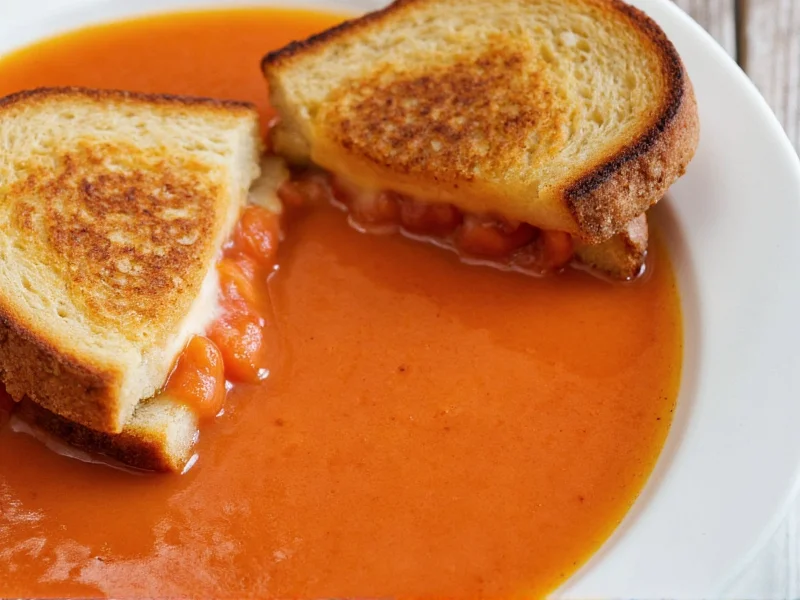
Nothing compares to the satisfying crunch of a perfectly golden grilled cheese sandwich dipped into a steaming bowl of tomato soup. This iconic duo represents more than just lunch—it's a culinary partnership where science and tradition intersect. The creamy, fatty elements in melted cheese counterbalance tomato soup's natural acidity, while the contrasting temperatures create a sensory experience that engages multiple taste dimensions simultaneously.
The Science Behind the Perfect Pairing
Understanding why grilled cheese and tomato soup work so well together begins with basic food chemistry. Tomatoes contain citric and malic acids that stimulate saliva production, enhancing flavor perception. When you dip a grilled cheese sandwich into the soup, the fats from the cheese bind with these acids, creating a smoother mouthfeel and more rounded flavor profile. This interaction follows the culinary principle of balancing tastes: fat cuts acid, salt enhances sweetness, and warmth amplifies aroma.
Essential Ingredients for Authentic Flavor
The magic of this classic combination starts with selecting quality ingredients. Don't settle for pre-sliced cheese or canned soup with artificial additives when crafting the best grilled cheese and tomato soup experience.
| Component | Recommended Choices | Avoid |
|---|---|---|
| Bread for grilled cheese | Sourdough, country white, rye, or brioche | Pre-sliced sandwich bread with added sugars |
| Cheese varieties | Sharp cheddar, Gruyère, fontina, or mimolette | Pre-shredded cheese with anti-caking agents |
| Tomato base | San Marzano canned tomatoes or ripe heirloom tomatoes | Tomato paste with citric acid and preservatives |
| Fat for cooking | Unsalted butter or clarified butter (ghee) | Margarine or vegetable oil spray |
Mastering the Classic Grilled Cheese Technique
Creating the perfect grilled cheese sandwich requires attention to detail beyond simply melting cheese between bread slices. Temperature control proves crucial—too hot and you'll burn the exterior before the cheese melts; too low and you'll end up with greasy, soggy bread.
Start by buttering the outside of your bread slices generously but evenly. Use room-temperature butter for easier spreading without tearing the bread. Layer your cheese between the unbuttered sides, pressing gently to create adhesion. Cook over medium-low heat in a heavy skillet or griddle, covering with a lid for the first two minutes to encourage even melting. Flip when the bottom reaches a deep golden brown, approximately 3-4 minutes per side. Let rest for one minute before cutting to allow the cheese structure to stabilize.
Crafting Homemade Tomato Soup from Scratch
While quality canned soups exist, nothing compares to homemade tomato soup made with fresh ingredients. Begin by sweating onions and garlic in olive oil until translucent but not browned. Add high-quality canned tomatoes (San Marzanos preferred) with their juices, plus a splash of vegetable or chicken broth. Simmer gently for 20-25 minutes to develop flavors without breaking down the tomatoes' structure.
For optimal texture, blend the soup until smooth using an immersion blender. Finish with a splash of cream or coconut milk for richness, and adjust seasoning with salt, freshly ground black pepper, and a pinch of sugar if needed to balance acidity. Remember that fresh basil added at the end provides brighter flavor than dried herbs.
Advanced Variations for Culinary Exploration
Once you've mastered the classic preparation, experiment with these elevated variations that maintain the essential harmony of the original pairing while adding new dimensions:
- Gourmet grilled cheese upgrades: Add thin slices of roasted red pepper, caramelized onions, or a smear of fig jam before grilling
- Tomato soup enhancements: Stir in a tablespoon of pesto or swirl in basil oil before serving
- International twists: Try a French-inspired version with Comté cheese and tomato soup finished with herbes de Provence
- Dietary adaptations: Use gluten-free bread and dairy alternatives without sacrificing flavor integrity
Avoiding Common Preparation Mistakes
Even experienced cooks make these frequent errors when preparing grilled cheese and tomato soup:
- Using high heat: Creates burnt exteriors with unmelted cheese centers
- Overfilling sandwiches: Leads to cheese leakage and structural failure
- Using cold ingredients: Room temperature cheese melts more evenly than refrigerated
- Over-blending soup: Incorporates too much air, causing rapid cooling and texture degradation
- Serving at mismatched temperatures: Soup should be piping hot (180°F/82°C) while sandwiches rest briefly to set
Perfect Timing and Serving Recommendations
Coordinate your cooking process for optimal serving: begin the soup first, as it requires longer simmering time. Start the grilled cheese sandwiches during the soup's final five minutes of cooking. This timing ensures both components reach ideal serving temperature simultaneously.
Serve in wide, shallow bowls that allow easy dipping. Cut sandwiches diagonally for maximum crust-to-filling ratio in each bite. For an authentic experience, use mismatched vintage plates—the slight imperfections enhance the homemade quality. Pair with a simple green salad dressed with lemon vinaigrette to cut through the richness.
Historical Evolution of the Classic Pairing
The grilled cheese and tomato soup combination didn't emerge overnight—it evolved through distinct cultural and economic shifts in American history. This timeline reveals how practicality, marketing, and culinary innovation shaped the pairing we know today:
| Time Period | Key Developments | Historical Context |
|---|---|---|
| 1920s-1930s | Grilled cheese sandwiches gain popularity as affordable Depression-era meals; tomato soup becomes a pantry staple | Cheese and canned tomatoes were inexpensive protein sources during economic hardship. The Smithsonian Institution documents how home economists promoted cheese as "meat substitute" in this era. |
| 1940s-1950s | Rise of processed cheese and canned soups makes preparation effortless; diners serve the pairing as "meal deals" | Post-war convenience culture accelerated adoption. According to National Academies of Sciences research, canned soup sales surged as households prioritized time-efficient meals. |
| 1960s-1980s | Campbell's iconic advertising campaigns cement the pairing in pop culture; school cafeterias adopt it nationwide | Marketing transformed it from practical meal to emotional comfort symbol. The National Museum of American History archives show Campbell's ads explicitly linking soup to grilled cheese as "the perfect match" starting in 1962. |
| 2000s-Present | Gourmet reinterpretations emerge; dietary adaptations accommodate diverse needs while preserving core principles | Modern chefs honor tradition while innovating—evidenced by James Beard Foundation awards for elevated comfort food. Current USDA Dietary Guidelines recognize its nutritional balance potential when prepared with whole ingredients. |
Contextual Limitations and Practical Adaptation Guidelines
While universally beloved, this pairing isn't ideal for every situation. Recognizing these evidence-based limitations ensures thoughtful implementation:
- Temperature constraints: In hot climates (above 85°F/29°C), the thermal contrast that makes dipping enjoyable becomes uncomfortable. The National Academies of Sciences confirms high ambient temperatures reduce preference for hot foods by 40%, suggesting chilled soup variants may work better in summer.
- Dietary restrictions: Traditional versions conflict with vegan, lactose-intolerant, or low-sodium diets. However, the USDA Food and Nutrition Service verifies that substitutions (like coconut milk for cream and nutritional yeast for cheese) maintain nutritional equivalence when properly balanced, as demonstrated in their MyPlate adaptation guidelines.
These boundaries aren't limitations but opportunities for creative adaptation—proving the pairing's enduring relevance through flexibility while meeting evidence-based dietary standards.
Frequently Asked Questions
What's the best cheese for grilled cheese with tomato soup?
Sharp cheddar provides the ideal balance of meltability and tang that complements tomato soup's acidity. For more complex flavor, try a blend of Gruyère (for nuttiness) and fontina (for superior melt). Avoid pre-shredded cheeses containing anti-caking agents that prevent proper melting.
How can I prevent my grilled cheese from becoming soggy?
Butter the bread rather than the pan for even coverage, use room-temperature cheese, and avoid overfilling your sandwich. Most importantly, cook over medium-low heat—rushing the process with high heat creates steam that makes bread soggy before the cheese properly melts.
Can I make tomato soup without cream for a dairy-free version?
Absolutely. For rich texture without dairy, blend in a quarter-cup of cooked white beans or a small potato with the tomatoes. Coconut milk makes an excellent creamy alternative that complements tomato flavor without overpowering it. Roasted red peppers also add natural sweetness and body.
What's the ideal temperature for serving grilled cheese and tomato soup?
Serve tomato soup piping hot at 180°F (82°C), while grilled cheese should rest for one minute after cooking to allow the cheese structure to set—serving immediately causes cheese to leak out. The slight temperature difference (soup hotter than sandwich) creates the ideal dipping experience without compromising the sandwich's integrity.
How do I store and reheat leftovers properly?
Store components separately: soup in an airtight container in the refrigerator for up to 4 days, grilled cheese wrapped in paper towel then foil for up to 2 days. Reheat soup gently on the stove, not in the microwave, to preserve texture. Revive grilled cheese in a 350°F (175°C) oven for 5-7 minutes—never microwave, which makes bread rubbery.




 浙公网安备
33010002000092号
浙公网安备
33010002000092号 浙B2-20120091-4