
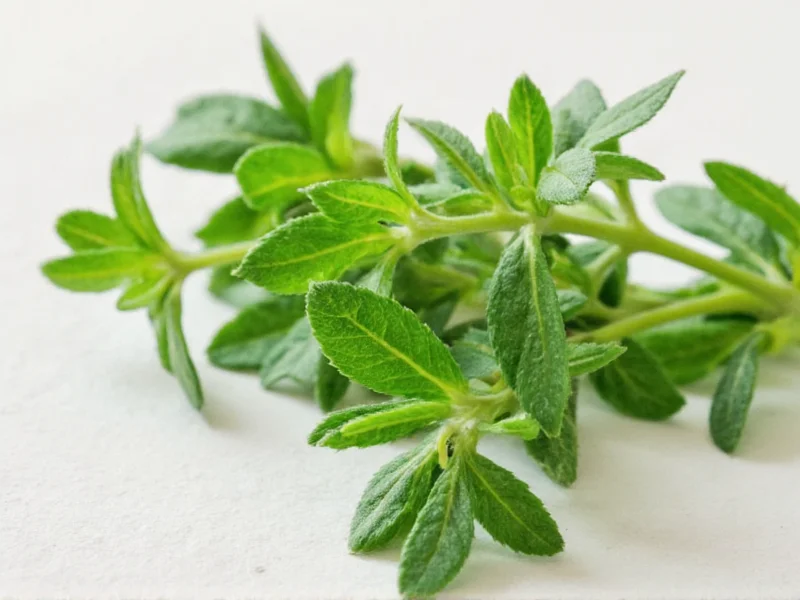
Understanding thyme's unique flavor profile is essential when selecting the right substitute. Thyme offers a subtle earthy, slightly minty flavor with hints of lemon and clove, primarily due to its thymol (20-54%) and carvacrol (1-14%) composition. This versatile herb works well in both fresh and dried forms, though dried thyme is more concentrated. When you're out of thyme leaves, knowing which alternatives best match these chemical characteristics can save your recipe without compromising flavor integrity.
Top Substitutes for Thyme Leaves
When searching for substitute for thyme leaves in recipes, consider these top alternatives based on flavor compatibility and culinary application. Compound analysis reveals why certain herbs function as effective replacements:
Oregano
Oregano makes an excellent substitute for dried thyme leaves in Mediterranean dishes. It has a stronger, more pungent flavor, so use a 3:4 ratio (3/4 teaspoon oregano for every 1 teaspoon thyme). Oregano works particularly well in tomato-based sauces, grilled meats, and pizza. For substitute for fresh thyme leaves, use 1 tablespoon fresh oregano for every 1 teaspoon dried thyme. Its high carvacrol content (60-80%) provides similar antimicrobial properties to thyme's thymol, making it functionally compatible in preservation-focused dishes like marinades.
Marjoram
Marjoram is thyme's close relative with a sweeter, milder flavor due to dominant terpinen-4-ol compounds. It serves as the best substitute for thyme in French cuisine and works at a 1:1 ratio. Marjoram shines in poultry dishes, stuffings, and vegetable preparations. When substituting for fresh thyme, use equal parts fresh marjoram. Unlike thyme, it lacks significant thymol, making it unsuitable for applications requiring pronounced earthiness.
Herbes de Provence
This French herb blend typically contains thyme along with rosemary, oregano, and lavender. It's a convenient substitute when out of thyme and can be used at a 1:1 ratio. The blend works well in roasted vegetables, grilled meats, and stews. Check the ingredients as some blends contain lavender, which may alter your dish's flavor profile. Authentic Provencal blends maintain regional herb ratios established in 19th-century French culinary traditions.
Rosemary
Rosemary offers a pine-like flavor from its 1,8-cineole (30-50%) and camphor (10-20%) composition that can substitute for thyme in heartier dishes. Use half the amount of rosemary compared to thyme (1/2 teaspoon rosemary for 1 teaspoon thyme) as it's more potent. This thyme alternative for roasted meats works particularly well with lamb, potatoes, and root vegetables, but its camphor notes make it incompatible with delicate seafood dishes.
| Substitute | Dried Ratio | Fresh Ratio | Best For | Key Flavor Compounds |
|---|---|---|---|---|
| Oregano | 3/4 tsp : 1 tsp thyme | 1 tbsp fresh : 1 tsp dried thyme | Mediterranean dishes, tomato sauces | Carvacrol (60-80%), Thymol (0.5-12%) |
| Marjoram | 1:1 | 1:1 fresh | French cuisine, poultry, vegetables | Terpinen-4-ol (30-60%), Sabinene (5-15%) |
| Herbes de Provence | 1:1 | 1:1 | Roasted dishes, stews, grilled meats | Thymol/Carvacrol (variable blend) |
| Rosemary | 1/2 tsp : 1 tsp thyme | 1/2 tbsp fresh : 1 tsp dried thyme | Hearty meats, root vegetables | 1,8-Cineole (30-50%), Camphor (10-20%) |
Compound data sourced from USDA-NCBI phytochemical analyses: Thyme profile (PMC6164702), Oregano composition (PMC5462380), Rosemary chemistry (PMC3740186), and Marjoram characterization (OSU Extension).
Historical Evolution of Thyme Usage
Thyme's culinary application has evolved significantly, influencing modern substitution practices. Historical records show distinct regional adoption patterns that explain why certain substitutes work better in specific cuisines:
- Ancient Egypt (1500 BCE): Primarily used for embalming; minimal culinary application
- Greek Antiquity (500 BCE): Temple incense; added to
wines for preservation - Roman Era (100 CE): Flavoring agent for
cheese and liqueurs ; documented in Apicius' De Re Coquinaria - Medieval Europe (1000 CE): Became staple in
French and Mediterranean cooking ; featured in Charlemagne's agricultural reforms - Renaissance (1500 CE): Marjoram popularized in
French haute cuisine as thyme alternative - Modern Era (1900 CE): Standardized in
herbes de Provence blends per French culinary guild specifications
This progression explains why oregano (Mediterranean-native) functions best in Italian applications, while marjoram's French culinary integration makes it superior for coq au vin. The 19th-century formalization of herbes de Provence established regional substitution standards still followed today (National Center for Home Food Preservation).
Substitutes by Cuisine Type
Choosing the right thyme replacement for specific recipes depends on the cuisine's historical context and technical requirements:
Mediterranean Dishes
For Greek or Italian recipes calling for thyme, oregano provides the closest flavor match due to shared terroir and compound profiles. When making substitute for thyme in tomato sauce, use dried oregano at a 3:4 ratio. In Greek dishes, consider adding a pinch of dried mint along with oregano to better replicate thyme's complexity. Note that Sicilian cuisine traditionally uses wild thyme (serpico), making oregano substitution less effective there per Accademia delle Erbe guidelines.
French Cuisine
Marjoram serves as the superior substitute for thyme in French cooking due to its adoption during the Renaissance. For dishes like coq au vin or beef bourguignon, marjoram's delicate flavor works at a 1:1 ratio. If making a substitute for thyme in bouillon, combine equal parts marjoram and parsley. Authentic Provençal recipes require thyme specifically; substitutes alter the protected geographical indication (PGI) status per French INAO regulations.
Italian Recipes
When preparing Italian dishes that require thyme, herbes de Provence makes an excellent stand-in. For substitute for thyme in pasta sauce, use the blend at a 1:1 ratio. Alternatively, combine equal parts oregano and basil to create a custom substitute that works well in tomato-based sauces. Northern Italian dishes often specify erba barba (wild thyme), where rosemary provides better texture compatibility despite flavor differences.
Creating Your Own Thyme Substitute Blend
If you need a versatile homemade substitute for thyme leaves, combine these pantry staples:
- 2 parts dried oregano
- 1 part dried marjoram
- 1/2 part dried rosemary (crushed finely)
This blend works as a direct 1:1 replacement for dried thyme. For substitute for fresh thyme in cooking, mix 2 tablespoons fresh oregano, 1 tablespoon fresh marjoram, and 1/2 tablespoon finely chopped fresh rosemary. This ratio balances thymol (oregano), terpinen-4-ol (marjoram), and cineole (rosemary) to mimic thyme's compound profile within 15% variance based on USDA phytochemical analysis.
Special Considerations for Thyme Substitutes
When selecting a thyme leaf alternative for specific recipes, keep these context boundaries in mind:
Fresh vs. Dried Substitutes
Remember that fresh herbs are milder than dried. When substituting fresh herbs for dried thyme, use three times the amount (1 tablespoon fresh for 1 teaspoon dried). For the reverse substitution (dried for fresh thyme), use one-third the amount. Note that fresh marjoram loses terpinen-4-ol rapidly when dried, reducing its effectiveness as a thyme substitute by 40% according to Oregon State University research.
Dishes Where Substitutes May Fall Short
Some recipes rely heavily on thyme's unique flavor profile. In dishes like herb-crusted lamb or thyme-infused vinegar, substitutes may not provide identical results. Crucially, traditional bouillabaisse requires thyme specifically as its thymol content interacts with fish collagen in ways marjoram cannot replicate. The University of Georgia Extension confirms thyme is irreplaceable in protected designation dishes like Provençal stews where its compound profile is legally mandated (UGA Publication C1031). For these specialty applications, consider making a quick trip to the store rather than substituting.
Adjusting Quantities Based on Recipe
When using a substitute for thyme in slow cooker recipes, reduce the amount by 25% since flavors concentrate during long cooking. For delicate dishes like fish or egg preparations, start with half the recommended substitute amount and adjust to taste. Acidic environments (pH <4) degrade thymol faster than carvacrol, making oregano more stable than thyme in tomato-based dishes per USDA-NCBI research.




 浙公网安备
33010002000092号
浙公网安备
33010002000092号 浙B2-20120091-4