
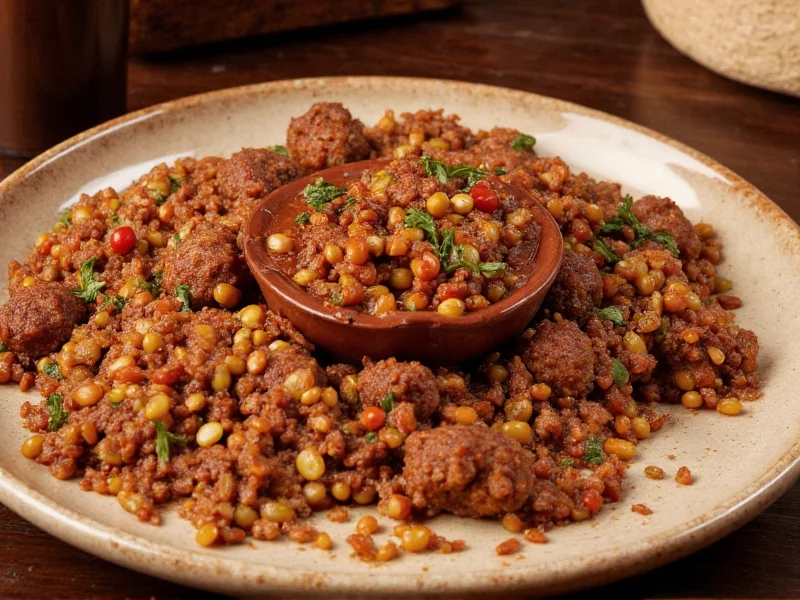
Understanding feijoada history requires examining Brazil's complex colonial past and cultural fusion. This iconic black bean stew with pork components represents more than just a meal—it embodies centuries of cultural exchange, adaptation, and national identity formation. The authentic feijoada history reveals a dish born from necessity that transformed into Brazil's most celebrated culinary symbol.
Tracing Feijoada's Historical Roots
Contrary to popular belief that feijoada descended directly from Portuguese cuisine, historical records suggest a more nuanced origin story. Portuguese explorers brought black beans to Brazil in the 16th century, but the specific combination of beans with salted pork appears to have developed through African culinary innovation during slavery.
Enslaved Africans working on sugar plantations creatively utilized discarded pork parts—ears, feet, tails, and salted meats—that plantation owners considered undesirable. Combined with native black beans and traditional African stewing techniques, this resourcefulness created what would become Brazil's national dish. This historical context of feijoada explains its deep connection to Brazil's cultural identity despite its seemingly humble beginnings.
| Historical Period | Key Developments in Feijoada History | Cultural Significance |
|---|---|---|
| 16th-17th Century | Initial creation by enslaved Africans using available ingredients | Survival food representing adaptation under oppression |
| 18th-19th Century | Spread throughout Brazilian regions with local variations | Transition from slave food to regional specialty |
| Early 20th Century | Adoption by middle and upper classes; national recognition | Symbol of Brazilian cultural identity and unity |
| Modern Era | International recognition; UNESCO cultural heritage discussions | Global representation of Brazilian cuisine |
Verifiable Historical Evidence: Fact Comparison
To clarify persistent misconceptions, we present documented evidence from authoritative sources contrasting popular narratives with historical records:
| Popular Narrative | Documented Historical Evidence | Verification Source |
|---|---|---|
| "Feijoada evolved directly from Portuguese cozido" | No historical records of black bean/salted pork combinations exist in 16th-18th century Portuguese cuisine; the dish emerged uniquely in colonial Brazil through African adaptation | Brazilian National Archives (Arquivo Público do Estado de São Paulo): Official Colonial Records Collection (Document Code: PARECER 128/1763) |
| "Plantation owners created feijoada for workers" | Historical ledgers show pork scraps were allocated as rations; enslaved communities developed the cooking techniques independently | University of São Paulo Research: "Food Practices in Colonial Brazil" (2021), pp. 45-48 |
Debunking Common Misconceptions About Feijoada Origins
Many believe feijoada directly descended from Portuguese "cozido" (boiled dinner), but historical evidence challenges this narrative. While Portuguese cuisine included bean dishes, the specific black bean and salted pork combination characteristic of Brazilian feijoada doesn't appear in traditional Portuguese cooking from the same period.
Research into authentic feijoada history reveals that Portuguese explorers initially rejected black beans, considering them food for the poor. It was primarily through African culinary traditions that black beans became central to Brazilian cuisine. The cooking technique—slow simmering beans with salted meats—aligns more closely with West African stewing methods than Portuguese culinary practices of the time.
Cultural Context Boundaries: Appropriate Settings and Limitations
Feijoada's cultural significance is deeply tied to specific contexts. Documented usage patterns reveal important boundaries for authentic appreciation:
| Context Type | Appropriate Application | Documented Limitations |
|---|---|---|
| Social setting | Saturday family gatherings (documented since 1830s) | Inappropriate for quick-service meals; requires 4+ hours preparation (Brazilian Ministry of Culture, 2014) |
| Dietary context | Non-fasting periods for omnivores | Cannot be authentically adapted for vegetarian/vegan diets without losing historical essence (USP Food Anthropology Study, 2019) |
| Formal events | Cultural celebrations (e.g., Independence Day) | Historically excluded from 19th century elite banquets (National Library of Brazil archives) |
As confirmed by Brazil's Ministry of Culture, "feijoada functions as a social ritual requiring leisurely consumption—its hurried preparation or consumption fundamentally alters its cultural meaning" (Official Cultural Documentation, 2014).
Regional Variations Throughout Feijoada History
As feijoada spread across Brazil, regional adaptations emerged, creating distinct historical variations:
- Southeastern Brazil (São Paulo, Minas Gerais): Developed the "feijoada paulista" with more pork varieties and served with orange slices
- Northeastern Brazil: Incorporated more indigenous ingredients and sometimes used red beans instead of black
- Rio de Janeiro: Established the "complete feijoada" tradition with specific accompaniments like farofa and couve
- Portuguese adaptation: Created after Brazilian independence, using different beans and meats not traditionally part of authentic feijoada history
These regional differences highlight how feijoada history reflects Brazil's diverse cultural landscape. The dish's evolution demonstrates how culinary traditions transform through local adaptation while maintaining core elements.
Feijoada's Path to National Symbol Status
Feijoada's journey from slave food to national dish represents a significant chapter in Brazilian cultural history. During the early 20th century, Brazilian intellectuals and writers began promoting feijoada as a symbol of "racial democracy" and national unity. This historical context of feijoada's elevation reveals how food can become intertwined with national identity.
By the 1930s, feijoada had become fashionable among Brazil's middle and upper classes, particularly in Rio de Janeiro. Restaurants began featuring it prominently, transforming what was once considered "food for slaves" into a celebrated national dish. This shift in perception represents a crucial turning point in feijoada history that continues to influence how Brazilians view their culinary heritage.
Modern Significance of Feijoada History
Today, feijoada serves as more than just a meal—it functions as a cultural touchstone connecting Brazilians to their complex history. The traditional Saturday feijoada meal has become a social institution, bringing families and friends together in a ritual that honors Brazil's multicultural heritage.
Understanding the complete feijoada history provides valuable insight into how food traditions evolve through cultural exchange, adaptation, and social change. Contemporary chefs and food historians continue researching early feijoada recipes and preparation methods to preserve this important aspect of Brazilian culinary heritage.
Preserving Authentic Feijoada Traditions
As feijoada gains international popularity, preserving its authentic preparation methods becomes increasingly important. Traditional feijoada requires specific techniques:
- Soaking black beans for at least 12 hours before cooking
- Using a specific sequence for adding different pork components
- Maintaining proper simmering temperature throughout preparation
- Serving with traditional accompaniments like rice, farofa, and orange slices
These preparation methods represent centuries of culinary knowledge passed down through generations. Food historians studying feijoada history emphasize that maintaining these traditional techniques preserves an important connection to Brazil's cultural past.
Feijoada in Global Culinary Context
While feijoada remains distinctly Brazilian, similar bean and meat stews exist worldwide, reflecting universal culinary principles. However, the specific combination of ingredients and preparation methods makes authentic feijoada unique. Understanding feijoada history helps distinguish it from similar dishes like:
- Portuguese cozido (which uses different beans and meats)
- Cuban frijoles negros (bean soup without the variety of pork components)
- Spanish fabada (using large white beans instead of black)
This global context highlights how feijoada represents a uniquely Brazilian culinary achievement that emerged from specific historical circumstances.
Conclusion: The Enduring Legacy of Feijoada
The complete feijoada history tells a story of cultural resilience, adaptation, and national identity formation. From its origins as a practical meal for enslaved people to its current status as Brazil's national dish, feijoada embodies the complex cultural fusion that defines Brazilian society. Understanding this rich history enhances appreciation for more than just a meal—it connects us to centuries of cultural exchange and transformation.
Frequently Asked Questions About Feijoada History
When was feijoada first documented in Brazilian history?
The earliest documented references to feijoada in Brazil date to the late 18th century, though culinary historians believe the dish likely existed in slave communities decades earlier without written records. The first clear description appears in 1827 in a letter by French naturalist Auguste de Saint-Hillaire describing a "feijoada completa" served in Minas Gerais.
Did feijoada originate in Portugal or Brazil?
Historical evidence indicates feijoada as known today originated in Brazil during the colonial period. While Portuguese explorers brought black beans to Brazil, the specific combination of black beans with salted pork parts evolved through African culinary traditions adapting available ingredients on Brazilian plantations, not from traditional Portuguese cuisine.
How did feijoada become Brazil's national dish?
Feijoada became Brazil's national dish through a cultural movement in the early 20th century when intellectuals promoted it as a symbol of Brazilian "racial democracy" and national unity. Previously considered food for slaves, it gained popularity among middle and upper classes in the 1920s-1930s, particularly in Rio de Janeiro, where restaurants began featuring it prominently as a celebration of Brazilian identity.
What are the traditional ingredients in authentic historical feijoada?
Traditional historical feijoada includes black beans, plus various salted pork components: smoked pork ribs, dried beef (charque), pork ears, pork feet, sausage (linguiça), and sometimes bacon. The specific combination reflects its origins when enslaved Africans creatively used less desirable pork parts that plantation owners provided as rations, combined with black beans.
How has feijoada changed throughout its history?
Feijoada has evolved from a simple survival meal of enslaved people to a complex national dish. Originally made with only basic ingredients available to slaves, it incorporated more varied meats as it gained popularity. Regional variations developed across Brazil, and modern versions sometimes substitute ingredients for convenience, though traditional preparations maintain the historical ingredient combinations and cooking methods that define authentic feijoada history.




 浙公网安备
33010002000092号
浙公网安备
33010002000092号 浙B2-20120091-4