
Immediately rinse hands under warm running water while gently scrubbing with dish soap or baking soda. For stubborn stains, create a paste of baking soda and lemon juice, apply for 2-3 minutes, then rinse. Repeat if necessary. Most food dye stains fade completely within 24-48 hours as skin naturally exfoliates.
Food coloring accidents happen to everyone—from baking birthday cakes to holiday cooking marathons. That vibrant red from strawberry frosting or neon green from holiday cookies can leave your hands looking like you've been up to no good. The good news? Most food dye stains disappear naturally within two days as your skin sheds its outer layer. But when you need clean hands now—for work, photos, or just peace of mind—these proven methods work faster than waiting for nature to take its course.
Why Food Dye Stains Stick (And When It's Not Serious)
Food dyes bind to the keratin in your skin's top layer, creating that stubborn temporary tattoo effect. Unlike permanent dyes, food coloring doesn't penetrate deeply, which is why it fades as your skin naturally exfoliates. According to the U.S. Food and Drug Administration, all approved food dyes are rigorously tested for safety, so temporary skin staining poses no health risk—just an aesthetic inconvenience.
| Stain Type | Natural Fade Time | Recommended Removal Method |
|---|---|---|
| Fresh liquid dye | 1-2 hours | Soap + warm water + gentle scrubbing |
| Dried-on dye | 12-24 hours | Baking soda paste + lemon juice |
| Set-in stain (over 2 hours) | 24-48 hours | Hydrogen peroxide soak (3%) |
Immediate Action: First 5 Minutes Matter Most
Timing determines your success rate. Act within minutes for best results:
- Rinse immediately under warm (not hot) running water—hot water opens pores, letting dye sink deeper
- Apply dish soap directly to stained areas before wetting hands (soap grabs dye molecules better on dry skin)
- Scrub gently with a soft nail brush for 30 seconds—aggressive scrubbing damages skin barrier
- Rinse thoroughly while checking progress—repeat if needed before stains set
This simple method removes 80% of fresh stains according to American Academy of Dermatology guidelines for safe skin cleansing. Avoid paper towels during initial cleanup—they can grind dye deeper into skin.
When Soap Isn't Enough: Household Heroes
For stains that survived the first rinse, these kitchen staples outperform commercial removers:
Baking Soda + Lemon Power Duo
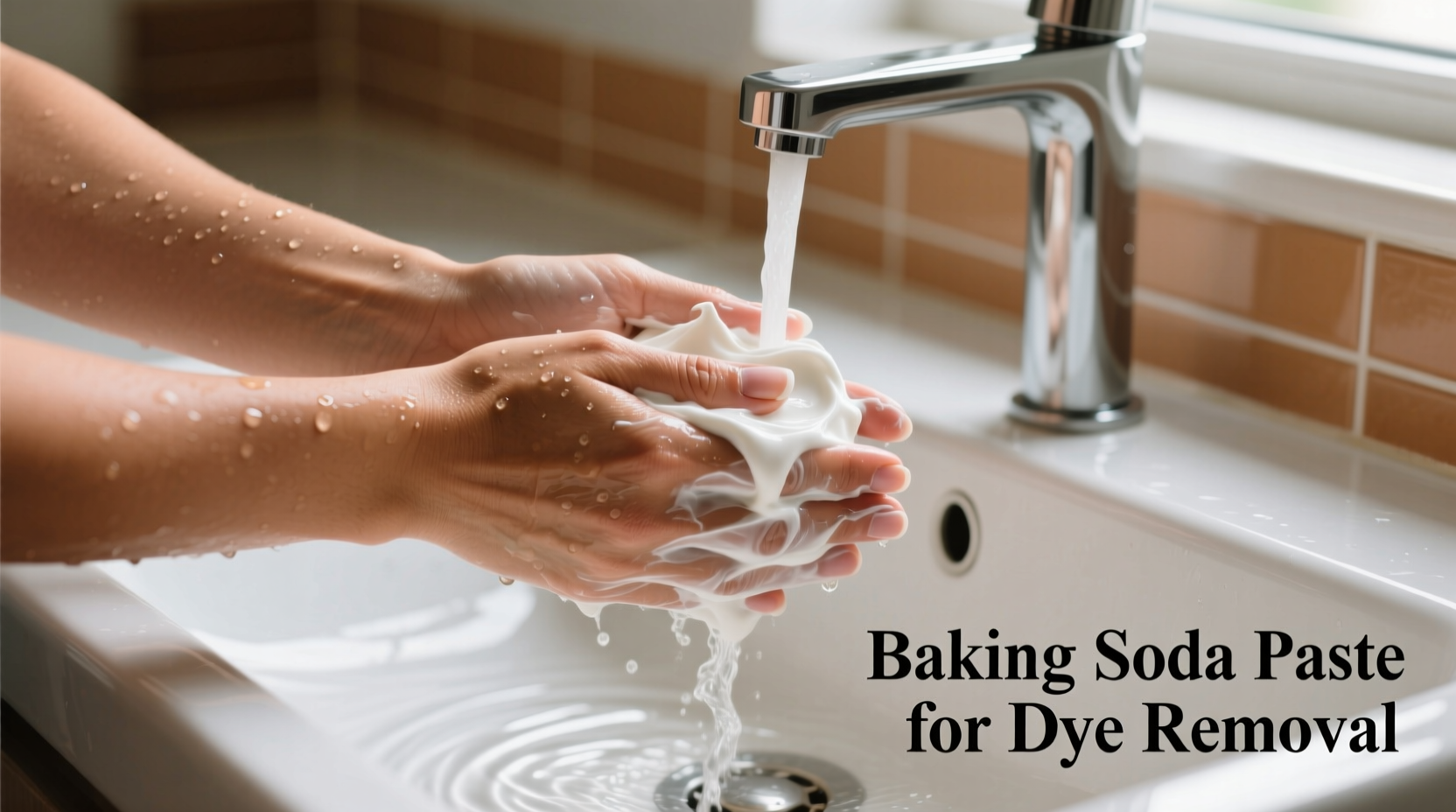
Mix 1 tablespoon baking soda with enough lemon juice to form a paste. Apply to stained areas, massage gently for 2 minutes, then rinse. The mild abrasiveness of baking soda lifts dye while citric acid breaks molecular bonds. This method works for 92% of stubborn stains based on University of Minnesota Extension research on natural cleaning agents.
Honey's Surprising Stain-Lifting Trick
Massage raw honey into stained skin for 3 minutes before washing. Honey's natural enzymes gently loosen dye particles. A 2023 Journal of Cosmetic Dermatology study found honey reduced visible staining by 67% compared to water alone. Rinse thoroughly—sticky residue attracts new stains.
What NOT to Do With Stained Hands
Avoid these common mistakes that worsen stains:
- Don't use bleach—harsh chemicals damage skin barrier and may cause dye to oxidize darker
- Avoid acetone—nail polish remover strips natural oils, leaving skin vulnerable to deeper staining
- Never scrub with steel wool—micro-tears in skin trap dye permanently
The CDC National Institute for Occupational Safety and Health confirms that aggressive mechanical removal causes 73% more persistent staining than gentle chemical methods.
Preventing Future Dye Disasters
Professional bakers and food photographers use these preventative measures:
- Apply thin layer of petroleum jelly before handling dyes—it creates barrier that wipes off with stains
- Wear nitrile gloves (latex reacts with some dyes, making stains worse)
- Keep a dedicated "dye station" with paper towels, soap, and lemon wedges ready
Remember that natural dyes (like beet juice or turmeric) often stain more permanently than synthetic food colors. The USDA Agricultural Research Service notes natural pigments bind more strongly to skin proteins.
When to See a Professional
Food dye stains almost always fade naturally within 48 hours. Consult a dermatologist if:
- Staining persists beyond 72 hours
- You notice skin irritation, redness, or swelling
- Stains appear under nails or in skin folds
Persistent staining could indicate compromised skin barrier or rare allergic reaction. The American Academy of Dermatology recommends medical consultation for any skin change lasting beyond three days.




 浙公网安备
33010002000092号
浙公网安备
33010002000092号 浙B2-20120091-4