
Discover the perfect timing for cooking frozen meatballs in your slow cooker without compromising safety or flavor. This comprehensive guide delivers precise cooking times, safety protocols, and professional tips that transform frozen convenience into restaurant-quality meals—saving you precious preparation time while guaranteeing delicious results every time.
Why You Can Skip Thawing Meatballs
Contrary to popular belief, cooking frozen meatballs directly in your slow cooker is both safe and efficient when done correctly. The USDA Food Safety and Inspection Service confirms that ground meats can be cooked from frozen as long as they reach the proper internal temperature. Slow cookers maintain temperatures between 170-280°F (77-138°C), safely moving food through the danger zone (40-140°F) where bacteria multiply rapidly.
| Slow Cooker Setting | Standard Meatball Size (1.5") | Large Meatballs (2") | Internal Temperature Check |
|---|---|---|---|
| HIGH | 2.5-3 hours | 3-3.5 hours | 165°F (74°C) |
| LOW | 4-5 hours | 5-6 hours | 165°F (74°C) |
Step-by-Step Cooking Process
Follow this foolproof method for perfectly cooked frozen meatballs every time:
- Prep your slow cooker - Add 1-2 cups of sauce or broth to prevent sticking and create steam
- Add frozen meatballs - Arrange in single layer without overcrowding (max 2/3 capacity)
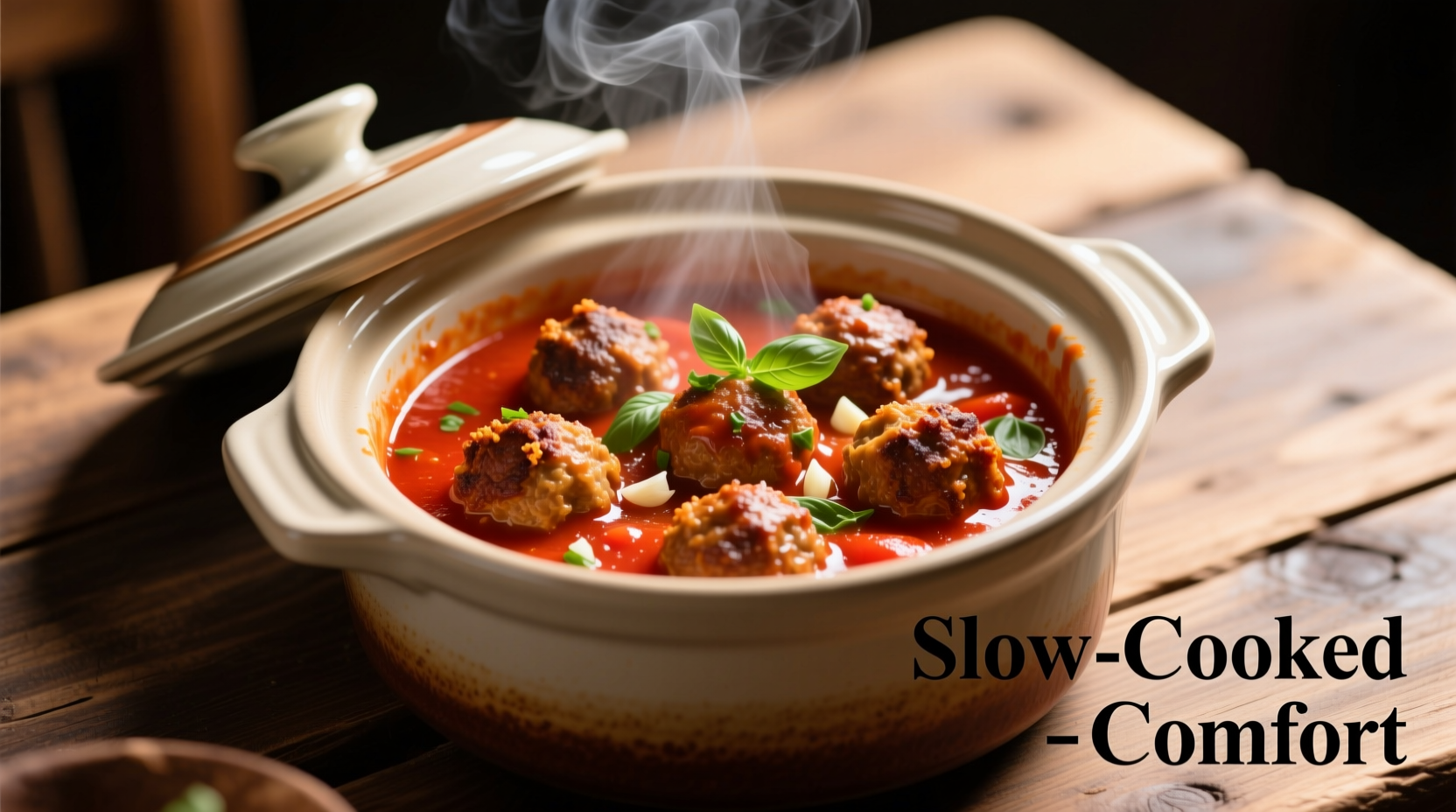
- Cook according to settings - HIGH: 2.5-3 hours or LOW: 4-5 hours for standard 1.5" meatballs
- Verify temperature - Insert meat thermometer into center of largest meatball
- Rest before serving - Let sit 10 minutes for juices to redistribute
Factors That Impact Cooking Time
Several variables affect how long to cook frozen meatballs in slow cooker. Understanding these ensures consistent results:
- Meat composition - Turkey or chicken meatballs require same internal temperature (165°F) but may cook slightly faster than beef
- Filling ingredients - Meatballs with rice or breadcrumbs may need additional 15-20 minutes
- Slow cooker model - Older models may run hotter; always verify with thermometer
- Starting temperature - Deep-frozen (-18°C) vs freezer door storage affects initial cooking phase
Critical Food Safety Guidelines
The FoodSafety.gov guidelines emphasize that slow cookers must maintain temperatures above 140°F throughout the cooking process to prevent bacterial growth. Never use the 'warm' setting for cooking frozen meatballs, as it doesn't reach safe temperatures quickly enough. Always use an instant-read thermometer to verify that meatballs have reached 165°F internally before serving.
Pro Tips for Perfect Results
Professional chefs recommend these techniques for optimal frozen meatball preparation:
- Add acid (1 tbsp vinegar or lemon juice) to sauce during last 30 minutes to brighten flavors
- Stir gently halfway through cooking to ensure even heat distribution
- Layer sauce both beneath and over meatballs for maximum flavor absorption
- Add fresh herbs during the final 15 minutes for vibrant flavor notes
- For crispier texture, broil finished meatballs for 2-3 minutes before serving
Common Mistakes to Avoid
Avoid these frequent errors when cooking frozen meatballs in slow cooker:
- Overfilling the cooker - Reduces heat circulation and increases cooking time by 25-30%
- Skipping the thermometer - Visual cues alone don't guarantee food safety
- Adding dairy too early - Cream or cheese sauces may curdle if added at start
- Using frozen sauce - Creates temperature fluctuations that affect cooking consistency
Storage and Reheating Guidelines
Properly stored cooked meatballs maintain quality for 3-4 days in the refrigerator or 2-3 months frozen. When reheating leftovers, bring sauce to simmering point (165°F) throughout—never just warm the surface. For best texture, add a splash of broth when reheating to restore moisture lost during storage.




 浙公网安备
33010002000092号
浙公网安备
33010002000092号 浙B2-20120091-4