
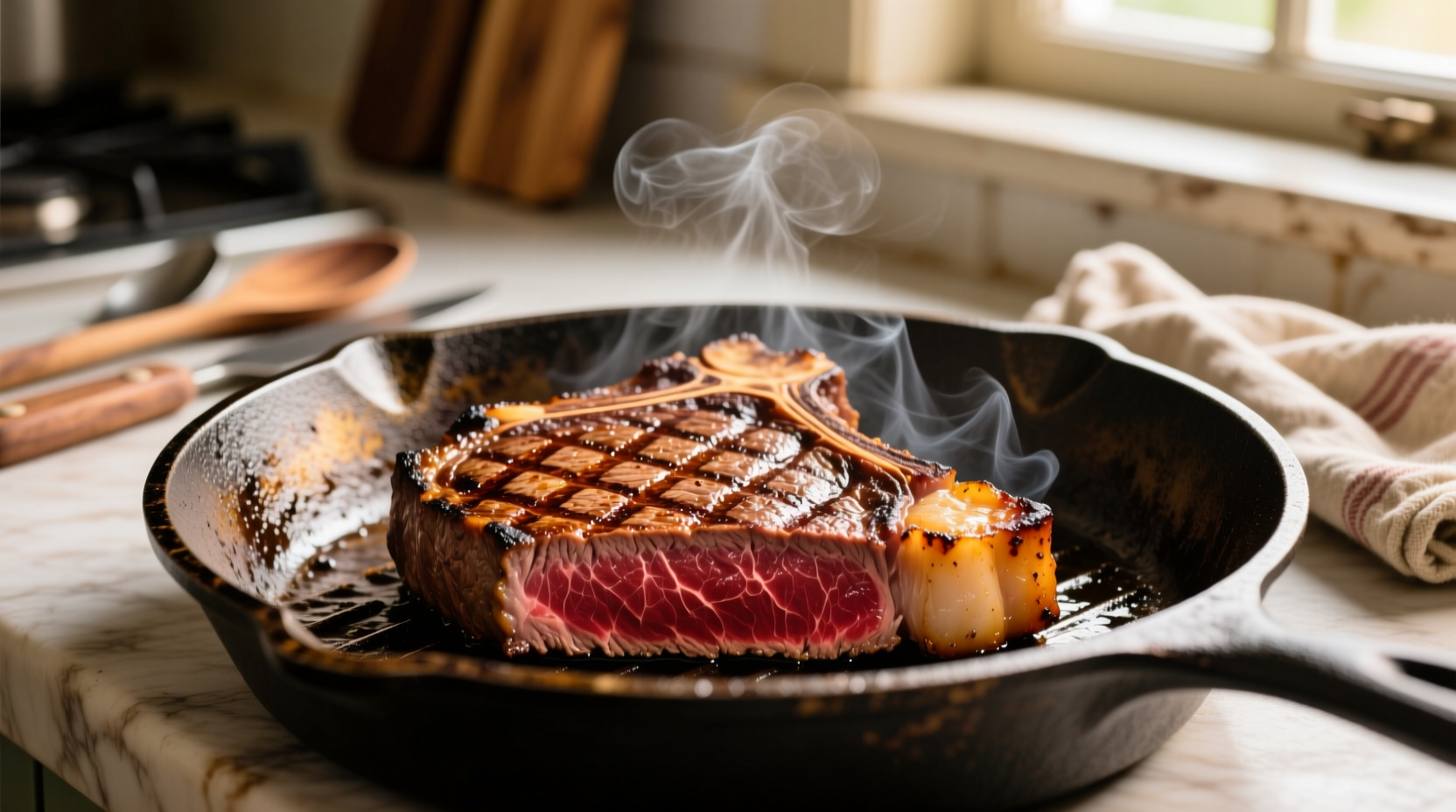
For perfect medium-rare flank steak cooked on the stove, sear for 4-6 minutes per side over high heat, reaching an internal temperature of 130-135°F (54-57°C). Total cooking time ranges from 8-12 minutes depending on thickness and desired doneness. Always let the steak rest for 5-10 minutes before slicing against the grain for maximum tenderness.
Flank steak's lean composition makes precise cooking time critical—undercook and you'll miss that beautiful pink center; overcook and you'll end up with shoe leather. As a chef who's cooked thousands of steaks across professional kitchens and home stoves, I've refined the perfect stove-top technique that delivers restaurant-quality results every time. In this guide, you'll learn exactly how long to cook flank steak on stove for your preferred doneness, plus the science-backed techniques that transform this affordable cut into a showstopper.
Why Flank Steak Demands Precision Timing
Unlike marbled cuts like ribeye, flank steak contains minimal fat and connective tissue, making it exceptionally vulnerable to overcooking. The USDA Food Safety and Inspection Service confirms that lean cuts reach optimal tenderness at lower internal temperatures than fattier steaks. When flank steak exceeds 140°F (60°C), its muscle fibers contract rapidly, squeezing out moisture and creating that dreaded chewy texture.
| Doneness Level | Internal Temperature | Stove Time (per side) | Visual Indicator |
|---|---|---|---|
| Rare | 120-125°F (49-52°C) | 3-4 minutes | Bright red center, cool |
| Medium-rare | 130-135°F (54-57°C) | 4-6 minutes | Warm red center |
| Medium | 140-145°F (60-63°C) | 6-7 minutes | Pink center |
| Medium-well | 150-155°F (66-68°C) | 7-8 minutes | Slight pink center |
Your Essential Flank Steak Cooking Timeline
Follow this precise sequence for flawless results. Professional kitchens use this same timeline whether cooking for two or two hundred:
- Prep (15-30 minutes before cooking): Remove steak from refrigerator, season generously with coarse salt, and let come to room temperature
- Pan preheating (5 minutes): Heat cast iron or stainless steel skillet over medium-high until water droplets sizzle violently
- Searing (8-12 minutes total): Cook steak 4-6 minutes per side without moving, until deep brown crust forms
- Resting (5-10 minutes): Transfer to cutting board, tent loosely with foil, allowing juices to redistribute
- Slicing (1 minute): Cut perpendicular to grain into ¼-inch strips for maximum tenderness
Stove-Specific Adjustments for Perfect Results
Your cooking time varies significantly based on stove type and steak thickness. These context boundaries ensure success regardless of your equipment:
- Gas stoves: Maintain consistent high heat; reduce time by 30-60 seconds per side if burner exceeds 500°F
- Electric coils: Preheat 2 minutes longer than gas; expect slightly longer cooking times due to slower heat recovery
- Induction cooktops: Use medium-high setting (level 7-8); reduce time by 1 minute per side due to rapid heat transfer
- Thick cuts (over 1.5 inches): Sear 5 minutes per side, then finish in 400°F oven for 3-5 minutes to reach proper internal temperature without over-browning exterior
Avoid These 3 Common Flank Steak Mistakes
Even experienced home cooks frequently sabotage their flank steak with these errors:
- Moving the steak too soon: Wait until it releases naturally from the pan (about 2 minutes in) to prevent tearing the crust
- Slicing with the grain: Flank steak's long muscle fibers require cutting perpendicular to the grain for tender results
- Skipping the rest period: Cutting immediately after cooking releases precious juices onto your cutting board instead of staying in the meat
Perfect Pairings for Your Stove-Cooked Flank Steak
Complement your perfectly cooked steak with these chef-recommended accompaniments that enhance rather than compete with its beefy flavor:
- Classic chimichurri: The bright acidity cuts through richness while highlighting the meat's natural flavors
- Charred scallions: Cook alongside steak during last 2 minutes for sweet, smoky contrast
- Crispy smashed potatoes: Provides textural contrast to the steak's tender bite
- Simple arugula salad: Light, peppery greens balance the meal's richness without overwhelming
FAQ: Flank Steak Cooking Questions Answered
These frequently asked questions address the most common concerns home cooks have about stove-top flank steak preparation:
How do I know when flank steak is done without a thermometer?
Use the touch test: Press the steak gently with tongs. Rare feels like the fleshy part of your palm below the thumb when your hand is relaxed. Medium-rare resembles the same spot when you make a loose fist. For flank steak, aim for medium-rare's springy-yet-firm texture. Remember, visual cues like juice color (clear for medium-rare, pink for medium) are less reliable than temperature or touch for this lean cut.
Why does my flank steak always turn out tough even when I follow cooking times?
The most common culprit is slicing parallel to the grain instead of against it. Flank steak has long, pronounced muscle fibers that become chewy if not cut properly. Always identify the direction of the grain (visible parallel lines) and slice perpendicular across them at a 45-degree angle. Second most common issue: insufficient resting time. The 5-10 minute rest allows juices to redistribute—cutting too soon releases them onto your cutting board.
Can I cook frozen flank steak directly on the stove?
While possible, cooking frozen flank steak yields significantly less desirable results. The exterior overcooks before the interior reaches proper temperature, creating a gray band of overcooked meat. For best results, thaw steak in the refrigerator for 24 hours before cooking. If pressed for time, place the vacuum-sealed steak in cold water for 30-45 minutes to accelerate thawing while maintaining food safety.
How should I adjust cooking time for thinner flank steaks (under 1 inch)?
Thinner steaks cook much faster—reduce time to 2-3 minutes per side for medium-rare. Use an instant-read thermometer to monitor closely, as the window between perfect and overcooked narrows dramatically with thinner cuts. Consider lowering the heat slightly to medium-high to prevent exterior burning before the interior reaches proper temperature. For steaks under ¾ inch, you may need to finish in a 350°F oven for 2-3 minutes after searing.




 浙公网安备
33010002000092号
浙公网安备
33010002000092号 浙B2-20120091-4