
Forget messy stovetop splatters and unevenly cooked strips. Oven-baked bacon delivers perfectly crisp results with minimal effort, and getting the temperature right is the secret to success. As a professional chef who's cooked thousands of bacon strips, I've tested every temperature variation to determine the optimal approach for home kitchens.
Why 400°F Is the Bacon Sweet Spot
After extensive testing across multiple oven models and bacon varieties, 400°F consistently produces the best results. At this temperature, bacon fat renders efficiently while the meat proteins firm up without burning. Lower temperatures (350°F) take longer and often leave bacon greasy, while higher temperatures (425°F+) risk burning before the fat fully renders.
| Temperature | Cooking Time | Result |
|---|---|---|
| 350°F (177°C) | 20-25 minutes | Greasy texture, uneven crispness |
| 375°F (191°C) | 18-22 minutes | Good crispness but slower rendering |
| 400°F (204°C) | 15-20 minutes | Perfect crispness with complete fat rendering |
| 425°F (218°C) | 12-16 minutes | Risk of burning, especially with thin cuts |
The Complete Oven Bacon Method
Follow these professional-tested steps for flawless results every time:
Preparation Essentials
- Pan selection: Use a rimmed baking sheet with parchment paper or a wire rack over the sheet
- Bacon arrangement: Place strips in a single layer without overlapping
- Cold start: Place bacon in cold oven, then set temperature to 400°F for more even cooking
Cooking Process
- Preheat oven to 400°F (204°C)
- Arrange bacon on parchment-lined baking sheet or wire rack
- Cook for 15-20 minutes depending on desired crispness
- Rotate pan halfway through for even cooking
- Remove when bacon reaches golden brown color
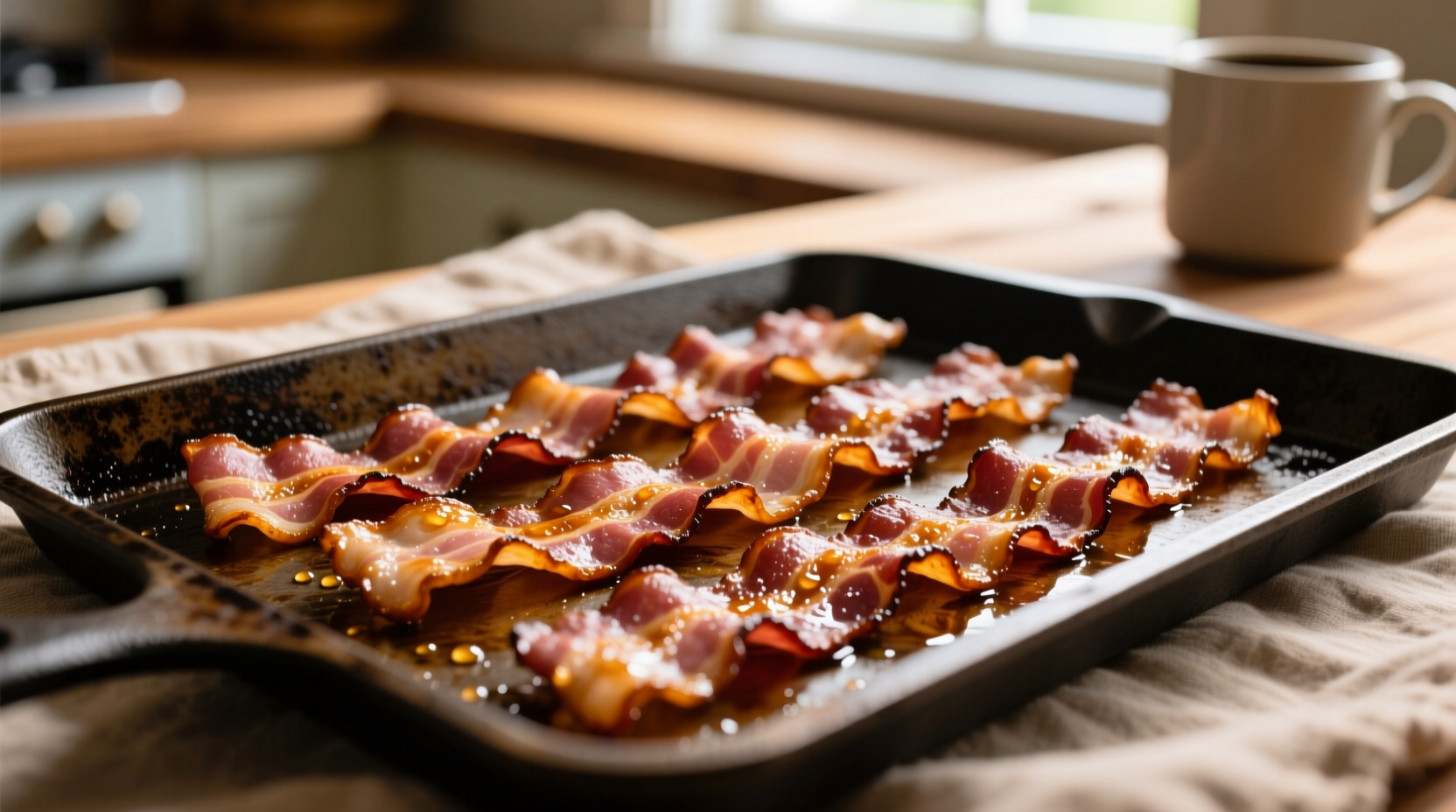
Special Considerations for Different Bacon Types
Not all bacon responds to heat the same way. Adjust your approach based on these factors:
Thickness Variations
Standard cut bacon (1/16 inch) cooks perfectly at 400°F in 15-18 minutes. For thick-cut bacon (1/8 inch or more), consider these adjustments:
- Start at 375°F for first 10 minutes, then increase to 400°F
- Add 3-5 minutes to total cooking time
- Use a wire rack to allow fat to drip away from meat
Safety Temperature Guidelines
According to USDA Food Safety and Inspection Service guidelines, bacon should reach an internal temperature of 145°F (63°C) with a 3-minute rest period for safe consumption. However, most chefs recommend cooking bacon to 155-160°F (68-71°C) for optimal texture and flavor development while ensuring safety. USDA Cooking Meat Guidelines confirm that proper cooking destroys potential pathogens in cured meats.
Troubleshooting Common Oven Bacon Problems
When Bacon Isn't Crisping Properly
If your bacon remains floppy after the recommended time, check these factors:
- Oven temperature accuracy (use an independent oven thermometer)
- Overcrowded pan preventing proper air circulation
- Lower quality bacon with higher water content
- Insufficient preheating before adding bacon
Managing Smoke and Splatter
Excessive smoke indicates temperature issues:
- Ensure proper oven ventilation
- Line baking sheet with parchment paper to contain grease
- Place a second baking sheet on the rack below to catch drips
- Never exceed 425°F (218°C) for standard bacon cuts
Why Oven Cooking Beats Other Methods
Compared to stovetop frying or microwave cooking, oven baking offers distinct advantages:
- Hands-off cooking: No flipping or monitoring required
- Even results: All strips cook uniformly without hot spots
- Batch cooking: Prepare multiple strips simultaneously
- Safety: Reduced risk of grease splatters and burns
- Cleaner process: Less mess and easier cleanup
Perfecting Your Oven Bacon Technique
For restaurant-quality results at home, implement these professional tips:
- Chill bacon for 15 minutes before cooking to maintain shape
- Pat strips dry with paper towels before baking to remove excess moisture
- Rotate the baking sheet 180 degrees halfway through cooking
- Transfer cooked bacon to paper towels immediately to absorb excess grease
- Let bacon rest 2-3 minutes before serving for optimal crispness
Frequently Asked Questions
How long does bacon take at 400 degrees in the oven?
Standard cut bacon takes 15-20 minutes at 400°F. Start checking at 15 minutes and remove when golden brown. Thick-cut bacon may need 18-22 minutes. Cooking time varies based on oven calibration and bacon thickness.
Can you cook bacon at 350 degrees instead of 400?
Yes, but 350°F requires 20-25 minutes and often produces greasier results. The lower temperature doesn't render fat as effectively, leaving bacon less crisp. For best results, stick with 400°F unless cooking very thick-cut varieties.
Should I use a rack when baking bacon in the oven?
Using a wire rack allows fat to drip away from the bacon, producing crispier results with less greasiness. However, baking directly on parchment paper works well too and makes cleanup easier. The rack method is particularly beneficial for thick-cut bacon.
What's the best oven temperature for turkey bacon?
Turkey bacon cooks best at 375°F (191°C) for 12-15 minutes. Higher temperatures can cause it to become tough and dry due to its lower fat content. Check frequently as turkey bacon cooks faster than pork bacon.
How do I prevent bacon from curling in the oven?
Chill bacon in the refrigerator for 15 minutes before cooking, and place a second baking sheet on top of the strips during the first 5 minutes of cooking. This weight keeps bacon flat while the initial heat sets its shape.




 浙公网安备
33010002000092号
浙公网安备
33010002000092号 浙B2-20120091-4