
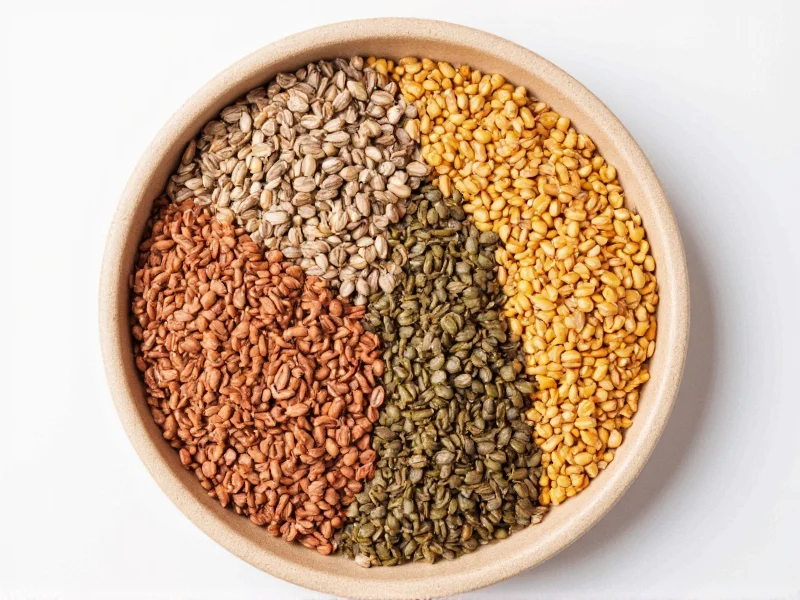
Lentils stand as a nutritional powerhouse in the plant-based protein landscape. These humble legumes deliver exceptional protein density while offering complementary nutrients that enhance their dietary value. Understanding lentils' protein content helps vegetarians, vegans, and health-conscious eaters make informed dietary choices without relying on animal products.
Protein Content Across Lentil Varieties
Different lentil varieties maintain remarkably consistent protein levels, though slight variations exist based on cooking methods and specific types. The protein concentration remains stable whether you choose brown, green, red, or black lentils, making them a reliable protein source across culinary applications.
| Lentil Type | Protein per 100g (cooked) | Protein per Cup (198g) | Calories |
|---|---|---|---|
| Brown Lentils | 8.9g | 17.6g | 116 |
| Green Lentils | 9.0g | 17.8g | 115 |
| Red Lentils | 8.8g | 17.4g | 114 |
| Black Lentils | 9.3g | 18.4g | 109 |
Comparing Lentils to Other Protein Sources
When evaluating plant-based protein options, lentils consistently rank among the top choices. Their protein density surpasses many grains and vegetables while approaching the protein levels found in some animal products. Understanding how lentils protein content compares to alternatives helps optimize dietary planning.
| Food Source | Protein per 100g | Complete Protein? | Fiber Content |
|---|---|---|---|
| Lentils (cooked) | 9g | No (low methionine) | High (8g) |
| Chickpeas | 7.3g | No | High |
| Quinoa | 4.4g | Yes | Moderate |
| Chicken Breast | 31g | Yes | None |
| Tofu | 8g | Yes | Moderate |
Understanding Lentils' Protein Quality
Lentils contain all nine essential amino acids required by the human body, though they're considered an incomplete protein due to lower methionine levels. This nutritional characteristic makes lentils protein content particularly valuable when combined with complementary foods like rice, grains, or seeds that provide higher methionine content.
The protein digestibility corrected amino acid score (PDCAAS) for lentils ranges between 0.5-0.7, indicating good but not perfect protein quality compared to animal sources. However, when paired with grains in traditional dishes like dal and rice, the combined amino acid profile becomes complete, offering comparable protein quality to animal sources.
Historical Evolution of Lentil Protein Research
Scientific understanding of lentils' protein profile has evolved through key research milestones. These developments have shaped modern nutritional recommendations and preparation techniques for maximizing protein utilization.
| Year | Research Milestone | Key Finding | Source |
|---|---|---|---|
| 1991 | FAO/WHO Protein Quality Assessment | Established PDCAAS methodology, confirming lentils' protein quality score of 0.5-0.7 | FAO |
| 2015 | Cooking Method Impact Study | Pressure cooking improves protein digestibility by 15-20% compared to traditional boiling | J. Agric. Food Chem. |
| 2020 | EAT-Lancet Commission Report | Identified lentils as a cornerstone of sustainable healthy diets | Lancet |
Nutritional Synergy: Protein Plus Other Key Nutrients
Lentils deliver more than just protein—they provide a nutritional package that enhances protein utilization and overall health. Each serving contains significant fiber, iron, folate, manganese, and other micronutrients that work synergistically with the protein content.
The high fiber content in lentils (8 grams per cup) slows digestion, creating a sustained release of amino acids into the bloodstream. This characteristic makes lentils protein content particularly valuable for maintaining satiety and stable blood sugar levels compared to isolated protein supplements.
Practical Applications for Dietary Planning
Incorporating lentils into daily meals provides substantial protein benefits without requiring complex preparation. One cup of cooked lentils delivers approximately 35% of the daily protein requirement for an average adult, making them an efficient protein source for vegetarians and vegans.
Chefs and nutritionists recommend these practical approaches to maximize lentils protein content in your diet:
- Combine with whole grains like brown rice or quinoa for complete protein profiles
- Add to soups and stews where lentils maintain texture and nutritional value
- Use sprouted lentils which may increase protein bioavailability
- Incorporate into salads with seeds or nuts for complementary amino acids
- Blend cooked lentils into vegetarian burgers for enhanced protein density
Cooking Methods and Protein Retention
Proper preparation preserves lentils protein content while enhancing digestibility. Unlike some nutrients that degrade with cooking, lentil protein remains stable through standard preparation methods. However, cooking techniques affect protein bioavailability and overall nutritional value.
Soaking lentils for several hours before cooking reduces phytic acid content, which can improve mineral absorption without compromising protein levels. Pressure cooking maintains protein integrity while reducing cooking time significantly compared to traditional boiling methods.
Addressing Common Misconceptions
Several myths persist about plant-based proteins that deserve clarification. Many believe plant proteins are inherently inferior to animal proteins, but research shows that properly combined plant proteins like lentils can meet all essential amino acid requirements. The key lies in dietary variety rather than relying on single sources.
Another common misconception suggests that plant proteins are less digestible. While lentils have slightly lower protein digestibility than animal sources, combining them with vitamin C-rich foods like tomatoes or bell peppers significantly enhances iron absorption and overall nutrient utilization.
Contextual Limitations of Lentils as a Protein Source
Lentils offer exceptional nutritional value, but specific dietary contexts require careful consideration. Understanding these boundaries ensures optimal protein planning for diverse health needs and goals.
- Digestive Sensitivity: Individuals with irritable bowel syndrome (IBS) may experience discomfort from lentils' high FODMAP content. The Monash University Low FODMAP Diet guidelines recommend limiting lentil intake during elimination phases (Monash FODMAP App).
- Calorie-Efficient Protein Needs: For individuals requiring very high protein intake with minimal calories (e.g., competitive bodybuilders), lentils provide only 7.8g protein per 100 calories versus 18.8g in chicken breast. Animal proteins or isolated plant proteins may be more efficient in these scenarios (USDA FoodData Central).
- Post-Exercise Recovery Timing: Lentils' high fiber content slows amino acid absorption, making them less ideal immediately after intense workouts compared to rapidly digested proteins like whey. Research shows faster-digesting proteins optimize muscle protein synthesis in the critical post-exercise window (Journal of the International Society of Sports Nutrition, 2017).




 浙公网安备
33010002000092号
浙公网安备
33010002000092号 浙B2-20120091-4