
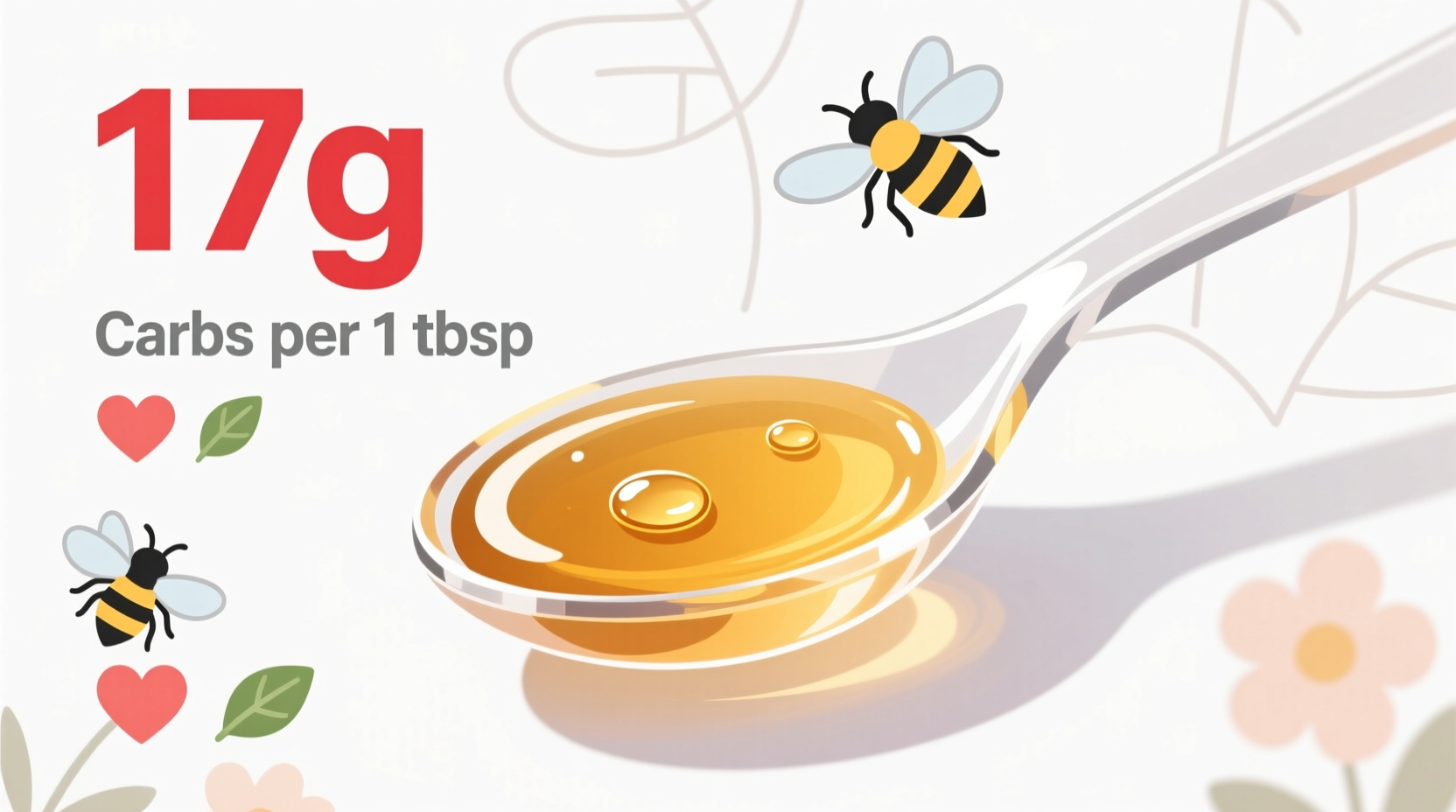
Understanding the exact carbohydrate content in honey matters when you're counting carbs for health reasons or culinary precision. As a natural sweetener increasingly used as sugar substitute, knowing its nutritional profile helps you incorporate it wisely into your diet. Let's break down exactly what's in that spoonful of golden sweetness.
Exact Carbohydrate Measurement in Honey
According to the USDA FoodData Central database, one standard tablespoon (15 milliliters or 21 grams) of raw honey contains 17 grams of carbohydrates. This represents about 6% of the recommended daily value for carbohydrates based on a 2,000-calorie diet.
Unlike refined sugar which contains sucrose, honey's carbohydrates come primarily from two simple sugars:
- Fructose: Approximately 8 grams per tablespoon
- Glucose: Approximately 7 grams per tablespoon
This natural sugar composition gives honey its characteristic sweetness while providing trace amounts of other compounds not found in regular table sugar.
| Sweetener | Carbs per Tbsp | Primary Sugar Components | Glycemic Index |
|---|---|---|---|
| Honey (raw) | 17g | Fructose (8g), Glucose (7g) | 58 |
| Table sugar | 12.6g | Sucrose (12g) | 65 |
| Maple syrup | 12g | Sucrose (mostly) | 54 |
| Agave nectar | 16g | Fructose (mostly) | 15-30 |
Source: USDA FoodData Central (2023), American Diabetes Association nutritional guidelines
Practical Implications for Your Diet
While honey offers trace nutrients and antioxidants not found in refined sugar, its high carbohydrate content means portion control remains essential. Consider these practical applications:
For Blood Sugar Management
Despite honey's lower glycemic index (58) compared to table sugar (65), the American Diabetes Association notes that honey affects blood glucose levels similarly to sugar. If you have diabetes or insulin resistance, measure honey precisely—don't assume it's "safe" in larger quantities.
For Weight Management
At 64 calories per tablespoon, honey provides significant energy density. Registered dietitians recommend measuring honey rather than pouring freely—a common mistake that leads to unintentional carb overload. Try these portion strategies:
- Use a measuring spoon instead of pouring directly
- Consider reducing other carbohydrate sources when adding honey
- For baking, substitute honey for sugar at a 3:4 ratio (use 3/4 cup honey for every 1 cup sugar)
Processing Impact on Carbohydrate Content
The carbohydrate composition of honey remains relatively stable regardless of processing, but certain factors affect its nutritional profile:
- Raw vs. processed: Raw honey retains more enzymes and antioxidants but has identical carb content to processed varieties
- Crystallization: When honey crystallizes, the sugar molecules rearrange but total carbohydrate count remains unchanged
- Blended honeys: Some commercial products mix honey with corn syrup—always check labels as these contain additional carbohydrates
The FDA requires accurate nutritional labeling for packaged honey products, making it reliable for carb counting when purchased from reputable brands.
When Honey Makes Sense in Your Diet
Honey's carbohydrate content fits well in specific dietary contexts:
- Pre-workout fuel: The quick-digesting carbohydrates provide immediate energy for endurance activities
- Cold season: Small amounts may soothe sore throats without the inflammatory effects of refined sugar
- Flavor enhancement: When you need intense sweetness in smaller volumes than sugar provides
However, registered dietitians emphasize that honey remains a concentrated source of carbohydrates. As Antonio Rodriguez, culinary nutrition expert, explains: "Honey's natural origin doesn't change its fundamental carbohydrate composition. Treat it as you would any sweetener—measure precisely and account for those 17 grams in your daily carb budget."
Smart Substitution Strategies
If you're watching carbohydrate intake but want honey's distinctive flavor, try these approaches:
- Dilution method: Mix one part honey with two parts water for beverages, reducing effective carb density
- Flavor accenting: Use half the honey amount plus spices like cinnamon or vanilla to maintain sweetness perception
- Combination sweetening: Blend small honey amounts with non-nutritive sweeteners for reduced carb impact
Remember that while honey contains trace nutrients like antioxidants and enzymes, these exist in quantities too small to significantly impact nutrition. The primary consideration remains its carbohydrate contribution to your diet.
Frequently Asked Questions
Does the type of honey affect carbohydrate content?
Most honey varieties (clover, wildflower, orange blossom) contain approximately 17g of carbohydrates per tablespoon. Darker honeys like buckwheat may have marginally different sugar ratios but nearly identical total carbohydrate content according to USDA analysis.
How does honey's carb content compare to sugar for baking?
Sugar contains about 12.6g of carbohydrates per tablespoon compared to honey's 17g. However, honey is sweeter, so you typically need less—use 3/4 cup honey for every 1 cup of sugar, plus reduce other liquids by 3-4 tablespoons per cup of honey.
Is honey's carbohydrate content affected by temperature?
No, heating or cooling honey doesn't change its fundamental carbohydrate composition. While heat may cause minor chemical changes (like forming small amounts of hydroxymethylfurfural), the total carbohydrate measurement remains 17g per tablespoon.
Does crystallized honey have different carb content?
Crystallized honey contains identical carbohydrate content to liquid honey—17g per tablespoon. Crystallization is simply a physical change where glucose molecules form crystals; no carbohydrates are created or destroyed in this natural process.




 浙公网安备
33010002000092号
浙公网安备
33010002000092号 浙B2-20120091-4