
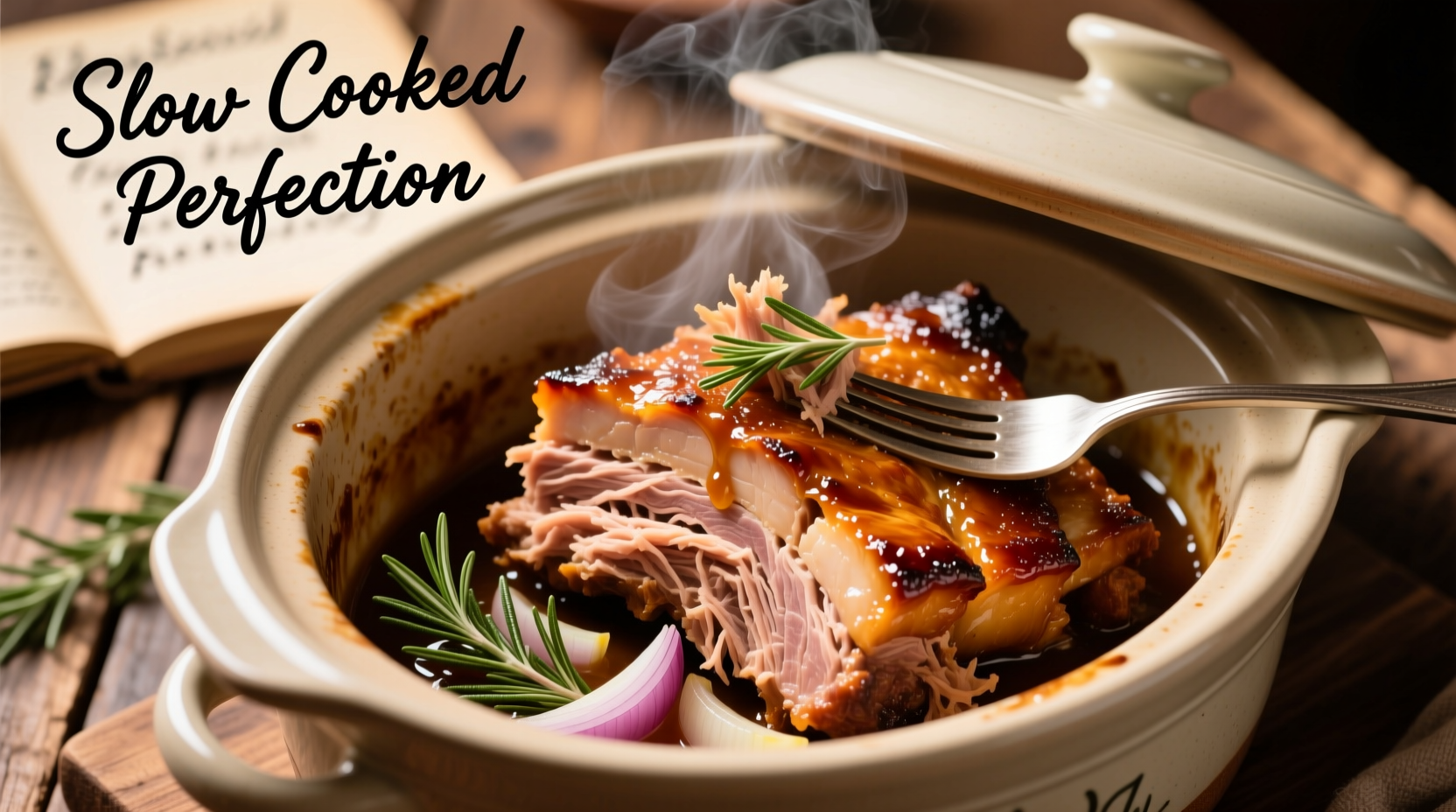
Place a 3-4 pound pork shoulder (also called Boston butt) in your slow cooker. Add 1 cup of liquid (broth, apple juice, or water), 2 tablespoons of your favorite dry rub, and 1 chopped onion. Cook on low for 8-10 hours until the internal temperature reaches 195-205°F. Remove the pork, shred with two forks, and mix with your preferred barbecue sauce.
Master Slow Cooker Pulled Pork: Your Foolproof Guide
Imagine tender, flavorful pulled pork that falls apart with a gentle fork nudge—no smoker required. Slow cookers transform affordable pork shoulder into barbecue perfection with minimal effort. In this guide, you'll discover the science-backed method professional pitmasters use for consistently juicy results every time. Whether you're meal prepping for the week or hosting a weekend cookout, these techniques guarantee restaurant-quality pulled pork with just 15 minutes of active preparation.
Why Slow Cooking Wins for Pulled Pork
The magic happens through controlled collagen breakdown. Pork shoulder contains abundant connective tissue that transforms into gelatin at 160-180°F. Slow cookers maintain the ideal 195-205°F temperature range for 8-10 hours, melting tough fibers while preserving moisture. Unlike ovens that require constant monitoring, slow cookers deliver hands-off precision—perfect for busy home cooks. According to the USDA Food Safety and Inspection Service, this low-and-slow approach ensures food safety while maximizing tenderness.
Your Equipment Checklist
Essential: 5-7 quart slow cooker (oval fits pork shoulder best), meat thermometer, two forks for shredding
Optional but helpful: Fat separator, disposable gloves for handling meat, small bowl for reserved juices
Choosing the Perfect Cut: Beyond Boston Butt Confusion
| Cut Name | Fat Content | Best For | Price per Pound |
|---|---|---|---|
| Boston Butt (Shoulder) | 25-30% | Traditional pulled pork | $3.50-$4.50 |
| Picnic Roast | 20-25% | Slightly leaner option | $3.00-$4.00 |
| Trimmed Shoulder | 15-20% | Health-conscious cooks | $4.00-$5.00 |
While often called "Boston butt," this cut actually comes from the pig's shoulder, not rear. The 25-30% fat content is crucial—it renders during cooking, basting the meat internally. Avoid pre-trimmed options; you'll lose essential moisture. The American Meat Science Association confirms that marbling directly correlates with juiciness in slow-cooked meats.
Step-by-Step Cooking Process
Prep Phase (15 Minutes)
- Pat 3-4 pound pork shoulder dry with paper towels
- Mix 2 tbsp brown sugar, 1 tbsp smoked paprika, 1 tsp garlic powder, 1 tsp onion powder, 1 tsp salt, and ½ tsp black pepper
- Rub mixture thoroughly over all surfaces of meat
- Add 1 cup liquid (apple juice adds sweetness, broth enhances savoriness)
- Place halved onion and 3 garlic cloves around meat
Cooking Phase (8-10 Hours)
Set slow cooker to LOW—never HIGH for pulled pork. High heat causes rapid moisture loss. The critical temperature window is 195-205°F, where collagen fully converts to gelatin. Insert thermometer probe through lid vent if possible. Cooking times vary:
- 3-pound cut: 8 hours
- 4-pound cut: 9-10 hours
- 5-pound cut: 10-12 hours (requires 6-qt+ cooker)
Shredding Phase (20 Minutes)
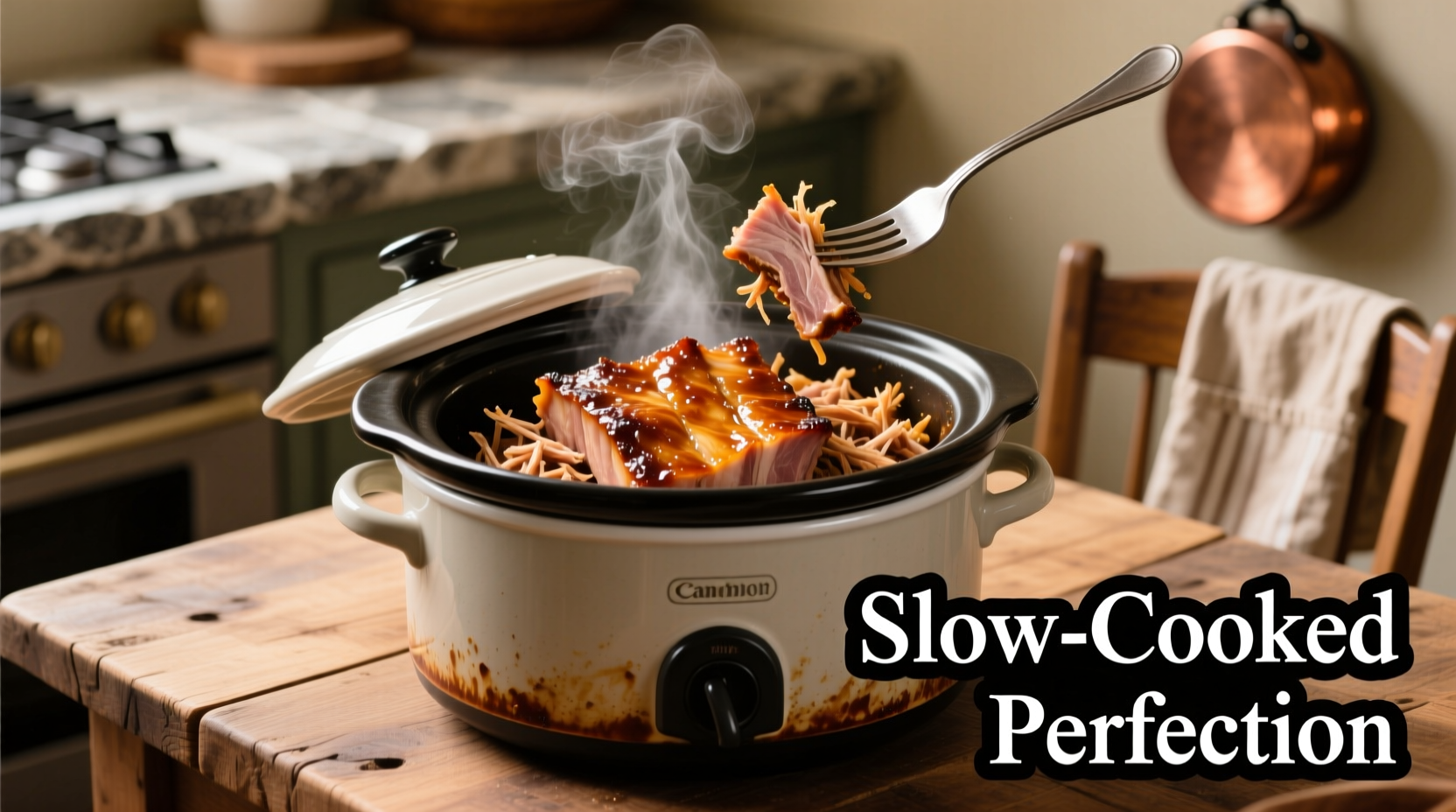
- Transfer pork to large bowl (reserve cooking liquid)
- Cool 10 minutes until handleable
- Remove large fat chunks (they won't render)
- Shred with two forks, following muscle grain
- Mix in ½ cup reserved liquid and 1 cup barbecue sauce
Troubleshooting Like a Pro
Problem: Meat won't shred
Solution: Return to cooker for 1-2 more hours. Undercooked pork resists shredding—temperature matters more than time.
Problem: Excess liquid
Solution: Skim fat, then simmer uncovered 15 minutes. Never pour out liquid before checking tenderness.
Problem: Bland flavor
Solution: Mix in 1 tbsp apple cider vinegar and 1 tsp smoked salt before serving. Acid brightens flavors instantly.
When Slow Cooking Isn't Ideal
This method shines for weeknight meals but has limitations:
- Large gatherings: Cook multiple shoulders separately—overcrowding causes steaming
- Crispy bark lovers: Finish shredded pork under broiler 3-5 minutes
- Time-crunched cooks: Pressure cooker achieves tenderness in 90 minutes (but less complex flavor)
Serving and Storage Guide
Perfect pairings: Brioche buns (hold up to juices), coleslaw (cuts richness), pickled onions (adds brightness)
Food safety: Refrigerate within 2 hours. USDA guidelines state cooked pork remains safe for 3-4 days refrigerated or 2-3 months frozen.
Reheating: Simmer in reserved juices—never microwave, which dries meat.
FAQs: Slow Cooker Pulled Pork
Can I cook frozen pork shoulder in a slow cooker?
No. USDA food safety guidelines require starting with thawed meat to prevent dangerous temperature zones. Frozen meat takes too long to reach safe temperatures, risking bacterial growth.
Why does my pulled pork turn out dry?
Dryness usually comes from either overcooking past 205°F or using lean cuts. Pork shoulder needs 25-30% fat content. Reserve cooking liquid and mix ½ cup back into shredded meat for guaranteed moisture.
How do I know when pulled pork is done?
Check both texture and temperature. Properly cooked pork should shred easily with forks and reach 195-205°F internally. The "probe test" works best—thermometer should slide in with almost no resistance.
Can I leave pulled pork in the slow cooker overnight?
Yes, but only on WARM setting after cooking completes. Leaving on LOW beyond 10 hours causes excessive moisture loss. Most modern slow cookers automatically switch to WARM after 10 hours—check your model's manual.




 浙公网安备
33010002000092号
浙公网安备
33010002000092号 浙B2-20120091-4