
If you've ever opened your honey jar to find it transformed into a gritty, solid mass, you're not alone. Crystallized honey frustrates home bakers, tea enthusiasts, and food preservers worldwide. The good news? This natural process doesn't mean your honey has spoiled—and more importantly, it's preventable with science-backed methods that maintain honey's liquid perfection for months longer.
Why Honey Crystallizes: The Simple Science
Honey crystallization occurs because it's a supersaturated sugar solution containing more sugar (primarily glucose and fructose) than can naturally remain dissolved. Glucose has lower solubility, so it gradually separates from the liquid and forms crystals. This process accelerates when:
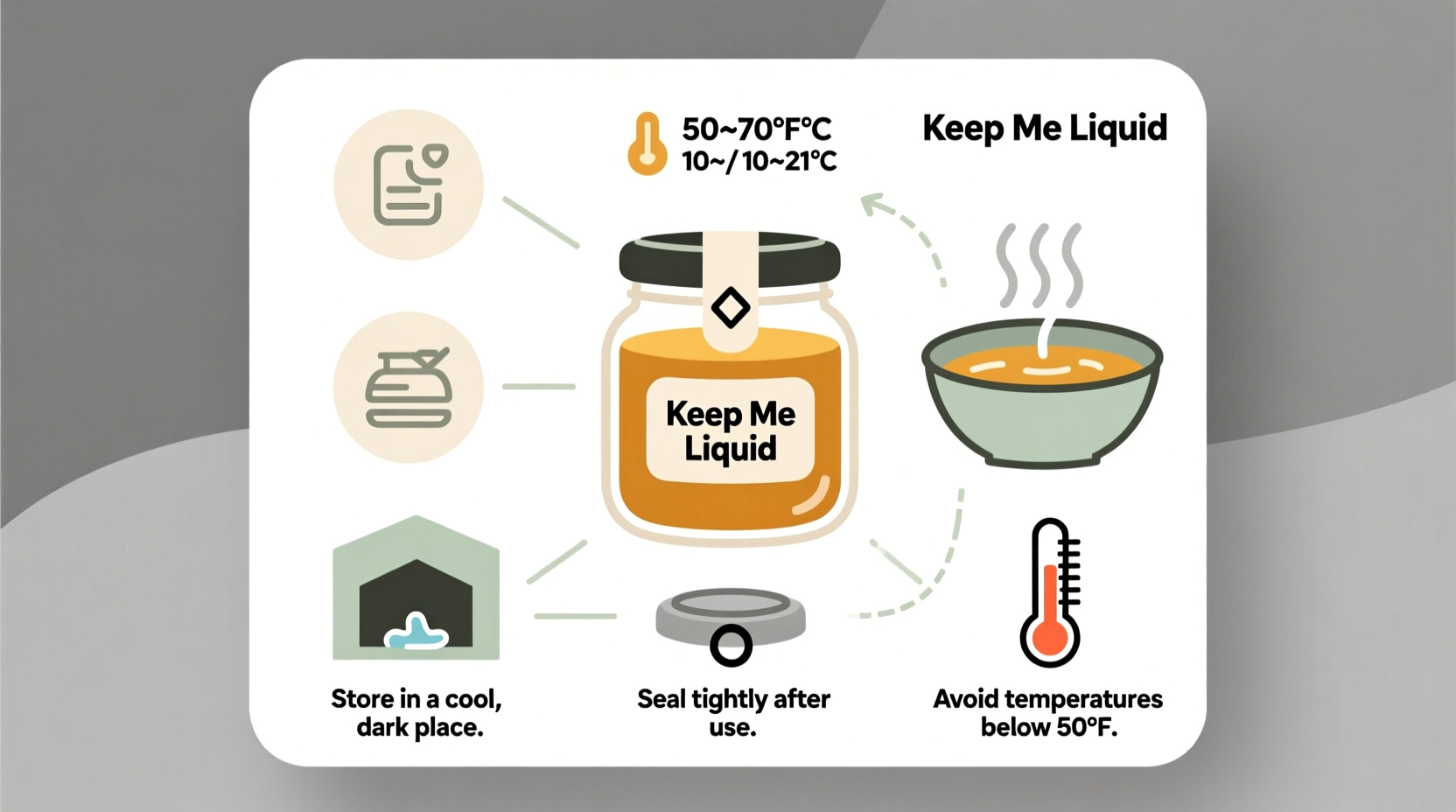
- Temperatures drop below 50°F (10°C)
- Moisture enters the container
- "Seed" crystals from previous crystallization remain
- Honey contains higher glucose content (like clover honey)
According to USDA honey guidelines, all natural honey will eventually crystallize—it's not a quality issue but a natural preservation mechanism. The National Honey Board confirms this process doesn't affect nutritional value or safety.
Effective Prevention Methods You Can Implement Today
Temperature Control Techniques
Maintain a consistent storage temperature between 70-80°F (21-27°C). This range keeps glucose dissolved without damaging honey's delicate enzymes. Avoid:
- Refrigeration (accelerates crystallization)
- Direct sunlight (causes temperature fluctuations)
- Proximity to heat sources like ovens
Food science research from the University of California's apiculture program shows honey stored at room temperature crystallizes 3-5 times slower than honey stored in cooler environments.
Optimal Storage Containers
Your container choice significantly impacts crystallization rates. Follow these storage guidelines:
| Container Type | Crystallization Rate | Recommendation |
|---|---|---|
| Airtight glass | Slowest (6-12+ months) | Best choice - prevents moisture absorption |
| Plastic containers | Moderate (3-6 months) | Avoid if possible - may leach chemicals |
| Original plastic bear | Fast (1-3 months) | Transfer to glass immediately |
| Open containers | Very fast (days-weeks) | Never store honey uncovered |
Honey Processing Tips for Raw Honey
If you process your own honey or purchase raw varieties, implement these professional techniques:
- Filter thoroughly using 400-micron filters to remove pollen and wax particles that act as crystallization nuclei
- Add natural inhibitors - Mix 1/4 teaspoon of lemon juice or cream of tartar per cup of warm honey (120°F/49°C)
- Controlled cooling - After extraction, cool honey rapidly to 64°F (18°C) before bottling
These methods, validated by the American Beekeeping Federation, can extend liquid honey shelf life by 50-100% compared to unprocessed honey.
What to Do When Prevention Fails
If your honey has already crystallized, don't panic—it's completely reversible. Follow these safe decrystallization steps:
- Remove lid and place jar in warm water bath (not exceeding 110°F/43°C)
- Stir gently every 5 minutes until crystals dissolve
- Never microwave honey (creates hot spots that destroy enzymes)
- After liquefying, store using prevention methods above
Important: Never heat honey above 140°F (60°C) as this destroys beneficial enzymes and creates harmful compounds, according to research published in the Journal of Agricultural and Food Chemistry.
When Crystallization Can't Be Prevented
Some honey varieties naturally crystallize faster due to their glucose-fructose ratio. Understanding these context boundaries helps set realistic expectations:
- Clover honey - Crystallizes within 1-3 months (high glucose content)
- Acacia honey - Stays liquid for 12+ months (high fructose content)
- Orange blossom honey - Moderate crystallization (4-8 months)
The National Honey Board's analysis of 50+ honey varieties confirms that floral source determines crystallization timeline more than storage methods alone. Don't blame your storage technique if your clover honey crystallizes—it's simply its natural tendency.
Common Mistakes That Accelerate Crystallization
Avoid these frequent errors that unknowingly trigger crystallization:
- Using wet utensils to scoop honey (introduces moisture)
- Storing honey near the refrigerator (cold air exposure)
- Leaving the lid partially open (humidity absorption)
- Mixing crystallized and liquid honey (seeds crystallization)
Practical Honey Storage Checklist
Implement these actionable steps for crystal-free honey:
- Transfer store-bought honey from plastic containers to glass immediately
- Wipe jar rim with dry cloth after each use
- Store in a dark cabinet away from temperature fluctuations
- Use honey within 18 months for best quality (even with perfect storage)
- For long-term storage, freeze honey (thaw slowly at room temperature)




 浙公网安备
33010002000092号
浙公网安备
33010002000092号 浙B2-20120091-4