
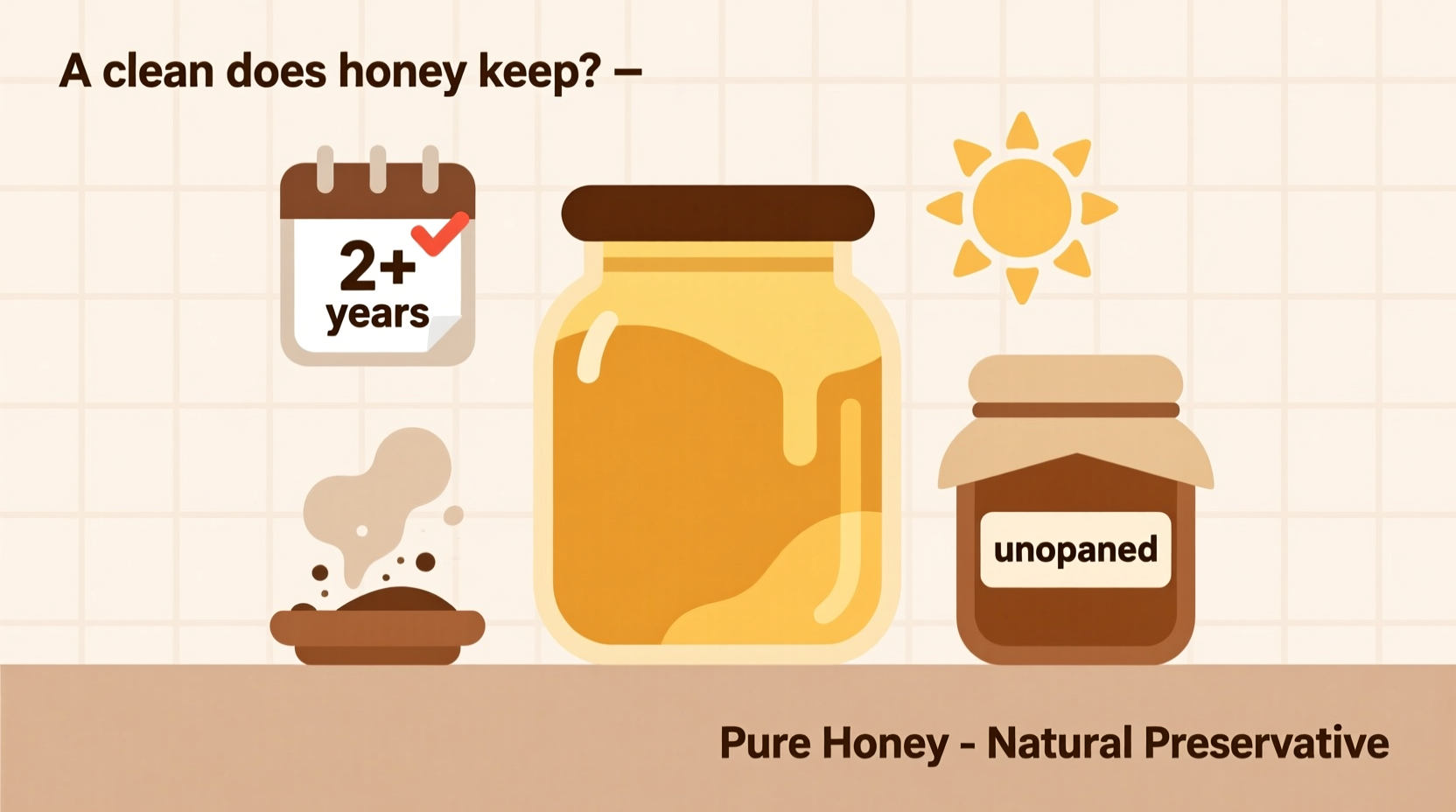
Have you ever discovered an old jar of honey in your pantry and wondered if it's still safe to eat? You're not alone. Millions of home cooks and food enthusiasts search for how long does honey keep each year, seeking clarity on this seemingly magical food's longevity. In this guide, you'll discover the scientific reasons behind honey's remarkable shelf stability, practical storage recommendations, and how to handle common changes you might observe in stored honey.
The Science Behind Honey's Eternal Shelf Life
Honey's legendary preservation capabilities aren't folklore—they're rooted in precise biochemical properties. Unlike most foods that require refrigeration or preservation, honey contains four natural defense mechanisms against spoilage:
| Natural Preservation Mechanism | How It Prevents Spoilage | Scientific Measurement |
|---|---|---|
| Low moisture content | Creates inhospitable environment for microbes | Natural water content: 14-18% |
| Natural acidity | Inhibits bacterial growth | pH level: 3.2-4.5 |
| Hydrogen peroxide production | Natural antimicrobial agent | Generated when diluted with water |
| Bee-derived enzymes | Further protect against microbial growth | Glucose oxidase enzyme activity |
According to research published by the USDA, these combined properties create what food scientists call "a perfect storm" against spoilage. The National Honey Board confirms that properly stored honey maintains safety and quality indefinitely—making it one of the only foods with no expiration date.
Practical Storage Guidelines for Honey Longevity
While honey doesn't expire, improper storage can cause undesirable changes that affect texture and appearance. Follow these evidence-based recommendations to maintain optimal quality:
Container Selection Matters
Use airtight glass containers whenever possible. The FDA Food Code recommends non-reactive containers for honey storage. Glass prevents moisture absorption better than plastic and won't leach chemicals into your honey.
Temperature Control for Honey Preservation
Maintain consistent room temperature (60-70°F or 15-21°C) for ideal honey storage. Extreme temperature fluctuations cause crystallization. Avoid refrigeration, which accelerates crystallization and makes honey difficult to use. The National Honey Board's storage research shows honey stored at consistent room temperature maintains liquid form longest.
Moisture Prevention Techniques
This is critical—honey's low moisture content is its primary preservation mechanism. Always use clean, dry utensils when handling honey. Even small amounts of introduced moisture can trigger fermentation. The USDA's food safety guidelines emphasize that moisture contamination is the most common reason for honey spoilage in home settings.
Changes You Might Observe (And What They Mean)
Understanding these natural processes prevents unnecessary honey waste:
Crystallization: A Natural Process, Not Spoilage
When honey crystallizes into a semi-solid state, this indicates purity—not spoilage. Raw honey typically crystallizes within 1-2 years. Different floral sources crystallize at different rates: clover honey crystallizes quickly while tupelo honey remains liquid for years. The FDA confirms crystallized honey remains perfectly safe and retains all nutritional properties.
Color Changes Over Time
Honey naturally darkens with age due to the Maillard reaction (similar to browning in baked goods). This doesn't affect safety but may slightly alter flavor. Lighter honeys like acacia may darken to amber over 5-10 years. The National Honey Board's quality standards consider color change a normal aging process with no impact on edibility.
When Honey Might Actually Spoil
True honey spoilage is extremely rare but can occur under specific conditions:
- Added moisture from improper handling (creates fermentation)
- Contamination with other substances
- Blended honeys with added sweeteners
- Exposure to extreme heat causing caramelization
If your honey develops an alcoholic smell or visible mold, it has likely been contaminated with moisture. Discard honey showing these signs, as this indicates microbial growth.
Practical Honey Revival and Usage Tips
Restore crystallized honey to liquid form without compromising quality:
Safe Decrystallization Method
Place the honey jar in warm water (not exceeding 110°F/43°C) until crystals dissolve. Avoid microwaving, which can destroy beneficial enzymes and create hot spots. The National Honey Board recommends this gentle warming technique preserves honey's natural properties while restoring pourability.
Everyday Kitchen Applications
Crystallized honey works perfectly for tea sweetening or spreading on toast. For baking, slightly warm the container by running under warm water before measuring. Remember that one cup of honey equals approximately 3/4 cup of sugar plus 1/4 cup liquid in recipes.
When to Replace Honey
While technically safe indefinitely, honey's flavor profile gradually changes over decades. For optimal taste, use honey within 2-5 years for culinary applications where flavor is critical. The National Honey Board suggests replacing honey that has darkened significantly beyond your preference, though it remains safe to consume.
Does honey ever go bad if stored properly?
No, pure honey stored in an airtight container at room temperature never spoils. Archaeological evidence shows edible 3,000-year-old honey. The only exception is when moisture has been introduced, causing fermentation.
Why does my honey crystallize and is it still safe?
Crystallization is a natural process indicating pure honey. It occurs when glucose separates from water. Crystallized honey remains perfectly safe and retains all nutritional properties. Simply warm gently in water to return to liquid form.
How should I store honey for maximum shelf life?
Store honey in an airtight glass container at room temperature (60-70°F). Avoid moisture contamination by using clean, dry utensils. Never refrigerate honey, as cold temperatures accelerate crystallization.
Can honey expire if it's processed or blended?
Pure honey doesn't expire, but blended products containing honey plus other ingredients (like honey mustard or honey-roasted nuts) follow the shelf life of the most perishable ingredient. Always check expiration dates on honey-containing products.




 浙公网安备
33010002000092号
浙公网安备
33010002000092号 浙B2-20120091-4