
Softneck Garlic Isn’t Milder—It’s Just Less Likely to Burn Your Pan
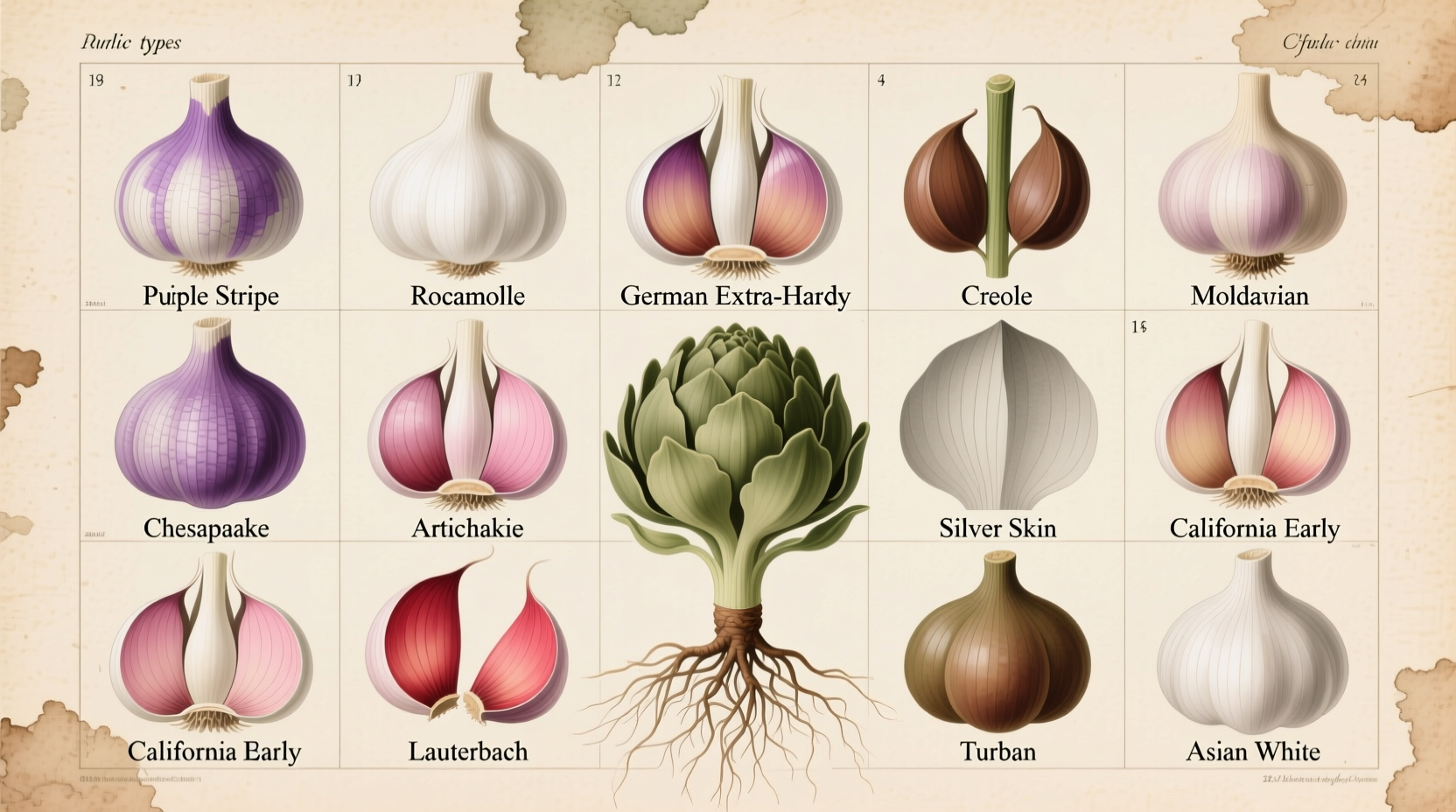
Most people assume softneck garlic is ‘milder’ because it’s sold in braids at supermarkets and labeled ‘cooking garlic.’ That assumption leads directly to burnt onions, bitter stir-fries, and the quiet ritual of scraping blackened bits off stainless steel pans. The real issue isn’t heat tolerance or pungency—it’s cell structure. Softneck cloves are denser, with tighter clove membranes and lower moisture content. When sliced thin and hit with medium-high heat, they release allicin slower—but hold heat longer. That delay creates a false window: cooks think they have time to sauté, then suddenly smell smoke. In contrast, hardneck varieties like ‘Rocambole’ rupture faster under heat, releasing volatile compounds earlier—and often exiting the pan before carbonization begins. The consequence? Not ‘stronger’ or ‘weaker’ taste, but a narrower safe window for timing.
This distinction doesn’t matter when garlic is minced and added late in a simmering soup, or roasted whole in foil. In those cases, thermal gradient is low and moisture is high—cell integrity collapses gradually, and all types behave similarly. Nor does it matter when garlic is used raw in dressings or cold marinades: enzymatic activity dominates, not thermal degradation. What matters is the intersection of surface-area-to-volume ratio (i.e., slice thickness), pan material (nonstick vs. cast iron), and oil temperature at point of contact. Those variables override cultivar differences every time. A finely minced hardneck clove in hot olive oil will scorch faster than a thick slice of softneck in ghee—but that’s physics, not botany.
Two common fixations are functionally irrelevant for home use. First: ‘Is it organic?’ Organic certification says nothing about clove density, sulfur compound profile, or thermal stability. Second: ‘Is it locally grown?’ Provenance affects freshness and shelf life, but not how quickly minced garlic turns bitter in a wok. Neither factor changes the core behavior under heat—only storage conditions and harvest timing do. Both become noise once the bulb has been refrigerated for more than three weeks or stored in humid cabinets. At that point, internal moisture loss flattens any original cultivar difference, making all garlic behave like aged parchment: brittle, slow to release, and prone to uneven browning.
The real constraint isn’t variety—it’s household refrigeration. Most home fridges run between 34–38°F (1–3°C), but humidity levels vary wildly. Softneck garlic tolerates low-humidity storage better; its papery wrappers resist desiccation. Hardneck types dry out faster in standard crisper drawers, leading to shriveled cloves that brown unpredictably—even at low heat. This isn’t theoretical: it means that if your kitchen lacks a cool, dry pantry (below 60% RH), hardneck garlic loses its structural advantage within 10 days of purchase. You’re not choosing a flavor—you’re choosing a shelf-life profile that matches your actual storage setup. Budget, time, and device limitations don’t enter the equation until this physical mismatch occurs.
Here’s where intuition fails: what works best depends entirely on *how you apply heat*, not how you label the bulb. For quick searing in stainless steel? Softneck holds up—not because it’s ‘milder,’ but because its denser tissue resists instant rupture. For slow-simmered tomato sauce with whole cloves? Hardneck’s looser structure allows deeper infusion, especially if peeled and lightly crushed. For raw applications like aioli? Only fresh hardneck delivers the clean, green-tinged bite—softneck tastes flat and slightly sweet after two weeks in the fridge. These aren’t preferences. They’re thermodynamic outcomes tied to preparation method, not taxonomy.
Stop asking ‘Which garlic is better?’ Ask instead: ‘What’s the shortest path from raw clove to edible result in *my* pan, *with my* oil, *on my stove*?’ That question bypasses cultivar marketing entirely. It shifts focus from botanical categories to observable behavior: Does it sizzle evenly? Does it darken before the onion softens? Does it smell green and sharp—or stale and dusty—when peeled? In a home kitchen, garlic type rarely ruins a dish. But misreading its thermal response *does*. And that misreading happens most often when cooks treat ‘softneck’ as ‘safe’ and ‘hardneck’ as ‘intense’—ignoring that both fail identically when overheated, and both succeed identically when treated as fragile, water-rich plant tissue.
| What people fixate on | What it affects | When it matters | When it doesn't |
|---|---|---|---|
| Softneck vs. hardneck classification | Thermal degradation rate under direct dry heat | Stir-frying, sautéing, pan-roasting with thin slices | Roasting whole bulbs, blending raw into sauces, slow-simmering in liquid |
| ‘Mildness’ labeling on packaging | Consumer expectation—not chemical composition | When selecting for raw applications where freshness dominates perception | In cooked dishes where Maillard reaction and oil temperature dominate outcome |
| Organic certification | Residue profile—not allicin stability or cell wall integrity | For households prioritizing pesticide exposure reduction | For predicting browning speed, aroma release, or shelf-life in home storage |
| Origin (local vs. imported) | Freshness at point of sale and post-harvest handling | When buying unrefrigerated at farmers’ markets in summer | When purchasing pre-packaged bulbs from supermarkets year-round |
Quick verdicts for home cooks
- If you stir-fry daily in a thin stainless pan, softneck lasts longer before burning—no taste sacrifice required.
- If your fridge dries out garlic in under a week, hardneck’s superior raw flavor won’t survive long enough to matter.
- If you roast whole heads weekly, clove count and wrapper integrity matter more than neck type.
- If you press garlic for dressings, only recently harvested hardneck delivers true brightness—softneck tastes muted after seven days.
- If you store garlic in plastic bags or sealed containers, cultivar differences vanish within five days regardless of type.
- If you use garlic powder or paste, neither softneck nor hardneck influences final flavor—processing erases all distinctions.
Frequently asked questions
Why do people think softneck garlic is milder?
Because it’s marketed as ‘cooking garlic’ and sold in long-lasting braids—creating an association with gentleness, not chemistry. Its denser texture delays browning, which gets misread as lower potency.
Is it actually necessary to choose hardneck for raw applications?
Only if you’re using it within 3–5 days of harvest and want maximum enzymatic brightness. After that, freshness—not cultivar—determines raw impact.
What happens if you ignore garlic type and just follow recipe instructions?
You’ll get acceptable results in most moist-cooked dishes. Where it fails is in high-heat, low-moisture applications—especially with thin cuts and reactive pans.
Lately, grocery labels have started listing cultivar names—‘Chesnok Red’, ‘German Extra Hardy’—not as descriptors, but as flavor promises. That shift signals growing consumer willingness to treat garlic as variable, not generic. But the underlying behavior hasn’t changed: garlic remains a thermal sensor disguised as a spice. Its type doesn’t define taste—it defines failure mode. And in most homes, failure arrives not from wrong choice, but from treating all garlic as if it responds the same way to heat, time, and air.




 浙公网安备
33010002000092号
浙公网安备
33010002000092号 浙B2-20120091-4