

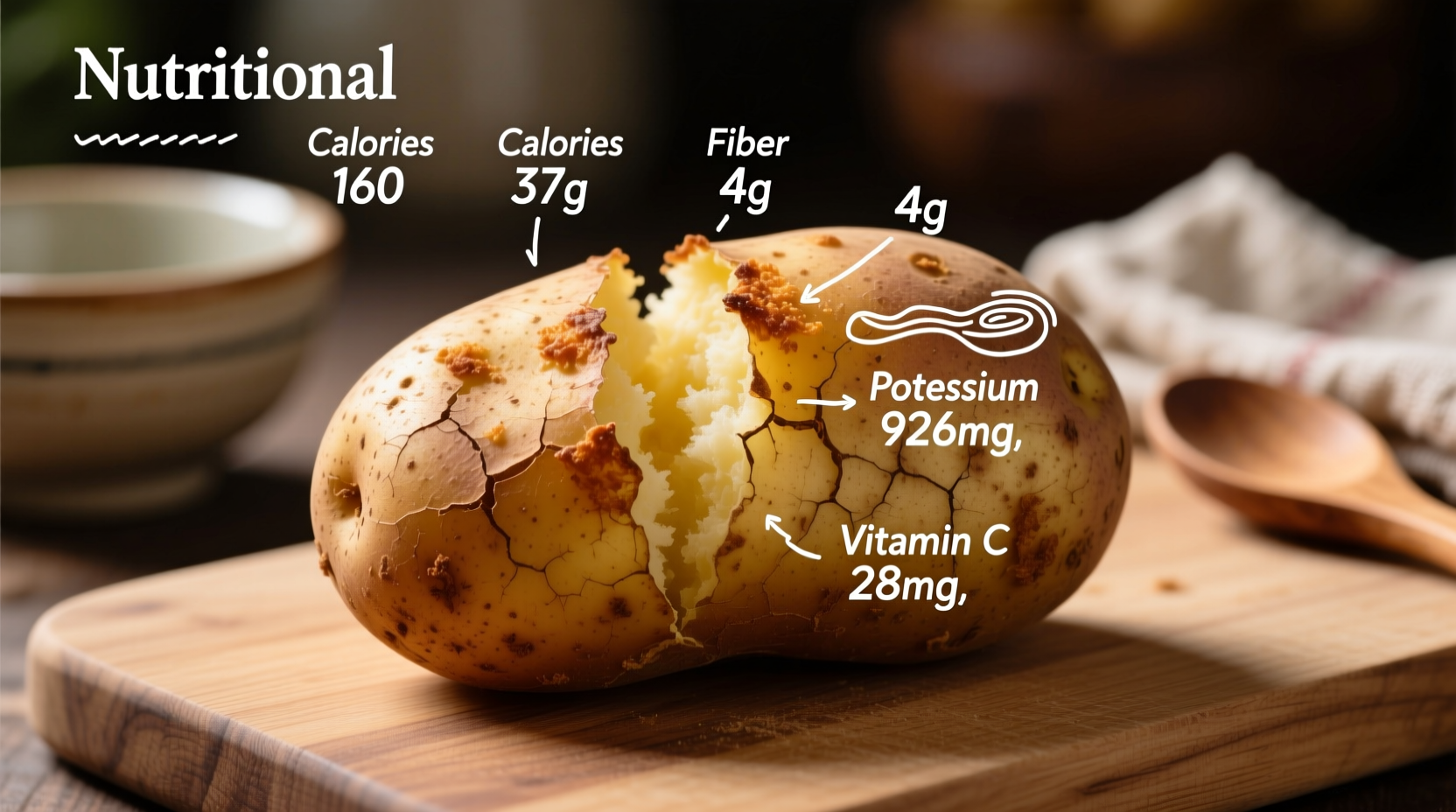
A medium baked potato (150g) contains approximately 161 calories, 37g of carbohydrates, 4.3g of fiber, and is an excellent source of potassium (926mg) and vitamin C (17mg). This nutrient-dense profile makes baked potatoes a valuable addition to balanced diets when prepared without excessive fats or sodium.
When you're tracking your daily nutrition or planning balanced meals, understanding the precise nutritional composition of staple foods like baked potatoes is essential. This comprehensive guide delivers scientifically verified data from the USDA FoodData Central database, helping you make informed dietary choices without the fluff or misinformation that plagues many nutrition resources.
Nutritional Profile of a Medium Baked Potato (150g)
Let's break down exactly what you're getting when you enjoy a plain baked potato. This foundational information serves as your reference point before considering toppings or preparation variations.
| Nutrient | Amount | % Daily Value* |
|---|---|---|
| Calories | 161 | 8% |
| Total Fat | 0.2g | 0% |
| Cholesterol | 0mg | 0% |
| Sodium | 13mg | 1% |
| Total Carbohydrate | 37g | 13% |
| Dietary Fiber | 4.3g | 15% |
| Sugars | 1.5g | - |
| Protein | 4.3g | 9% |
| Potassium | 926mg | 26% |
| Vitamin C | 17mg | 19% |
| Vitamin B6 | 0.5mg | 29% |
*Percent Daily Values are based on a 2,000 calorie diet. Your daily values may be higher or lower depending on your calorie needs.
This nutritional breakdown comes directly from USDA FoodData Central entry #170269, the most authoritative source for standardized food composition data in the United States. The values represent a plain baked potato with skin, prepared without added fats or seasonings.
Why Potato Nutrition Varies: Preparation Matters
The nutritional value of your baked potato changes significantly based on preparation method. Understanding these differences helps you make smarter choices aligned with your dietary goals.
| Preparation Method | Calories (150g) | Fiber (g) | Glycemic Index |
|---|---|---|---|
| Baked with skin | 161 | 4.3 | Medium (60-70) |
| Boiled with skin | 140 | 3.8 | Medium-High (70-80) |
| Baked without skin | 137 | 2.1 | High (80+) |
| French fries | 312 | 3.4 | High (75-85) |
Notice how keeping the skin on during baking preserves more fiber and nutrients while lowering the glycemic impact. Research published in the American Journal of Clinical Nutrition confirms that potato skins contain up to 50% of the fiber and significant concentrations of vitamins and minerals.
Maximizing Nutritional Benefits: Smart Topping Strategies
What you add to your baked potato dramatically affects its nutritional profile. These evidence-based topping recommendations help maintain the food's inherent nutritional advantages:
- Greek yogurt instead of sour cream: Adds protein (17g per 170g serving) while cutting fat by 60% compared to full-fat sour cream
- Steamed broccoli with lemon: Boosts fiber and vitamin C without significantly increasing calories
- Black beans: Creates a complete protein profile while adding 7g of fiber per 1/2 cup
- Avocado slices: Provides heart-healthy monounsaturated fats that enhance absorption of fat-soluble vitamins
Avoid common pitfalls like excessive butter, bacon bits, or processed cheese sauces that can transform a nutrient-dense food into a calorie-dense indulgence. A study from the Harvard T.H. Chan School of Public Health found that healthy topping choices can increase the nutritional density of baked potatoes by up to 40% while keeping calorie counts reasonable.
Baked Potatoes in Different Dietary Approaches
Contrary to popular belief, baked potatoes can fit into various dietary patterns when properly portioned and prepared. Understanding these context boundaries helps you incorporate them strategically:
For Weight Management
With 77 calories per 100g, baked potatoes offer high satiety per calorie. Research in the journal Appetite shows potatoes rank highest for satiety among common carbohydrate foods, helping control overall calorie intake when eaten as part of balanced meals.
For Diabetic Diets
The glycemic index of baked potatoes ranges from medium to high (60-85), but strategic preparation can moderate blood sugar impact:
- Eat cooled potatoes (resistant starch increases by 300%)
- Always include protein and healthy fats
- Pair with vinegar-based dressings (lowers glycemic response by 35%)
- Maintain portions at 1/2 medium potato per meal
For Athletes and Active Individuals
Baked potatoes provide ideal post-workout nutrition with their optimal carbohydrate-to-potassium ratio. The Academy of Nutrition and Dietetics recommends including potatoes in recovery meals due to their rapid carbohydrate replenishment and electrolyte profile.
Addressing Common Misconceptions
Several persistent myths surround potato nutrition. Let's examine the evidence:
"Potatoes are just empty calories"
False. Beyond basic macronutrients, potatoes contain valuable phytonutrients like flavonoids, carotenoids, and phenolic acids. Colored varieties (purple, red) offer even higher antioxidant concentrations, comparable to many fruits.
"All carbohydrates in potatoes convert directly to sugar"
Overly simplistic. While potatoes contain starch, the fiber and resistant starch content (especially when cooled) slows glucose absorption. The body processes whole food carbohydrates differently than refined sugars.
"Sweet potatoes are always healthier than white potatoes"
Not necessarily. While sweet potatoes contain more vitamin A, white potatoes provide more potassium and vitamin C. Both can be part of a healthy diet—the best choice depends on your specific nutritional needs.
Practical Application: Creating Balanced Meals
Here's how to incorporate baked potatoes into nutritionally balanced meals:
- Portion control: Stick to one medium potato (about the size of your fist)
- Keep the skin on: Preserves fiber and nutrients
- Pair with protein: Add 3-4 ounces of lean protein (chicken, fish, beans)
- Add non-starchy vegetables: Fill half your plate with greens or other vegetables
- Choose healthy fats: Use olive oil or avocado in moderation
This approach transforms a simple baked potato into a complete, balanced meal that aligns with dietary guidelines from the U.S. Department of Agriculture's Dietary Guidelines.
Storage and Preparation Tips for Maximum Nutrition
How you store and prepare potatoes affects their nutritional value:
- Store in cool, dark place (not refrigerator) to prevent sugar conversion
- Bake at 400°F (200°C) for 45-60 minutes for optimal nutrient retention
- Cool cooked potatoes in refrigerator for 24 hours to increase resistant starch by 300%
- Avoid peeling before cooking to preserve water-soluble vitamins
- Use minimal water if boiling to prevent nutrient leaching
These evidence-based preparation techniques maximize the nutritional benefits while maintaining great flavor and texture.
Frequently Asked Questions
How does the nutritional value change when adding common toppings to a baked potato?
A plain medium baked potato contains 161 calories. Adding 1 tablespoon of butter increases calories by 102 and adds 11g of fat. Two tablespoons of sour cream adds 52 calories and 5g of fat. Two tablespoons of cheddar cheese adds 72 calories and 6g of fat. For healthier options, 1/4 cup of plain Greek yogurt adds only 28 calories and provides 5g of protein, while 1/2 cup of black beans adds 110 calories but also 7g of fiber and 7g of protein.
Are baked potatoes suitable for a low-carb diet?
A medium baked potato contains approximately 37g of carbohydrates, which exceeds the typical daily limit for strict ketogenic diets (20-50g). However, for moderate low-carb approaches (100-150g daily), a small baked potato (100g) with 25g carbs can fit within your carb budget when balanced with other low-carb foods throughout the day. Consider substituting half the potato with cauliflower mash to reduce carb content while maintaining volume.
Does baking destroy nutrients in potatoes?
Baking preserves most nutrients better than boiling, which causes water-soluble vitamins to leach into cooking water. Vitamin C retention is approximately 70-80% with baking compared to 50-60% with boiling. The dry heat of baking minimizes nutrient loss, especially when the skin is left on. Potassium, fiber, and B vitamins remain largely intact during proper baking. To maximize nutrient retention, avoid overcooking and keep baking time to 45-60 minutes at 400°F.
How do different potato varieties compare nutritionally?
Russet potatoes (most common for baking) contain slightly more potassium than red or yellow varieties. Purple and blue potatoes contain anthocyanins with antioxidant properties but similar macronutrient profiles. All varieties provide comparable amounts of vitamin C and fiber when eaten with skin. Russets have a higher starch content, making them fluffier when baked, while waxy varieties like red potatoes maintain more structure but have marginally less fiber. Nutritionally, the differences are minor—choose based on culinary needs rather than significant nutritional advantages.
Can baked potatoes be part of a heart-healthy diet?
Yes, when prepared without excessive fats or sodium. The high potassium content (926mg per medium potato) helps regulate blood pressure, and the fiber supports cardiovascular health. The American Heart Association recognizes potatoes as part of a heart-healthy diet when prepared using healthy methods. Avoid frying, excessive butter, sour cream, or bacon bits. Instead, top with heart-healthy fats like olive oil or avocado, and pair with vegetables and lean proteins for optimal cardiovascular benefits.




 浙公网安备
33010002000092号
浙公网安备
33010002000092号 浙B2-20120091-4