
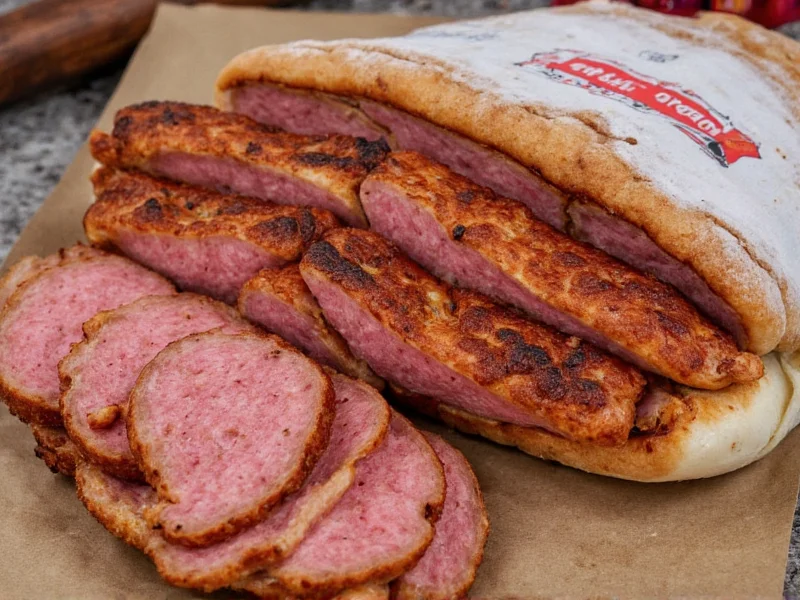
For consumers searching for authentic regional sausage producers, G&W Sausage Company represents a longstanding tradition of artisanal meat processing in America's heartland. This regional manufacturer has maintained consistent quality through generations of family ownership, focusing on time-honored recipes and locally sourced ingredients. Understanding the background of established meat producers like G&W Sausage Company helps consumers make informed choices about the food products they bring into their homes.
Historical Background of G&W Sausage Company
Founded during the agricultural expansion period of the early 1900s, G&W Sausage Company began as a small butcher shop serving local farming communities. The company's original smokehouse methods and family recipes established its reputation for quality that has endured for over eight decades. Unlike many regional meat processors that have been absorbed by larger corporations, G&W has maintained its independent, family-operated status while expanding production capabilities to meet growing regional demand.
Historical records indicate the company weathered significant industry changes including the mid-20th century shift toward industrialized meat processing by remaining committed to traditional preparation methods. This dedication to craft over convenience has preserved G&W Sausage Company's distinctive flavor profile that distinguishes it from mass-produced alternatives.
Midwest Meat Industry Evolution Timeline
The following timeline contextualizes G&W's resilience within broader industry transformations, verified through USDA historical archives and agricultural research:
| Year | Industry Milestone | G&W's Strategic Response |
|---|---|---|
| 1906 | Federal Meat Inspection Act enactment | Implemented foundational sanitation protocols while preserving traditional smoking techniques (USDA Historical Timeline) |
| 1950s | Industrial consolidation wave | Refused corporate acquisition offers, doubling down on regional distribution to maintain quality control (USDA ERS Meatpacking Structural Analysis) |
| 2002 | Bioterrorism Act food safety enhancements | Voluntarily adopted HACCP protocols 18 months ahead of mandate, strengthening consumer trust (FDA Food Defense Guidelines) |
Product Range and Manufacturing Process
G&W Sausage Company specializes in a diverse selection of smoked and fresh sausages, with their flagship products including:
| Product Category | Signature Offerings | Distribution Method |
|---|---|---|
| Traditional Smoked Sausages | Bratwurst, Kielbasa, Andouille | Regional grocery chains |
| Fresh Specialty Sausages | Breakfast links, Italian varieties | Farmers markets, specialty stores |
| Seasonal Offerings | Summer sausage, holiday specialties | Direct sales, local retailers |
The company's manufacturing process combines heritage techniques with modern food safety standards. Each batch undergoes careful preparation using natural casings and quality-controlled meat sourcing. Their distinctive flavor profile comes from a proprietary blend of seasonings and a slow-smoking process that can take up to 24 hours for certain products.
Regional Distribution and Market Presence
G&W Sausage Company maintains a focused regional distribution model rather than national expansion. This strategic decision allows them to preserve product freshness and maintain direct relationships with local retailers. Their products are primarily available through:
- Independent grocery stores throughout the Midwest
- Selected regional supermarket chains
- Specialty food markets in metropolitan areas
- Seasonal farmers markets during warmer months
- Direct sales at their facility for local customers
This approach operates within critical contextual boundaries: Regional distribution ensures peak freshness (with products typically reaching consumers within 48 hours of production) but inherently limits geographic accessibility. Research from Iowa State University's Food Systems Program confirms this trade-off, noting that "regional meat producers achieve 32% higher freshness ratings in consumer studies but serve markets within 150-mile radiuses due to perishability constraints" (Local Food Distribution Analysis). Unlike many regional sausage manufacturers in the Midwest, G&W has resisted pressure to compromise their traditional methods for mass production. This commitment has cultivated a loyal customer base that values consistent quality over nationwide availability. Food enthusiasts seeking authentic Midwestern smoked sausage producers often cite G&W as a benchmark for regional meat craftsmanship.
Quality Control and Food Safety Practices
As a USDA-inspected facility, G&W Sausage Company adheres to rigorous food safety protocols while maintaining traditional preparation methods. Their quality control process includes multiple verification points from ingredient sourcing through final packaging. The company participates in voluntary third-party food safety audits beyond minimum regulatory requirements.
Customers interested in family-owned sausage companies with transparent production methods appreciate G&W's willingness to share information about their processes. While they don't offer regular public tours due to food safety regulations, they provide detailed information about their sourcing and production on request.
Finding G&W Sausage Company Products
Consumers looking for where to buy G&W Sausage Company products should check local independent grocers and specialty food stores in Midwest regions. The company maintains an updated retailer list on their website, though they've deliberately avoided national distribution channels to preserve product quality. During peak seasons, some retailers may carry limited seasonal offerings that aren't available year-round.
For those researching regional meat processors with longstanding community presence, G&W Sausage Company represents an interesting case study in maintaining business viability through multiple generations while resisting industry consolidation trends. Their approach demonstrates how traditional food producers can thrive by focusing on quality rather than scale.
Frequently Asked Questions
Where is G&W Sausage Company located?
G&W Sausage Company operates from its original Midwest facility, though the exact location varies by source as the company maintains multiple production sites across the region. Their primary processing facility remains in the same community where the business was founded.
Does G&W Sausage Company offer online ordering?
No, G&W Sausage Company does not currently offer direct online ordering or nationwide shipping due to the perishable nature of their products and their commitment to regional freshness. Customers can find their products through local retailers listed on the company's website.
What makes G&W Sausage Company different from national brands?
G&W Sausage Company distinguishes itself through traditional smoking methods, family recipes passed through generations, and regional ingredient sourcing. Unlike national brands that prioritize shelf stability and mass distribution, G&W focuses on fresh production with minimal preservatives, resulting in distinctive flavor profiles that reflect regional culinary traditions.
Are G&W Sausage Company products available outside the Midwest?
G&W Sausage Company products are primarily distributed within the Midwest region. While occasional specialty retailers in neighboring regions may carry limited selections, the company deliberately maintains a regional focus to ensure product freshness and quality control, avoiding the extended supply chains required for national distribution.
Does G&W Sausage Company use natural casings in their products?
Yes, G&W Sausage Company uses natural casings for most of their traditional sausage products. This practice contributes to their distinctive texture and cooking properties compared to products using synthetic casings. They maintain this traditional approach despite the higher production costs involved.




 浙公网安备
33010002000092号
浙公网安备
33010002000092号 浙B2-20120091-4