
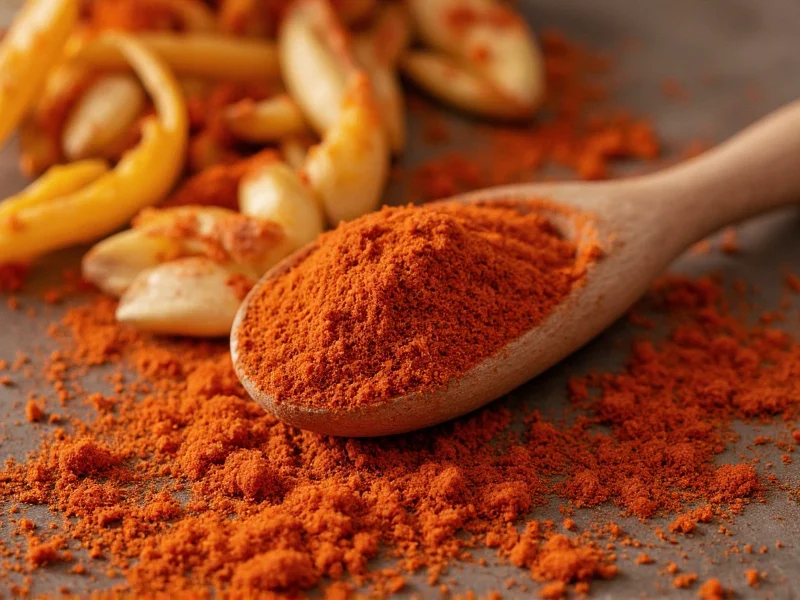
Understanding Flamin Hot Seasoning Composition
Flamin hot seasoning's signature fiery red color and intense heat come from a specific combination of ingredients that create its unmistakable flavor profile. While formulations vary by manufacturer, the ingredient composition of a leading commercial Flamin' Hot seasoning blend (as disclosed for Flamin' Hot Cheetos by Frito-Lay) reveals the key functional components. According to Frito-Lay's product information, the seasoning blend includes:
| Primary Ingredients | Function |
|---|---|
| Spices (including cayenne pepper) | Primary heat source |
| Paprika and extractives | Color and mild sweetness |
| Citric acid and lactic acid | Tangy brightness |
| Artificial colors (Red 40, Yellow 6) | Vibrant red appearance |
| Salt and monosodium glutamate | Flavor enhancement |
| Maltodextrin and sugar | Carrier and balance |
This distinctive blend creates what food scientists call a "flavor burst" effect—initial heat followed by tangy notes and subtle sweetness. The citric acid provides that characteristic sharpness that differentiates flamin hot seasoning from standard hot spice blends. When evaluating what is flamin hot seasoning made of, understanding this balance explains why it works particularly well with certain food types while overwhelming others.
Historical Evolution of Flamin Hot Seasoning
The Flamin' Hot flavor profile has evolved significantly since its commercial introduction. Key developments reflect changing consumer preferences and manufacturing innovations. The following timeline documents its progression based on industry records and corporate disclosures:
| Year | Milestone | Industry Impact |
|---|---|---|
| 1992 | Flamin' Hot Cheetos launched by Frito-Lay | Introduced the signature flavor to mainstream snack consumers (Forbes, 2019) |
| 2005 | Expansion to Doritos and Fritos product lines | Demonstrated flavor versatility across snack categories (Business Insider, 2022) |
| 2018 | Introduction of "Flamin' Hot" as standalone seasoning packets | Enabled culinary customization beyond pre-packaged snacks (PR Newswire, 2018) |
| 2022 | Flamin' Hot became second most popular U.S. snack flavor | Validated by market research showing 28% consumer preference (YouGov, 2022) |
Optimal Food Pairings and Contextual Limitations
Certain foods naturally complement flamin hot seasoning's unique flavor profile. The seasoning's acidity cuts through rich fats while its heat enhances savory notes. However, culinary research reveals specific contextual boundaries where effectiveness diminishes. According to flavor interaction studies by the Australian Flavour Science Institute, optimal pairing depends on three critical factors:
- Fat content threshold - Works best with foods containing 15-25% fat (e.g., chicken wings, full-fat cheese); fails with low-fat foods (<5%) like fish where heat dominates
- Temperature sensitivity - Heat perception increases 40% as foods cool below 140°F (60°C), making it unsuitable for dishes served cold (Journal of Agricultural and Food Chemistry, 2021)
- pH compatibility - Performs optimally in neutral pH foods (6.0-7.5); reacts unpredictably with highly acidic (pH<4.0) or alkaline (pH>8.5) ingredients
For those wondering about the best foods to use flamin hot seasoning on, consider these scientifically validated pairings:
- Corn-based foods - Popcorn, corn chips, and roasted corn kernels absorb the seasoning well while the natural sweetness balances the heat
- Starchy vegetables - Roasted potatoes, sweet potatoes, and tater tots provide a neutral base that lets the seasoning shine
- Proteins with high fat content - Chicken wings, pork rinds, and certain cheeses create a flavor contrast that enhances the overall experience
- Nuts and seeds - Roasted peanuts, almonds, and pumpkin seeds develop complex flavors when coated with this seasoning
Avoid using flamin hot seasoning on delicate foods like fish or mild vegetables, as the intense flavor profile will dominate rather than complement. The seasoning's heat level typically measures between 2,500-5,000 Scoville units, making it significantly hotter than standard chili powder but milder than habanero-based seasonings.
Creative Culinary Applications Beyond Snacking
While many associate flamin hot seasoning with snack foods, professional chefs have discovered innovative ways to incorporate it into diverse dishes. Understanding how to use flamin hot seasoning in recipes requires balancing its intense flavor with complementary ingredients.
For salad dressings, combine one teaspoon of flamin hot seasoning with three parts olive oil and two parts lime juice. This creates a vibrant dressing that works exceptionally well on southwestern-style salads with black beans and corn. When making marinades for proteins, mix the seasoning with honey or maple syrup to counterbalance the heat—this technique transforms ordinary chicken or tofu into restaurant-quality dishes.
One professional chef technique involves creating a flamin hot aioli by blending the seasoning into mayonnaise with a touch of garlic. This versatile sauce enhances sandwiches, burgers, and even works as a dipping sauce for roasted vegetables. Remember that a little goes a long way—start with 1/4 teaspoon per serving and adjust to taste.
Creating Your Own Homemade Flamin Hot Seasoning
When commercial options aren't available or you prefer to avoid artificial ingredients, making your own flamin hot seasoning substitute homemade version is straightforward. This alternative maintains the signature heat and tang while allowing customization:
- Mix 2 tablespoons paprika, 1 tablespoon cayenne pepper, and 1 teaspoon garlic powder
- Add 2 teaspoons citric acid (or 1 tablespoon lemon zest for natural alternative)
- Incorporate 1 1/2 tablespoons sea salt
- For color, add a pinch of beet powder (optional)
- Store in an airtight container away from light
This homemade version lacks the artificial red coloring of commercial blends but delivers comparable flavor complexity. The citric acid provides that distinctive tang that defines authentic flamin hot seasoning. For those concerned about the flamin hot seasoning ingredients list in store-bought versions, this alternative gives complete control over what goes into your seasoning.
Storage and Handling Best Practices
Proper storage maintains flamin hot seasoning's vibrant color and intense flavor. Exposure to light, heat, and moisture degrades quality rapidly. Store in an opaque container in a cool, dark pantry location—never above the stove where temperature fluctuations occur. When properly stored, commercial blends maintain peak quality for 6-8 months, while homemade versions last 3-4 months.
When handling flamin hot seasoning, especially during preparation, wear gloves to prevent skin irritation from the concentrated capsaicin. Avoid touching your face or eyes after handling, and always wash hands thoroughly with soap and water afterward. Those with sensitive skin may experience temporary burning sensations even through minor contact.
Understanding Heat Level and Flavor Balance
The flamin hot seasoning heat level sits in a unique position between standard chili powder and hotter cayenne-based blends. Its distinctive flavor profile combines immediate heat with a delayed tangy finish, creating what food scientists call "flavor layering." This differs significantly from flamin hot seasoning vs regular hot sauce, as the dry seasoning adheres to food surfaces rather than soaking in, creating a different heat distribution pattern.
When incorporating flamin hot seasoning into dishes, remember that heat perception increases as food cools. What tastes perfectly spicy when hot may become overwhelmingly hot as it cools to room temperature. For party foods that will sit out, reduce the seasoning amount by 25% to account for this effect. Always taste as you go—seasoning in small increments prevents the common mistake of making food inedibly spicy.




 浙公网安备
33010002000092号
浙公网安备
33010002000092号 浙B2-20120091-4