
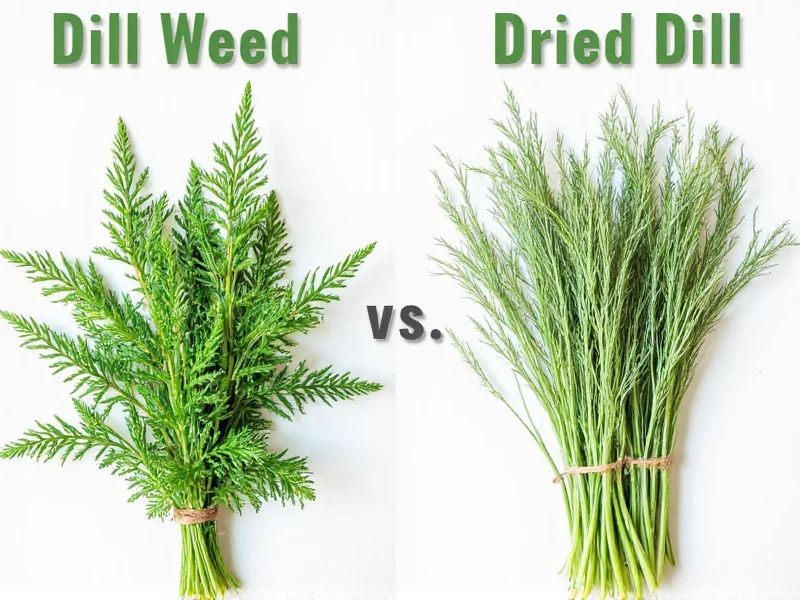
Understanding the terminology around dill is essential for home cooks and culinary professionals alike. Despite common misconceptions, dill weed isn't a distinct plant species but rather the formal name for the dried form of dill herb. The term "weed" in this context is a historical botanical designation for herbaceous plants, not an indication of quality or type.
Decoding Dill Terminology
The confusion between "dill weed" and "dried dill" primarily exists due to inconsistent packaging labels and regional naming conventions. When you purchase either product from reputable spice manufacturers, you're getting identical ingredients: dehydrated dill foliage.
Botanically speaking, dill (Anethum graveolens) produces two harvestable components:
- Dill weed: The feathery green leaves and tender stems
- Dill seed: The oval, flat seeds that develop after flowering
When dill weed is dehydrated for shelf stability, it becomes what some manufacturers label as "dried dill," though the technically accurate term remains "dill weed." This labeling inconsistency has created unnecessary confusion in home kitchens.
Historical Evolution of Terminology
The term "weed" in botanical contexts has undergone significant transformation. As documented by Merriam-Webster, "weed" originally described any herbaceous plant in 16th-century English, devoid of negative connotations. The specific designation "dill weed" emerged in written records by 1578 to distinguish the leafy portions of Anethum graveolens from its seeds. Modern labeling inconsistencies arose during the 1950s with industrialized spice production, where some manufacturers adopted "dried dill" as a consumer marketing term despite the Spice Council of America's continued use of "dill weed" as the standardized industry term.
Source: Merriam-Webster: What is a Weed?
Physical Characteristics Comparison
| Characteristic | Dill Weed / Dried Dill | Fresh Dill |
|---|---|---|
| Moisture Content | 5-8% (dehydrated) | 85-90% |
| Color | Olive green to medium green | Bright emerald green |
| Texture | Brittle, easily crumbled | Delicate, feathery |
| Shelf Life | 2-3 years (properly stored) | 7-10 days refrigerated |
Scientific Composition Analysis
Research published by the National Center for Biotechnology Information (NCBI) demonstrates measurable chemical changes during dill dehydration. Gas chromatography analysis reveals significant shifts in key flavor compounds between fresh and dried forms:
| Compound | Fresh Dill Essential Oil | Dried Dill Essential Oil |
|---|---|---|
| Carvone | 12.3% | 53.2% |
| α-Phellandrene | 40.5% | 18.5% |
| Limonene | 22.1% | 8.7% |
| Myristicin | 5.2% | 2.1% |
This compositional shift explains dried dill's intensified anise notes (from elevated carvone) and diminished citrus characteristics (reduced limonene and myristicin), as confirmed by sensory analysis in the study.
Source: Chemical Composition and Antimicrobial Activity of Essential Oils of Dill (Anethum graveolens L.) at Different Stages of Development, NCBI, 2018
Flavor Profile Analysis
Dill weed (dried dill) exhibits a more concentrated but slightly different flavor profile compared to fresh dill. The drying process transforms certain volatile compounds, resulting in:
- Earthy undertones that aren't present in fresh dill
- Reduced citrus notes (fresh dill has pronounced lemony qualities)
- More pronounced anise-like characteristics
- Less grassy freshness but greater depth in cooked dishes
Professional chefs note that dried dill's flavor compounds are fat-soluble rather than water-soluble, making it particularly effective in oil-based dressings and creamy preparations where fresh dill might lose its impact.
Culinary Applications Guide
Understanding when to use dill weed versus fresh dill significantly impacts recipe outcomes. The dried form works best in applications where:
- Long cooking times are involved (stews, braises, pickling brines)
- Fat-based preparations like salad dressings, dips, and compound butters
- Dry rubs for meats and fish
- Baked goods including breads and savory pastries
Fresh dill excels in:
- Finishing dishes where bright flavor is desired
- Cold preparations like tzatziki and gravlax
- Garnishing soups and seafood dishes
- Quick-cooking applications under 10 minutes
Contextual Limitations
While versatile, dill weed has specific application boundaries that impact culinary success. The Food and Agriculture Organization (FAO) emphasizes that dried herbs require different handling than fresh counterparts due to altered chemical stability. Key constraints include:
- Heat Exposure Limits: Flavor degradation accelerates above 70°C (158°F); avoid adding to boiling liquids more than 20 minutes before serving (FAO, 2007)
- Acidity Sensitivity: Loses potency in pH environments below 4.0; limit pickling brine exposure to under 2 hours (University of Maine Cooperative Extension)
- Fat Solubility Requirement: Requires fat-based carriers for optimal flavor release; ineffective in predominantly aqueous preparations like clear broths
Understanding these boundaries prevents flavor loss and ensures optimal utilization in recipe development.
Sources: FAO Post-harvest Operations: Herbs and Spices; Preserving Herbs, University of Maine Cooperative Extension
Precise Substitution Guidelines
When substituting between fresh and dried dill, precise measurements matter. Due to dehydration concentrating the flavors:
- 1 tablespoon fresh dill = 1 teaspoon dill weed (dried dill)
- 3 tablespoons fresh dill = 1 tablespoon dill weed
For best results when using dill weed in place of fresh:
- Add dried dill early in cooking to allow rehydration
- Combine with a small amount of liquid (lemon juice, vinegar, or oil) before adding to dishes
- Reduce quantity by 66% compared to fresh dill measurements
Optimal Storage Practices
Proper storage maintains dill weed's flavor potency. Follow these evidence-based recommendations:
- Store in airtight glass containers away from light and heat
- Keep away from strong-smelling spices (onion, garlic) to prevent flavor transfer
- Freeze for long-term storage (up to 3 years) in vacuum-sealed bags
- Check potency by rubbing between fingers—strong aroma indicates freshness
Contrary to popular belief, refrigeration isn't recommended for dried herbs as moisture exposure degrades quality. The ideal storage temperature is 60-70°F (15-21°C) with humidity below 60%.
Addressing Common Misconceptions
Several persistent myths surround dill terminology:
Myth: "Dill weed" refers to a different plant than regular dill.
Fact: Only one species (Anethum graveolens) produces both dill weed and dill seed.
Myth: Grocery stores sell "fresh dill weed" as a separate product.
Fact: What's labeled as "fresh dill" is technically fresh dill weed—the same plant material before dehydration.
Myth: Dill weed contains actual weeds or inferior plant parts.
Fact: "Weed" is a historical botanical term for non-woody plants, not an indication of quality.
Practical Usage Tips
Maximize dill weed's culinary potential with these professional techniques:
- Bloom in oil: Heat dried dill in olive oil for 2-3 minutes before adding to dishes to release flavor compounds
- Reconstitute: Soak in warm broth or lemon juice for 10 minutes before use in cold preparations
- Layer flavors: Combine 75% dill weed with 25% fresh dill for complex flavor profiles
- Grind fresh: Use a spice grinder immediately before cooking for maximum potency
Food scientists confirm that dried dill retains significant amounts of carvone and limonene—the compounds responsible for dill's characteristic flavor—even after dehydration, though the ratios shift slightly compared to fresh.
Quality Assessment Guide
When purchasing dill weed, evaluate quality using these criteria:
- Color: Vibrant green indicates recent processing; brownish hues suggest age
- Aroma: Strong, clean scent when crushed; mustiness indicates moisture exposure
- Texture: Crisp and brittle; limp or clumped product has absorbed moisture
- Purity: No visible stems or seed particles in premium products
Reputable manufacturers typically include harvest and processing dates on packaging—opt for products processed within the last 12 months for optimal flavor.




 浙公网安备
33010002000092号
浙公网安备
33010002000092号 浙B2-20120091-4